• Home
  • Les Iris
  • Normandy in the Press
  • About
  • Rent the Cottage

chaumierelesiris

~ A fairy-tale cottage by the Seine in Normandy

chaumierelesiris

Author Archives: chaumierelesiris

Our Daily Bread

08 Saturday Oct 2011

Posted by chaumierelesiris in Culture, Food, France, Normandy, Things to do

≈ 2 Comments

Tags

boulanger, bread, brioche, Food, France, la four a pain, Normandy, St Fiacre, Travel

Bread is given three definitions in the Merriam-Webster Dictionary:

  1. a usually baked and leavened food made of a mixture whose basic constituent is flour or meal
  2. livelihood <earns his bread as a laborer>
  3. food, sustenance <our daily bread>

It is in search of bread under its first definition, a baked food made from flour, that we go as soon as we set foot on French soil. A truism, still true: bread never tastes quite like it does in France. For baguettes and croissants, an early morning run up the hill to our local artisanal bakery, Le Fournil de la Roselière in Sainte Opportune La Mare,  does the trick. Although it stands alone in a quiet village, I’ve never seen it empty. Cars and trucks are constantly pulling in and owners whisking out with their daily bread in hand.

In a nearby village, La-Haye-de-Routot, is Normandy’s Bread Oven Museum. Every Sunday afternoon during the year, and every day in the summer, there are bread-making demonstrations.

The bread oven cottage is small and dark, and the bread oven is enormous, filling half of the cottage. It’s the kind of oven Grimm’s witch might have tried to push Hansel and Gretel into. Our children are sceptical, and they keep their distance. The boulanger is large and muscular and has a booming kind of voice. He starts us from the beginning, showing how he heats the oven and removes the coal and ash. It’s hard and hot work, requiring patience.

While he works Monsieur le Boulanger keeps up a comic patter with the audience, telling jokes about the clueless Parisians who take his bread-making courses. He only bakes in the traditional way, he tells us. Baking and keeping alive the art of traditional bread making is quite literally his livelihood.

He shows us how he shapes and decorates the bread, using a special tool for the detail. A pinch here, a prod there, a few seconds of extra work and people will pay three times more for a loaf, he chuckles.

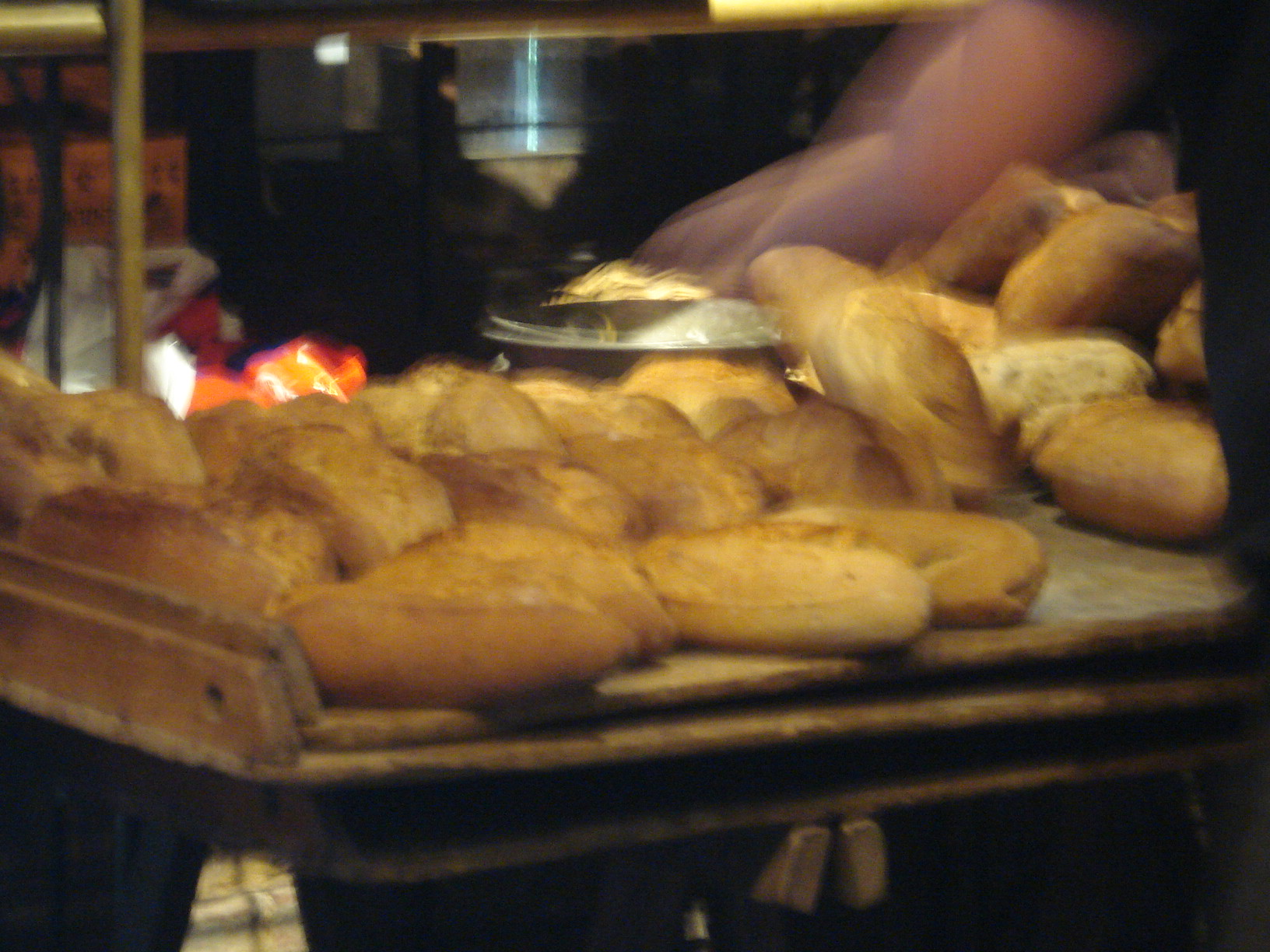
While the bread is baking we go for a walk and return to the smell the baking bread. Now the children are keen, gathering close to the boulanger. Each has a go at helping to remove the bread. The paddle is carefully inserted under a few loaves and then the bread is pulled out with a fast, powerful tug.

Afterwards the fresh bread is sold. We leave with the warm loaves nestled in their white bags, ready for the evening meal.

With most meals in France we eat bread, freshly made and often hot: daily sustenance. One Saturday evening there is a mass in the village chapel, to honour the feast day of the village’s patron saint, St Fiacre. He probably started off as Fiachra, an Irishman, who travelled to France and built a hospice for travelers. Legend has it that St Fiacre furrowed a great garden with his staff. He is the patron saint of gardeners and taxi drivers. This seems fitting for our village with its beautiful cottage gardens, and I like the anomalous conflagration of rural and urban. It’s the story of our lives.

We arrive at the chapel just as mass is starting and are invited to sit in the only free seats, uncomfortable and ancient wooden pews at the front. Next to us is an unexplained heap of warm brioches. Brioche is made in a similar way to bread, but is enriched with egg and butter. It was often used as blessed bread in French churches, and was sold at market in the butter centres of northern France.

The mass is long and the chapel is full. We are hungry and the brioches smell so good. Finally as mass is ending, the priest and the mayor come forwards. The priest blesses the special St Fiacre brioches, sprinkling them with holy water: bread of life. The mayor invites the congregation for a glass of sparkling wine in the mairie, and the brioches are distributed. In the morning for breakfast, is the glistening golden brioche all the more delicious for having been blessed?

Share this:

  • Share on X (Opens in new window) X
  • Share on Facebook (Opens in new window) Facebook
  • Share on Pinterest (Opens in new window) Pinterest
  • Email a link to a friend (Opens in new window) Email
Like Loading...

Money for Nothing: A French Bank Odyssey

01 Saturday Oct 2011

Posted by chaumierelesiris in France, Property in France

≈ 1 Comment

Tags

buying a house, Club Med, French bank account, Property, Relevé d’Identité Bancaire, RIB

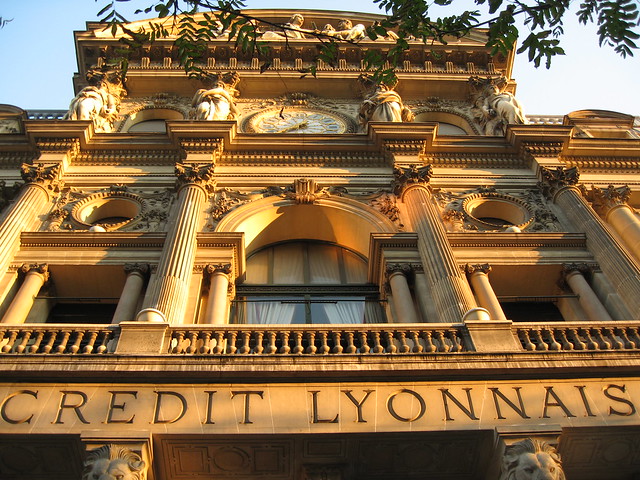
Everyone told us that buying a house in France would be hard. For us, buying the house was the easy part. Our seller and the estate agents were a true joy to work with. The hard thing – the thing that nearly scuppered the whole deal  – was our French bank account.

We were warned to get a French bank account even before we found a property. That dealing with French banks was hard. We didn’t believe it could be that hard. For four reasons.

  1. My husband has worked for two of the major French banks
  2. Among my husband’s clients today are all of the major French banks
  3. My husband speaks fluent French
  4. My husband already had a bank account in France

In a past life, my husband did a stint as a G.O., or Gentil Organisateur, at Club Med. This involved a bit of teaching tennis, a bit of acting, a bit of customer service, and a lot of partying by the beach in Corsica.

* Image is representative only

Incredibly, he was paid for this work, and the money went into a French bank account. And stayed there for two decades, while he embarked on his proper, respectable career. Then one day my husband went looking for his account details to help buy a property in France.

As soon as we had our offer on the house accepted, we got in touch with the bank. The account was pre-digital: there was no cheque book, no credit card, and no cash card. And most importantly, no RIB. The RIB, or rélévés d’identité bancaire, is a piece of paper that shows your bank account details and address. To do anything financial in France, you need the RIB. To get a utilities account. To pay the phone bill. To get insurance. To buy a house.

The bank assigned us a Conseillère personelle, or customer advisor. She was polite and well-spoken. She advised that it would be no problem to get an RIB, cheque book and bank card. This was two months before we needed the RIB.

A week later, we had a phone call. Copies of our passports were needed. We promptly had these notarised and sent them on. We also started transferring funds into the account.

Two weeks passed. Nothing arrived in the mail. We phoned, and discovered our conseillère had taken her summer holidays and would be returning two weeks before our deadline. We were assured this would not cause a problem as everything was in order. We went on holiday.

We returned to find a hand-written letter from our conseillère. An apology? No – a request to see our wedding certificate and proof of the source of the funds we had transferred into our French bank account. Just in case we were up to something. No RIB could we issued until it was confirmed we were not terrorists.

We sent off the requested evidence. We started to panic. With only ten working days to go before we closed on the house, we had to transfer funds to the notaire’s account (a sort of escrow account), or we would not be able to close.

Five days passed. And then, joy! The RIB arrived. Now we would be able to transfer funds to the notaire. We phoned our conseillère. But once again, she was on holiday. But it was no problem they told us – she would be back in two days’ time, the day before we were due to close. And no, there was no one else who could, or would, help us.

At this point, two things happened. First, my husband logged a complaint with his contact at the bank. Second, the notaire, nervous about getting his fee, decided to take things into his own hands. He called the bank.

And then everything fell into place. Our funds were transferred. We closed on the house. We still haven’t, however, received a cheque book or a bank card. We wonder whether our conseillère was reprimanded, and is now exacting her revenge. We’re considering changing banks. But could we really go through the pain, again?

Share this:

  • Share on X (Opens in new window) X
  • Share on Facebook (Opens in new window) Facebook
  • Share on Pinterest (Opens in new window) Pinterest
  • Email a link to a friend (Opens in new window) Email
Like Loading...

From Calais to Normandy: Montreuil, Baie de Somme, Le Touquet

25 Sunday Sep 2011

Posted by chaumierelesiris in France, Travel

≈ 1 Comment

Tags

Baie de Somme, Calais, Carousel, Le Touquet, Montreiul-sur-Mer, Seaside

In the Telegraph this weekend we read that more than half of Britons who own holiday homes in France drive rather than fly. Most are going to Normandy and Brittany, not Dordogne and Provence as all the summer holiday chatter would lead us to expect. And at a 40th birthday party, a friend tells me she takes her children to Montreuil-sur-Mer every year.

I have never visited Montreuil-sur-Mer (note that it’s a bit inland from the sea despite its name). She is convincing about its merits. Just an hour from Calais, it is faster to get to than many of the UK seaside resorts. The food is wonderful. The town is surrounded by medieval ramparts. It is the setting for much of the early part of Les Misérables.

We have two favourite stops along the drive from Calais to Normandy. On the A16 just north of Abbeville is the Aire de la Baie de Somme. As a rule of thumb, autoroute rest stops get better in France the further south you go. The Aire de la Baie de Somme is an exception.

It’s a fairly new, airy structure, with a local produce shop, good coffee, and a playground. There is a pond with enormous, threatening fish, ducks paddling among the reeds, and a viewing tower. It’s a bright, windy place, with shifting light.

Read more about La Baie de Somme – France Today.

West of Montreuil-sur-Mer is Le Touquet – a lively, chic, yet still traditional seaside resort with a wide sandy beach and wonderful art deco architecture. We stop here if we have time for lunch in the busy town centre, a walk on the wide sandy beach, and a ride on the classical carousel.

Here are some more resources about Le Touqet.

Eurofile | The Paris Plage. The New York Times neatly deconstructs the social signals of Le Touquet and Deauville.

Perfect break: Le Touquet – Telegraph. Recalls swinging down to Le Touquet in the ’20s.

Le Touquet – YouTube. Selling holidays, but some nice imagery that gives an idea of the place.

Share this:

  • Share on X (Opens in new window) X
  • Share on Facebook (Opens in new window) Facebook
  • Share on Pinterest (Opens in new window) Pinterest
  • Email a link to a friend (Opens in new window) Email
Like Loading...

How to Buy a House in Normandy, Online

19 Monday Sep 2011

Posted by chaumierelesiris in Les Iris, Property in France

≈ 2 Comments

Tags

Buying a house in France, House in France, House in Normandy, Property, real estate

It took us six years to find a house in Normandy. We started visiting the region when our older daughter was almost one. She was learning to speak, and we wanted French to feel as close to native as it could to a child living in London. When we bought Les Iris she was seven, and her sister three.

Why did it take us so long?

There are several reasons. The one I want to dwell on today is the technology of buying a house in France. If you don’t live in France, it’s hard to get excellent information about French property. Even if you speak French fluently as we do (full disclosure: by we, I mean my husband).

I do everything online. And have been, for the last 10 years. I buy food online. I buy clothes online. I buy Christmas online.  I bought my kitchen sink online.

Really. When you have young children and a full-time job, shopping is one of the things that disappears. Fast. Walton Street, Marylebone High Street, Westfield: who has the time? Five minutes in the pharmacy at lunchtime is as close as I get to physical shopping these days. So I went online.

When you shop for a property in London there are wonderful websites like Zoopla and Globrix. You can look at property for sale on a specific street. You can see what properties have been bought recently nearby, and for how much. You can find out the crime rate, and which schools are best. For France it was even more important to have this information before driving up to five hours to see each property.

The information just wasn’t there, or I couldn’t find it. There is detailed historical population and employment data available from INSEE. But I wasn’t able to find information about crime rates, school rankings or property sales. Is this stuff really not out there? Does anyone know? If you do, please let me know.

More than anything, I wanted a website that would let me search by location. I wanted to look at the satellite imagery of the area around a house even before I talked to an agent let alone made the trip to France. I never found a site that did this, exactly. Often agents wouldn’t even share the coordinates of a property so that we could plug them into our satnav.  Many rendevous were arranged in parking lots outside churches and town halls. Perhaps the agents were afraid we would try to cut a direct deal with the owner.

Floor plans were extremely hard to come by. At best, there was a hand-drawn approximation. Pictures on property websites were often partial, hiding the major road behind the hedge, or the electric pylon at the end of the garden, or the old mines under the property that were in danger of caving in at any moment.

Many homes we saw were listed as ‘habitable’. Some of these were in excellent condition. Others had holes in the roof, asbestos in the walls, no heating or no discoverable sewage system.

Things have improved recently. The site where we found our cottage, Green-Acre (formerly ImmoFrance), has gathered traction with estate agents, and today the site lists over 70,000 French properties in all of the major European languages. You can search for property by town or area and sign up for email updates about new properties. CapiFrance.co.uk, which has a network of estate agents working under its brand name, has a portal in both French and English, and has listings from over 300 estate agents.

British-run sites have also worked to fill the gap. Somewhere between 100,000 and 500,000 British live in France, depending on whose estimates you believe. Many more are looking for homes in France, and agencies catering to English-speaking buyers abound. We found Domus Abroad and A House in Normandy to be particularly helpful, offering high levels of personal service. Other useful sites were the Sextant French Property Network, Rightmove France, Leggett and La Résidence.

We also did a lot of offline research. We bought property magazines. The French like to own country homes, and Normandy is near enough to Paris that it attracts editorial attention. The magazines Maisons Normandes and Belles Demeures can be picked up in newsagents. There are also property specials in weekly news magazines like Le Point.

Late in the day, we discovered that notaires, as well as estate agents, can hold property listings. Often these will be advertised on a board outside of the notaire’s office, or in the regional trade publications available in the reception of the local notaire’s office.

We got to know local estate agents. We walked around the towns we liked and noted down the names of estate agents, then built up a relationship. In person they were friendly, full of local information, and professional. They’re also a pleasure to work with once you find a house and I’ll write more about that later.

Agents we spoke to included Patrice Besse, a Paris-based agency specialising in castles and manor houses with a significant portfolio in Normandy. This is property porn at its best: very little you can afford, and looking at it will suck hours from your life. There’s even an iphone app. More realistic in our bit of Normandy were Cany immobilier and Le Forestier.

In the end, we did find our property online. Technology caught up with us and one morning there it was, in my inbox. Les Iris.

Share this:

  • Share on X (Opens in new window) X
  • Share on Facebook (Opens in new window) Facebook
  • Share on Pinterest (Opens in new window) Pinterest
  • Email a link to a friend (Opens in new window) Email
Like Loading...

The Art of Normandy

15 Thursday Sep 2011

Posted by chaumierelesiris in Culture, Normandy

≈ Leave a comment

Tags

Art, Etretat, Monet, paintings

I’ve been having fun with Artfinder, which lets you create your own art galleries. Here’s my collection of paintings of Normandy. For the static version, go here.

Most of the paintings are nineteenth and twentieth century. Artists love the shifting light of Normandy. Here’s a taster.

X

The people at Artfinder are onto something. It’s great fun to play curator.

Share this:

  • Share on X (Opens in new window) X
  • Share on Facebook (Opens in new window) Facebook
  • Share on Pinterest (Opens in new window) Pinterest
  • Email a link to a friend (Opens in new window) Email
Like Loading...

Five Great Books About Normandy

10 Saturday Sep 2011

Posted by chaumierelesiris in Culture, Normandy

≈ 1 Comment

Tags

Books, Flaubert, Gemma Bovery, Julia Child, Madame Bovary, Michelin, Normandy, Rouen, Travel

Here are five books about Normandy I’ve read and loved. Some are reference books which were helpful to us as we initially explored the region. Others are fiction and memoir. These too have served as reference of course: what, after all, is fiction if not a guide to the possible ways of being?

When we started thinking about buying a house in France, I read everything I could get my hands on: the chic lit novels, the earnest guides to property purchases, A Year in Provence. This last didn’t help much. We are a two-career family, without Mayle’s luxury of time, nor his means.

A couple of caveats. There are significant gaps in this list. First and most glaringly there are not enough books in French. There is also a lack of historical writing, both recent and ancient. I am working to fill these gaps. Please let me know your favourite books about Normandy and France. I’d like to read them, and maybe add them in over time. Finally, there is no particular order to this list.

Madame Bovarytakes place in and around Rouen where Gustave Flaubert was born and raised. Charles and Emma Bovary’s first home is in Tôtes, and they later move to Yonville which is based on Ry. Emma famously meets her lover in Rouen Cathedral I have an edition of Madame Bovary designed by Manolo Blahnik, and it has always seemed a perfect partnership between the cobbler  to the Sex in the City girls and Emma, the original desperate housewife.

We have poured over this gorgeous coffee table picture bookby photographer Hugh Palmer, considering the merits of one village over another. Palmer beautifully captures the diversity of Normandy, from the cliffs of Étretat to the lush Pays de Caux farmland dotted with grazing cattle and cider orchards.

There is nothing that comes close to the Michelin Green Guide for its authority and knowledge of the region. You know that if the men at Michelin give an attraction three stars, it will be worth the trip. The alphabetical organization by place name, rather than by region, can be annoying. Normandy is large, and it would be convenient to see what’s near you now. But maybe it’s just reflective of life in France: deal with the weird structure to get to the good stuff.

My mother cooked from Julia Child when I was growing up: not for the children, but when there were dinner parties. Oh the dinner parties. Silver and crystal and cigars and port. Fricadelles de Veau a la Creme. La Tarte des Demoiselles Tatin. I’ve never hosted such a dinner party and it makes me wonder: have I grown up?  In My Life in France Julia Child tells how she arrived as a diplomatic wife in her late thirties. The boat docked in Le Havre, and she motored with her husband to Rouen, where she tasted sole meuniere and fine wine and described it as “an opening up of the soul and spirit for me.”

Tell me that Posy Simmond’s graphic novel Gemma Bovery isn’t a great book at your own risk. Great about the English and the English in France, how we talk to each other, how we dress, and how (we imagine) the French observe us. Haircuts, handbags, home decor: Simmonds doesn’t miss a beat in this sharp comic parody of Flaubert’s novel.

I want to give a shout out to three writers whose words about Normandy and France today have resonated with me. It’s not about Normandy specifically, but New Yorker writer Adam Gopnik’s essays in Paris to the Moon opened my eyes to the pleasures of living with children in France, indeed the pleasures of living with children at all. Humourist David Sedaris dissects the reality of life as a gay American writer in rural Normandy (take that, Emma Bovary!) in Me Talk Pretty One Day. And Judith Warner, who I find perpetually wise, has written beautifully in the New York Times about rural Normandy as antidote to our wired lives.

…in the early evening there is a misty kind of light – a particularly French, grayish, bluish, blackish kind of light – that fills you with a joy so profound that it’s painful. It reminds me of why I live most of my life running around in a snit and obsessing about noisome details, petty insults and minutiae: because to experience happiness – of the most powerful and soul-intimate kind – is also to know that some day it all will end.

–Judith Warner, We’ll Always Have Normandy

Share this:

  • Share on X (Opens in new window) X
  • Share on Facebook (Opens in new window) Facebook
  • Share on Pinterest (Opens in new window) Pinterest
  • Email a link to a friend (Opens in new window) Email
Like Loading...

A Visit to Jumièges

09 Friday Sep 2011

Posted by chaumierelesiris in Normandy, Things to do, Travel

≈ 2 Comments

Tags

Abbey, Anglo-Norman, Europe, France, Jumieges, Michelin, Normandy, ruins, Travel

I had never heard of Jumieges Abbey before reading about it in the Michelin green guide, which gives it a rare three stars. Three stars from Michelin means you can’t miss it, particularly when it’s only 25 minutes from your house – maybe 35, if you have to wait 10 minutes for the ferry. The ferry is not much more than a sturdy kind of raft that takes about 8 cars and pops you across the Seine in under 5 minutes, to the delight of our children. While waiting, you can stock up on courgettes and lettuces from the lady who grows and sells vegetables from her house next to the road by the ferry.

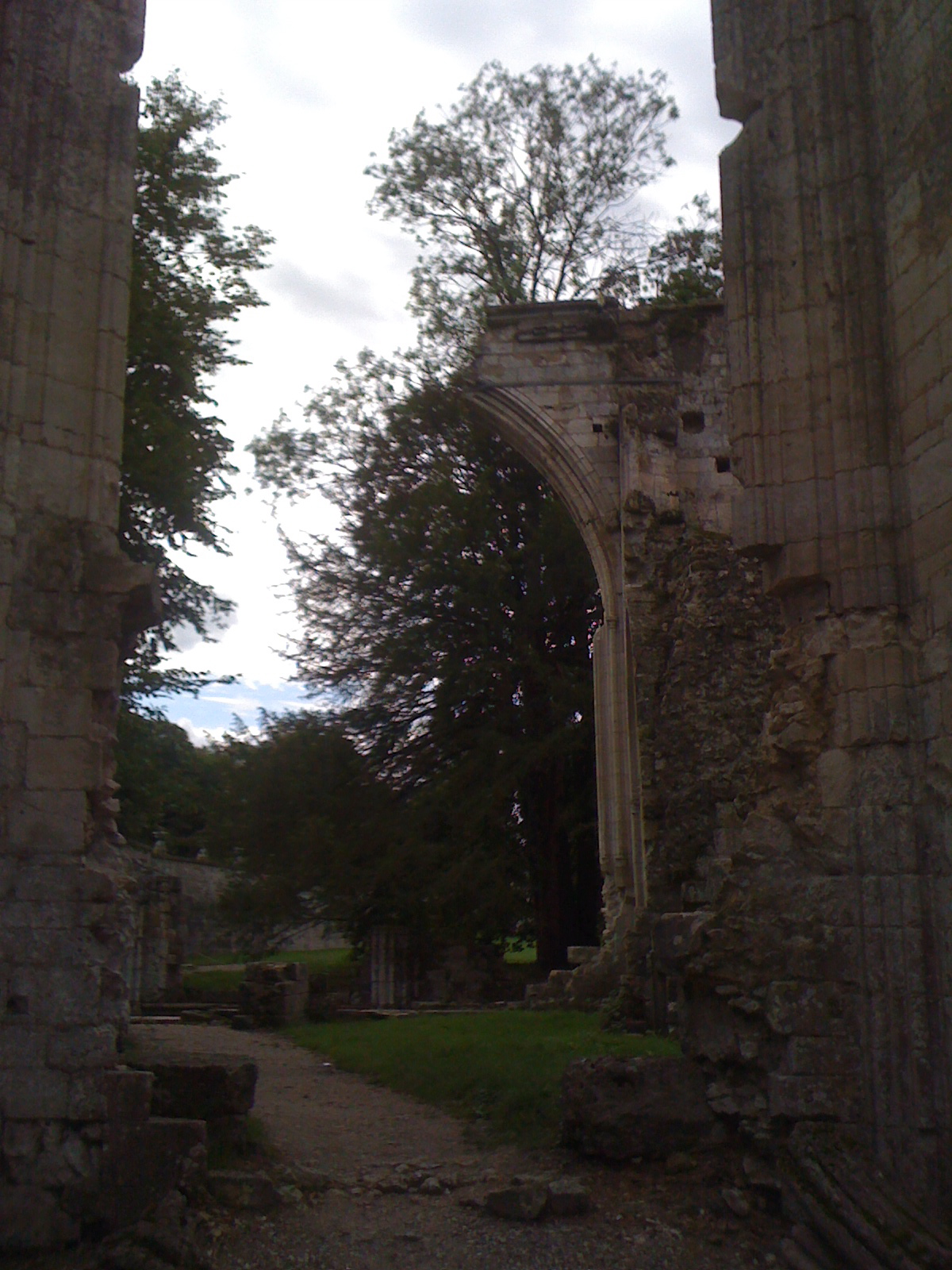
Originally built in the seventh century, the abbey was pillaged (how, exactly do you pillage? Can you give me a visual image?) by the Vikings. It was rebuilt and consecrated in 1067. William the Conqueror attended the consecration. An early Benedictine abbot, Robert Champart, became Archbishop of Canterbury. It was an important centre of learning and power for hundreds of years. The abbey fell into ruin after the Revolution, when it was sold and became a stone quarry. The imposing twin towers and skeleton of the abbey remain, open to the sky, and towering over the landscape of the Seine Valley.

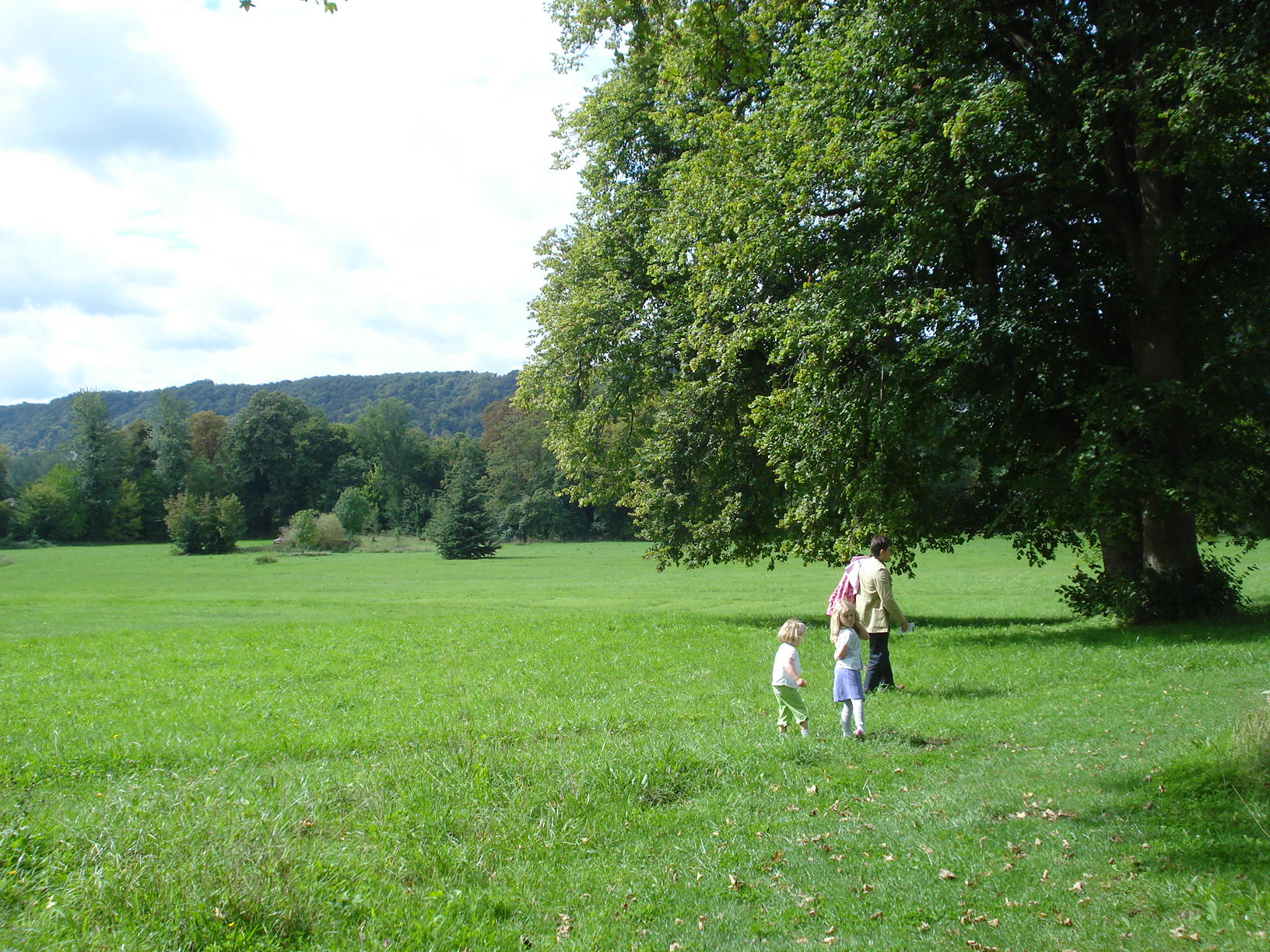
The ruins are hyper-Romantic (insert your favourite Byron verse here). It’s extremely photogenic, and serves as a backdrop to performing arts events in the summer. We didn’t expect our children to love Jumièges Abbey, but they did. The wide open spaces, ruins you can clamber about on, and 15 acres of parkland to explore.

This is a haunting, ancient image of a Carolingian man, one of few remaining traces of the monastery that the Vikings destroyed. The best known artwork from the Carolingian period (780-900 AD) are the illuminated manuscripts.

What I have been mulling over is why I had never heard of Jumièges. I’ve been visiting Normandy for years (more on that later). Did it really not get covered in school? Its history is as much the history of England as of France. By some estimates, 50% of our English vocabulary today derives from Anglo-Normand, the language of William the Conquerer’s court. Beef, mutton, lentils, pears, laundry, pocket, petition, endorsement: so much of the food we commonly eat, as well as our names for things of the earth and the intellect, come from this historical exchange between Normandy and England.

Share this:

  • Share on X (Opens in new window) X
  • Share on Facebook (Opens in new window) Facebook
  • Share on Pinterest (Opens in new window) Pinterest
  • Email a link to a friend (Opens in new window) Email
Like Loading...

Les Iris

03 Saturday Sep 2011

Posted by chaumierelesiris in Les Iris, Normandy

≈ 5 Comments

Tags

chaumiere, France, Normandy, Seine, thatched cottage, wild mushrooms

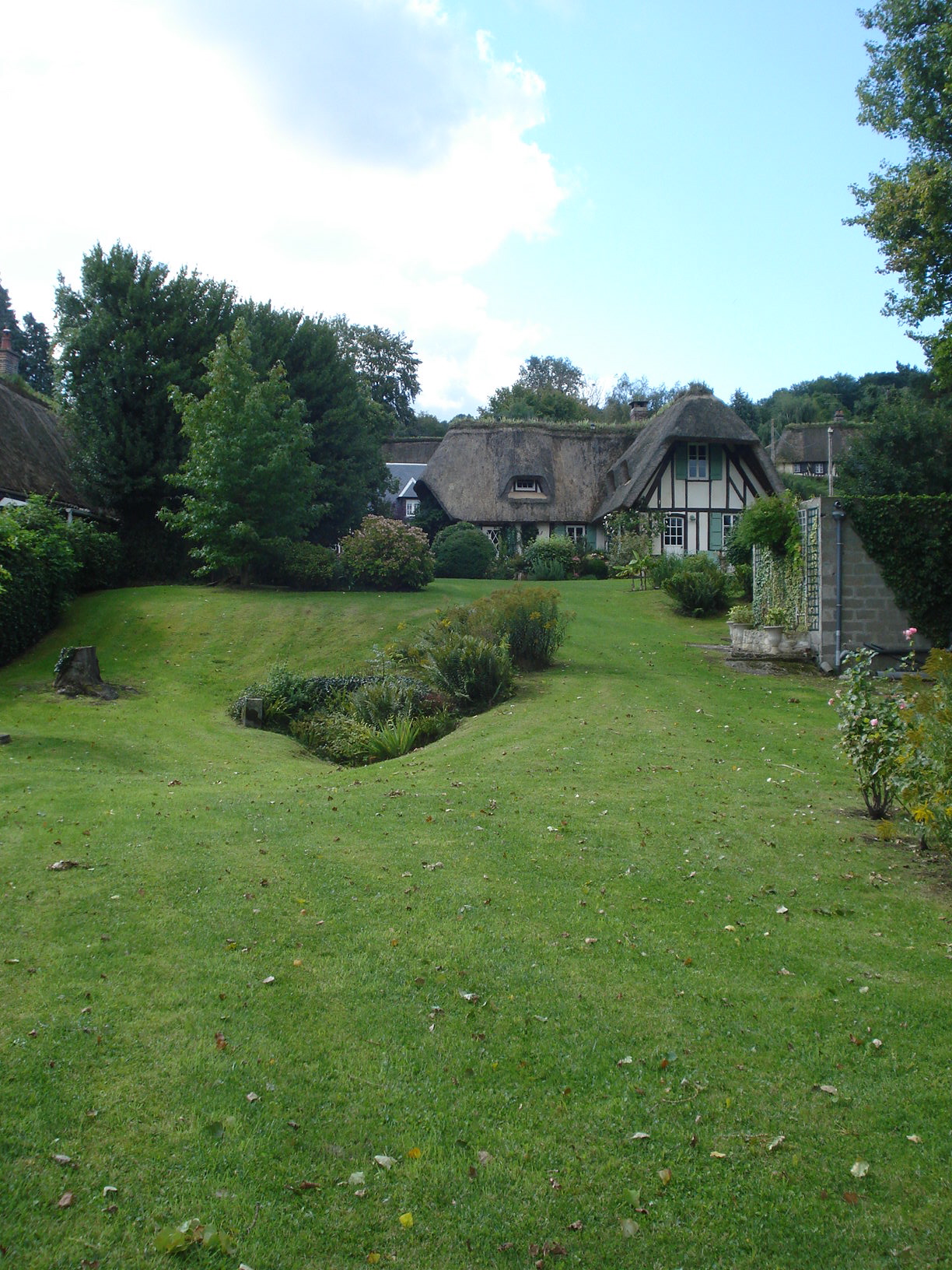
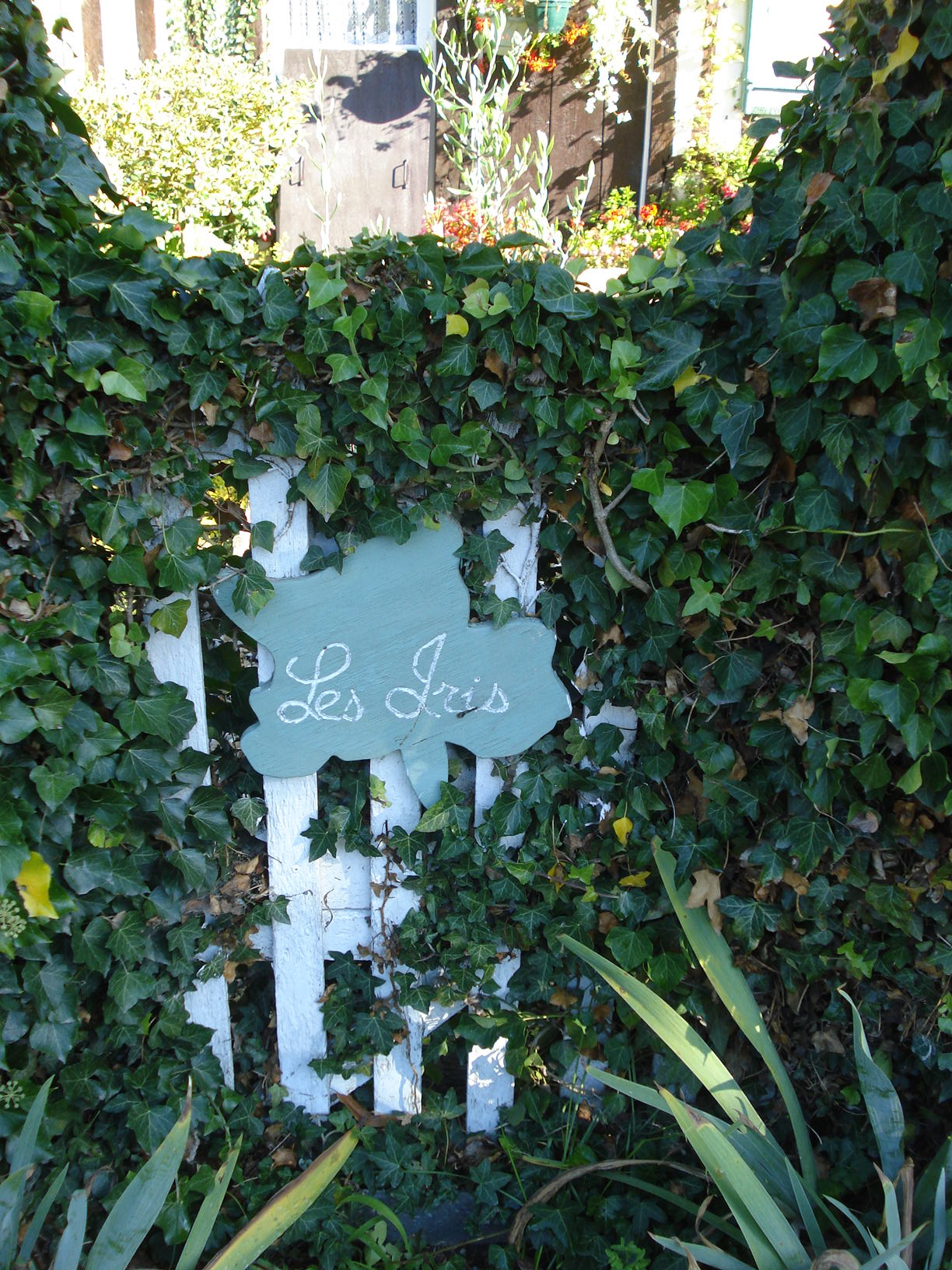
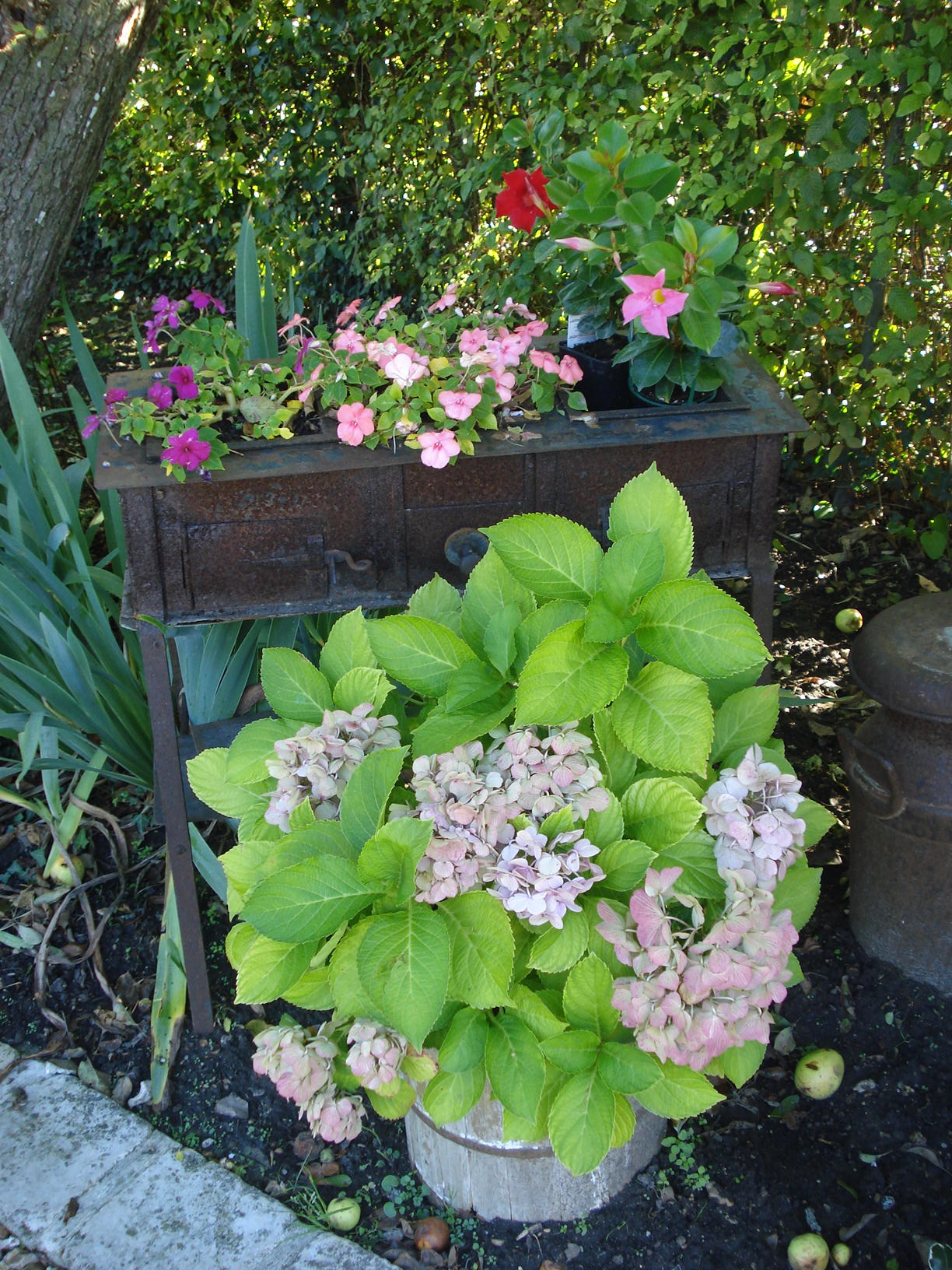
Here are some pictures of Les Iris, our chaumiere in Normandy.

A chaumiere is a thatched cottage, built from a skeleton of wood beams, infill of clay or lime and sometimes reinforced with horse or cow hair, and a roof of reeds.

Les Iris is on the Thatched Cottage Road, a 53-km route that runs through the Boucles de la Seine national park connecting Notre-Dame-de-Bliquietuit to Vatteville, Azier and Vieux-Port and winding along the Seine to the Vernier marshlands.

“The thatched roofs of our buildings, from whose tops grow irises with their sabre like leaves, appear to steam as though the humidity of the stable or the barn rises up through the straw”

—Guy de Maupassant

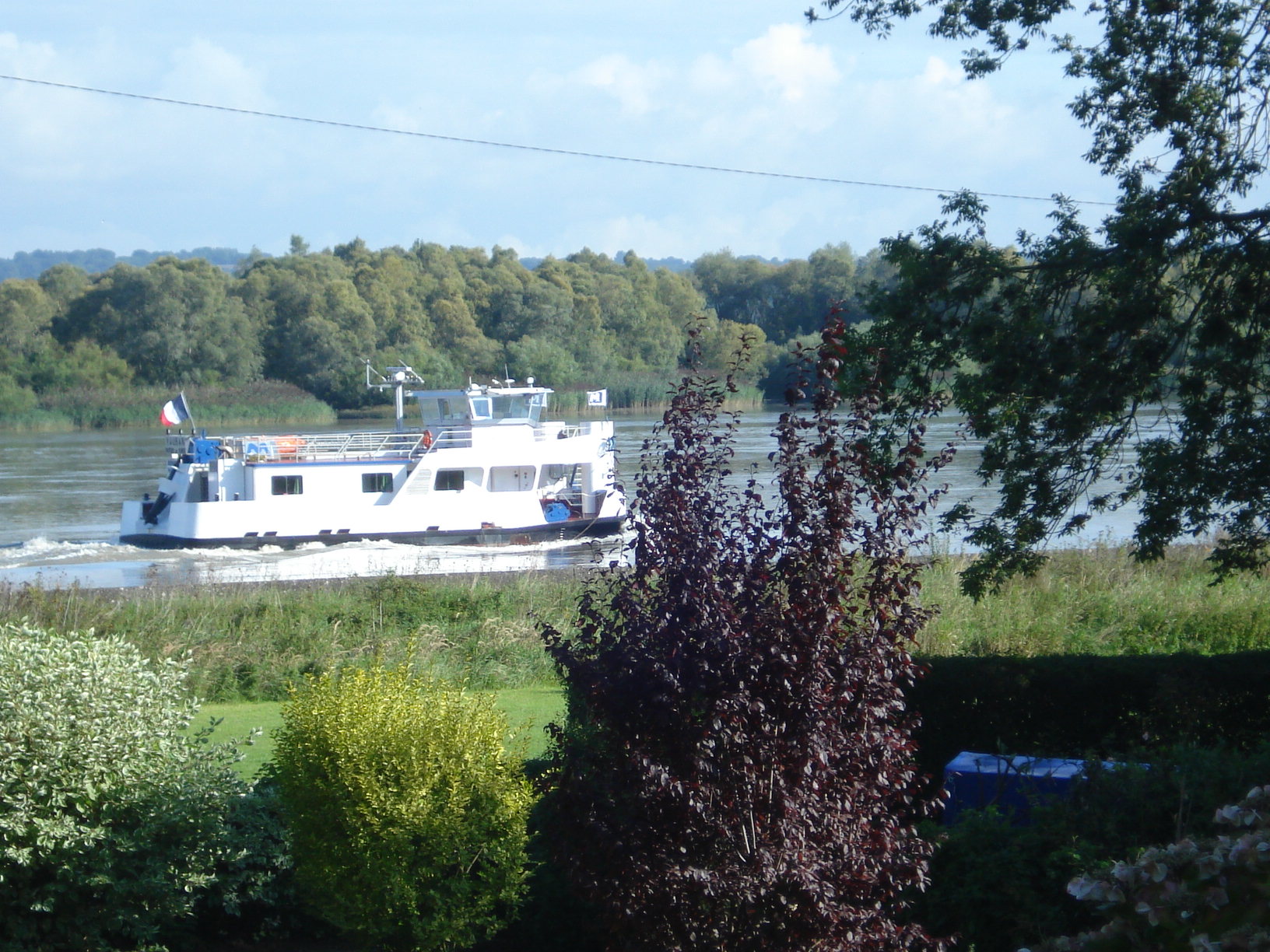
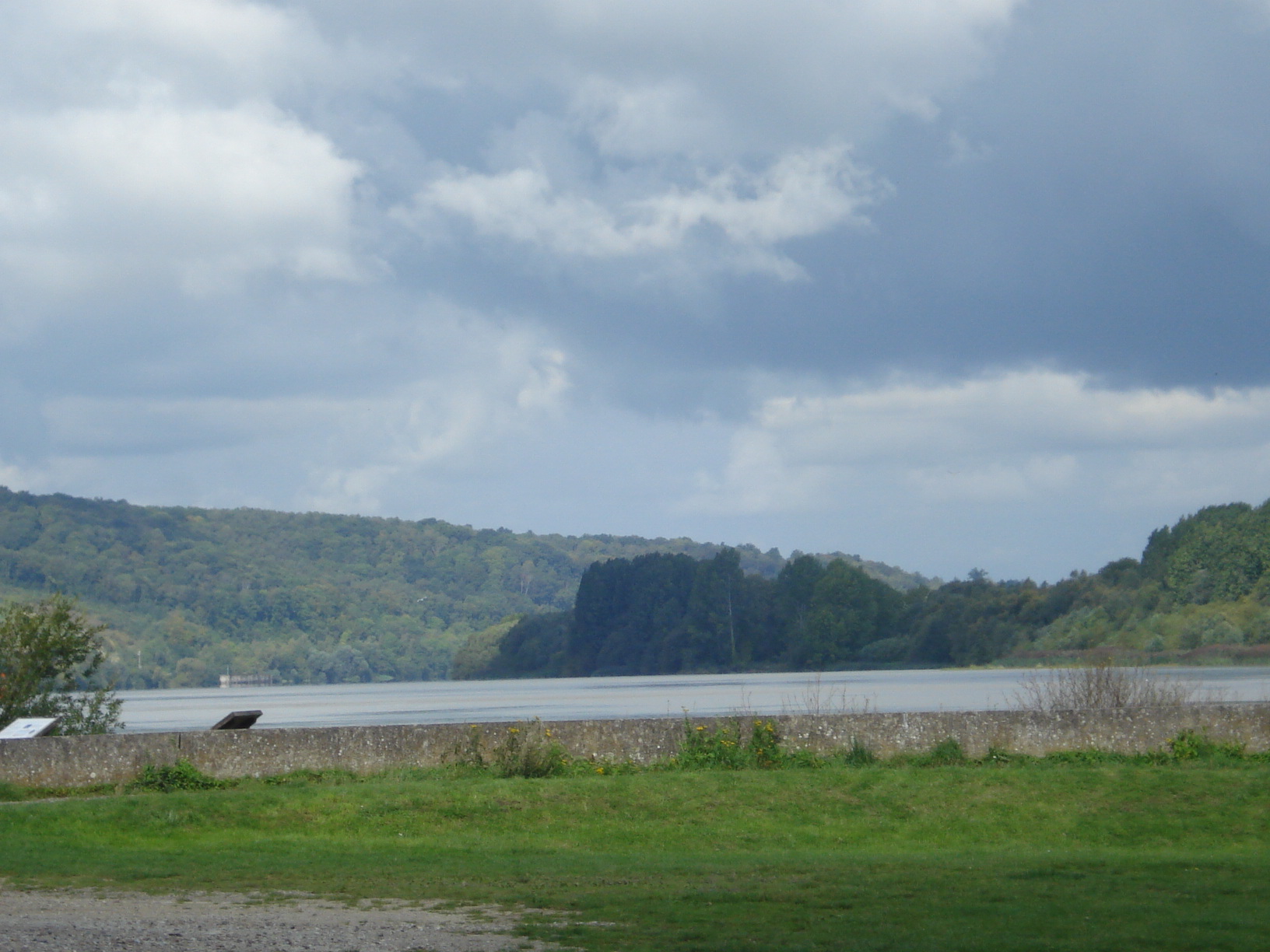
The Seine flows at the end of the garden, between limestone cliffs and occasional villages. At certain times of day, large boats glide silently past, heavy on their way to Rouen, or, lighter, back out to Le Havre and the sea beyond.

This being Normandy, there is the requisite apple tree in the garden. Ours is large and old and the unripe apples taste sour and floury. The garden is full of herbs, and along the footpaths from the village up into the ancient forest there are plentiful mushrooms. The abundance this season has been a general topic of village conversation, and we ate the wild mushrooms cooked with butter and herbs by a neighbour. You can take the mushrooms you have picked to the pharmacy in the next village, and they will tell you which ones you can eat. We haven’t tried this yet.

The small village church from our window. There are said to be graves in the cemetery from the hundred years’ war. During the day the bell tolls every half hour and with particular vigour at 7 am and 7 pm.

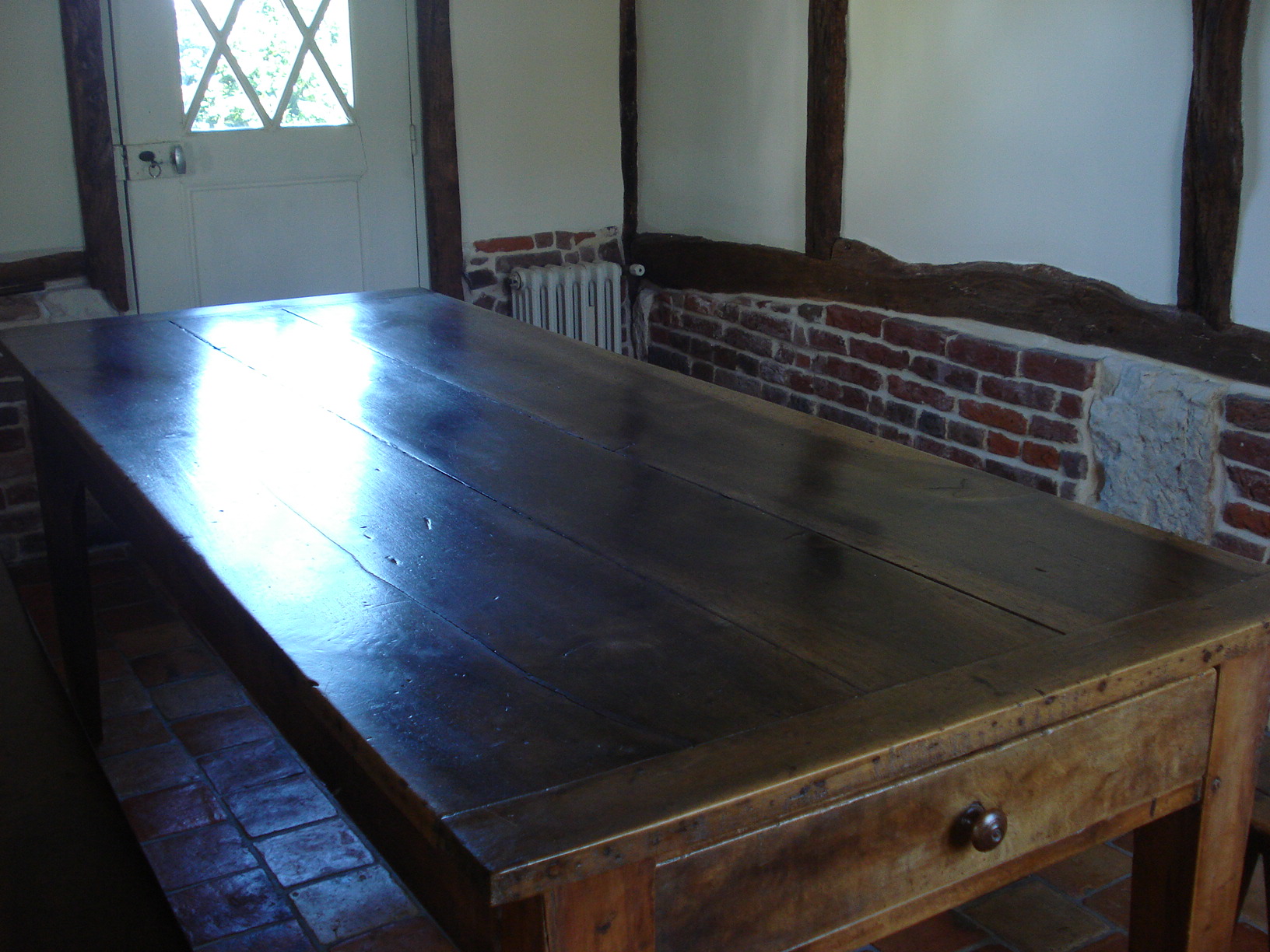
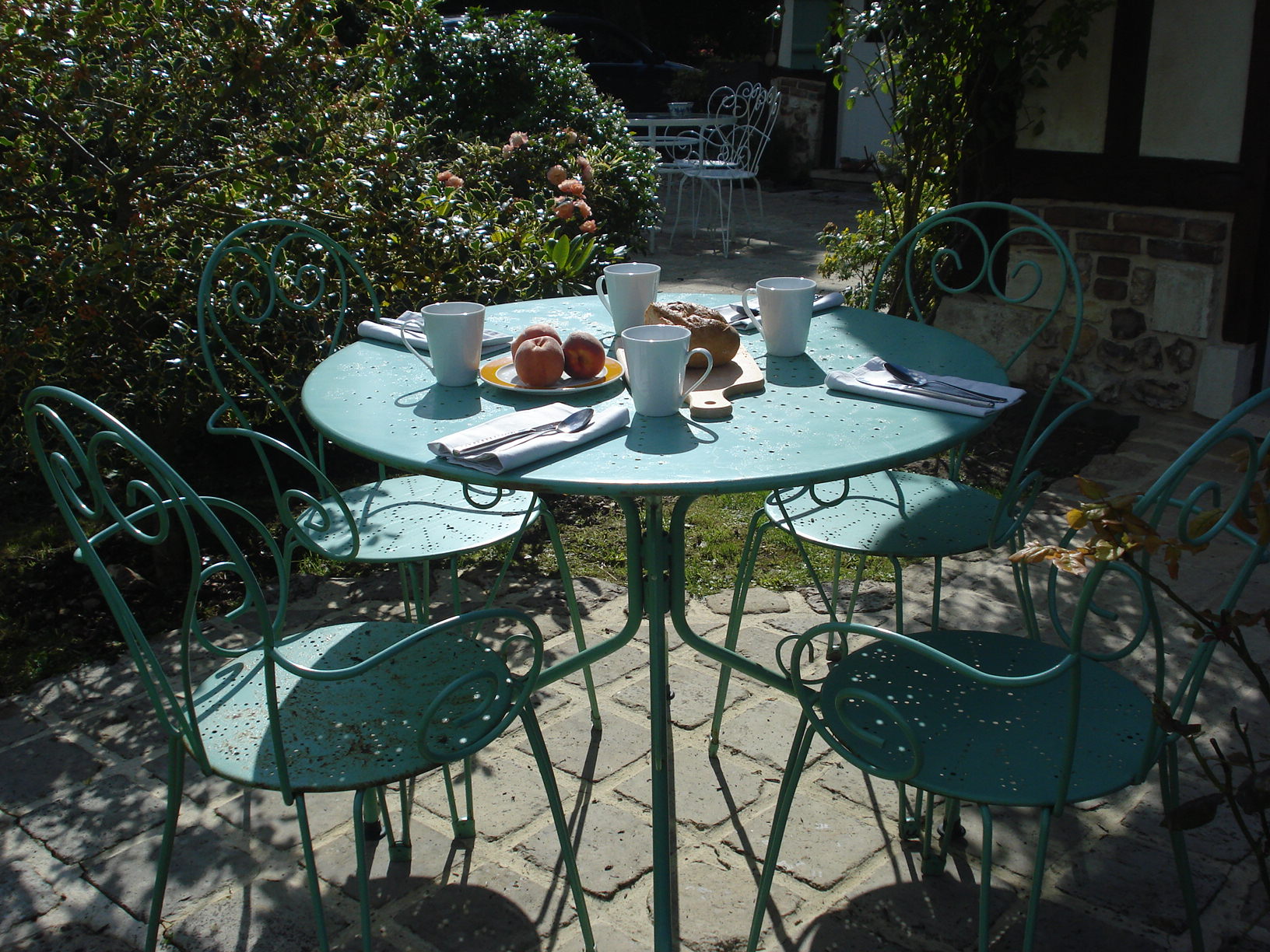
Meals are outside in the sunshine overlooking the Seine, or in the salle a manger at the petrin (dough-making table). The top lifts to reveal a trough, which provided a warm, draft-free place to knead dough and leave it to rise.

No space for bathtubs under the thatched roof, but there are two lovely bathrooms, one on the ground floor, with strong showers. The country kitchen has windows overlooking the garden and a Belfast sink.

A typical Norman fireplace, for wintry evenings.

The floors downstairs are traditional Pont Audemer tiles, and upstairs, hardwood throughout.

v

Share this:

  • Share on X (Opens in new window) X
  • Share on Facebook (Opens in new window) Facebook
  • Share on Pinterest (Opens in new window) Pinterest
  • Email a link to a friend (Opens in new window) Email
Like Loading...
Newer posts →

Abbey Aizier Anglo-Norman architecture Armada Art autumn Birds Books bread brocante buying a house Buying a house in France calvados Carousel chaumiere Christmas Christmas tree churches Cleres cycling decorations Easter Etretat Europe Flaubert Flowers Food France Gardens Gemma Bovery Gertrude Jekyll guests Halloween History home decor Honfleur House in France Jumieges Le Bec-Hellouin Le Havre Les Iris Le Touquet London Madame Bovary Market Michelin Monet museum Normandy Olympics oysters paintings photography pictures Pont-Audemer Pont-l'Évêque Property Recipes Renoir restaurant reviews Romanesque Rouen ruins Seine shopping shops sport St Fiacre thatched cottage Tour de France Travel Walking wild mushrooms

Twitter Updates

Tweets by lesirisnormandy

Instagram

No Instagram images were found.

Enter your email address to follow this blog and receive notifications of new posts by email.

Categories

  • Culture
  • Food
  • France
  • Les Iris
  • Normandy
  • Property in France
  • Things to do
  • Travel
  • Uncategorized

Archives

  • September 2020
  • May 2019
  • April 2019
  • August 2018
  • May 2018
  • December 2017
  • July 2017
  • March 2017
  • February 2016
  • August 2015
  • May 2015
  • September 2014
  • July 2014
  • May 2014
  • October 2013
  • August 2013
  • June 2013
  • April 2013
  • March 2013
  • February 2013
  • January 2013
  • December 2012
  • November 2012
  • October 2012
  • September 2012
  • August 2012
  • July 2012
  • June 2012
  • May 2012
  • April 2012
  • March 2012
  • February 2012
  • January 2012
  • December 2011
  • November 2011
  • October 2011
  • September 2011
  • RSS - Posts
  • RSS - Comments

Create a free website or blog at WordPress.com.

Privacy & Cookies: This site uses cookies. By continuing to use this website, you agree to their use.
To find out more, including how to control cookies, see here: Cookie Policy
  • Subscribe Subscribed
    • chaumierelesiris
    • Join 78 other subscribers
    • Already have a WordPress.com account? Log in now.
    • chaumierelesiris
    • Subscribe Subscribed
    • Sign up
    • Log in
    • Report this content
    • View site in Reader
    • Manage subscriptions
    • Collapse this bar
 

Loading Comments...
 

    %d