• Home
  • Les Iris
  • Normandy in the Press
  • About
  • Rent the Cottage

chaumierelesiris

~ A fairy-tale cottage by the Seine in Normandy

chaumierelesiris

Category Archives: France

New Years Day in Étretat, Normandy

14 Saturday Jan 2012

Posted by chaumierelesiris in France, Normandy, Things to do, Travel

≈ 5 Comments

Tags

Art, beach, Etretat, Impressionists, Monet, New Years Day, Normandy, paintings

Is there a good way to start the new year? Celebrate midnight in style, and you wake up with a headache and a mess to tidy up, and at least one resolution broken in the first twenty-four hours. This year, with guests to entertain, we decided the headaches had to be ignored. And the mess: we decided to leave it behind.

But where to go? New Years Day was both a Sunday and a bank holiday. Northern France was closed for business. Not a museum or a restaurant to be visited. There were many small children in our party, so a walk in the forest wouldn’t be easy. That left the beach. Perfect.

I like beaches best in the dead of winter. Preferably stony, with the wind whipping salt through my hair, and a moody slate-grey sea. I am not the bikini type: for one thing, my skin fries in the heat, and another is I get bored just lying around. The beach we settled on for New Years Day was at Étretat.

Etretat, Normandy

Étretat isn’t the closest beach to Les Iris, but the 45 minute cross-country drive on narrow farm roads through open fields and villages is pretty. Étretat is famous for its alabaster cliffs, or falaises, which were painted by Monet, Courbet and Boudin among others. There is plenty of parking in town; park as close to the seafront as you can. Two famous rock formations are visible from the town. As you face the sea, to the left is the Porte d’Aval. There is a path to hike up to the top, from which a further falaise can be seen.  At the top there is also a spectacularly situated golf course.

The Cliffs at Etretat after the storm, by Gustave Courbet.

We decided to hike in the opposite direction, up the Porte d’Amont. There were some steep steps, but overall it looked a shorter climb for the children.
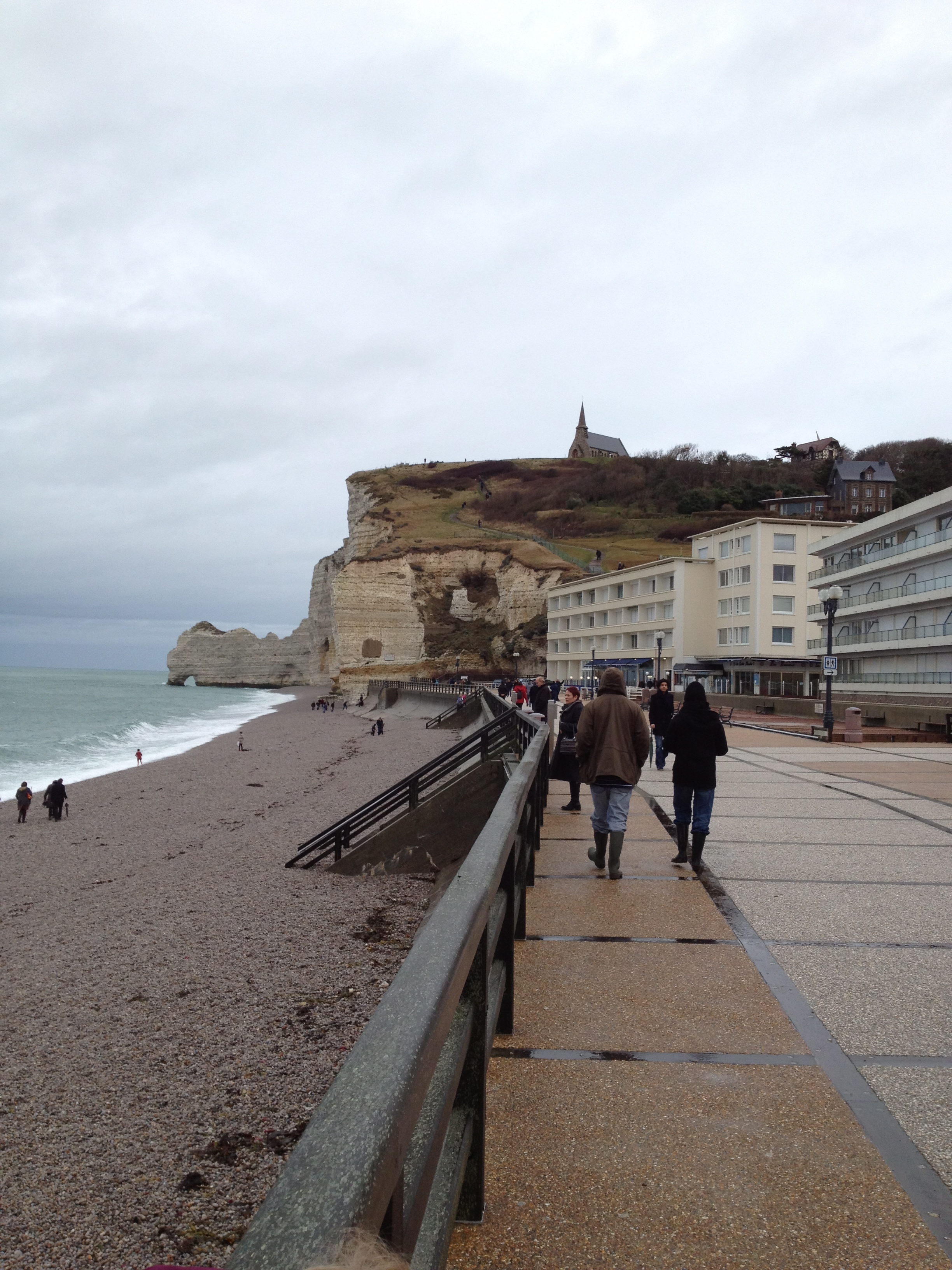
Etretat, Normandy

Etretat, beach and the Porte d’Amont, by Claude Monet.

It took us about 30 minutes to climb to the top. There are tables overlooking the town on the way up which would make a lovely picnic spot in warmer weather. On the clifftops, cows were grazing. There is a small church. There are no fences: hold on to your children.

Falaise, Etretat, NormandyEtretat, Normandy

A few minutes along from the church there is a path that goes a little way down towards the sea from which you can look northwards. The views of the cliffs are timeless. You feel that you have been here before, that you’ve walked into a painting. Etretat, Normandy

The town itself is attractive, with typical Norman architecture, and restaurants and boutiques (all closed, of course, on New Years Day).
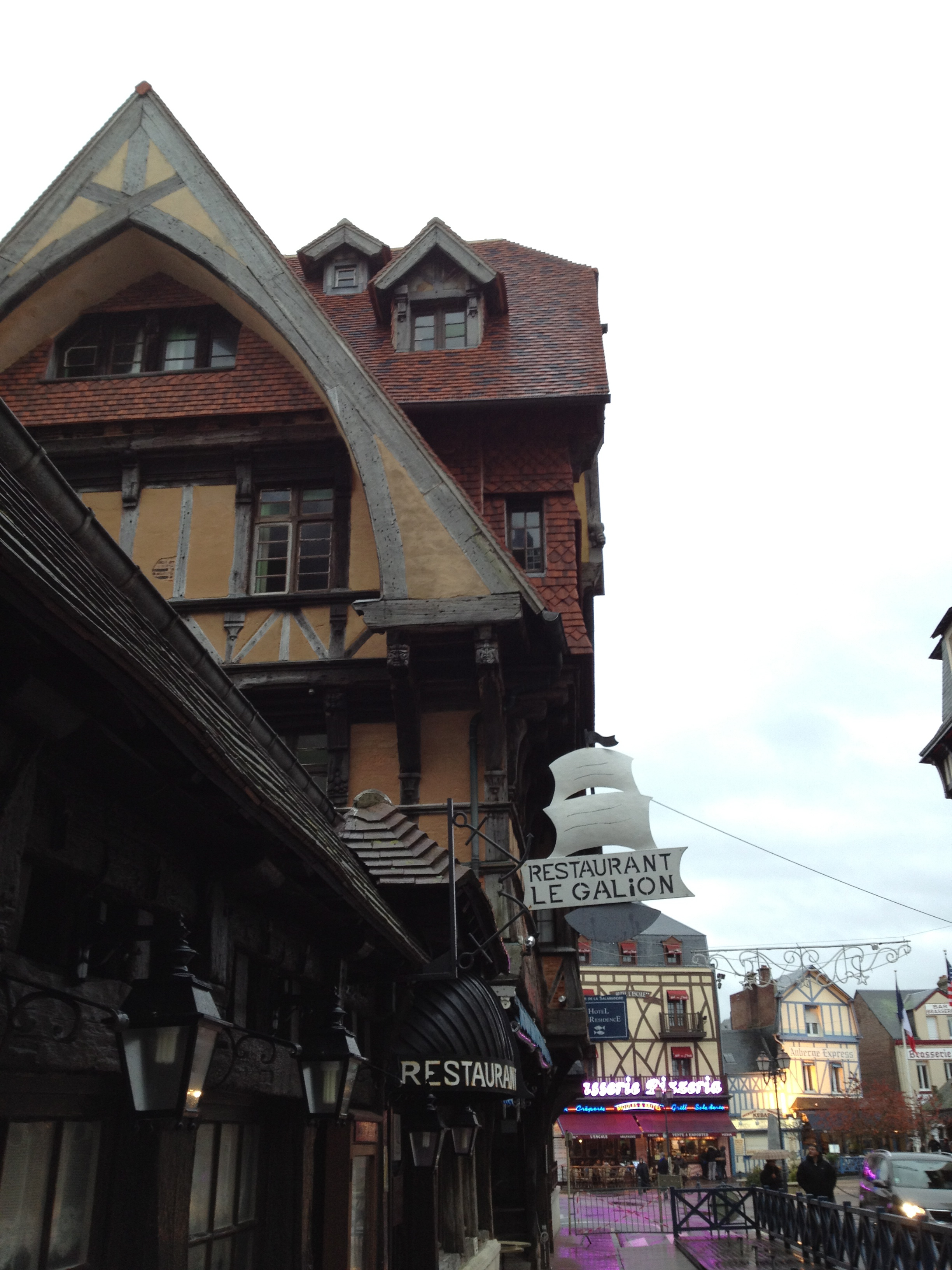
Restaurant, Etretat, NormandyEtretat, Normandy

There is a small casino, a restored covered market in the main square, and a war memorial.
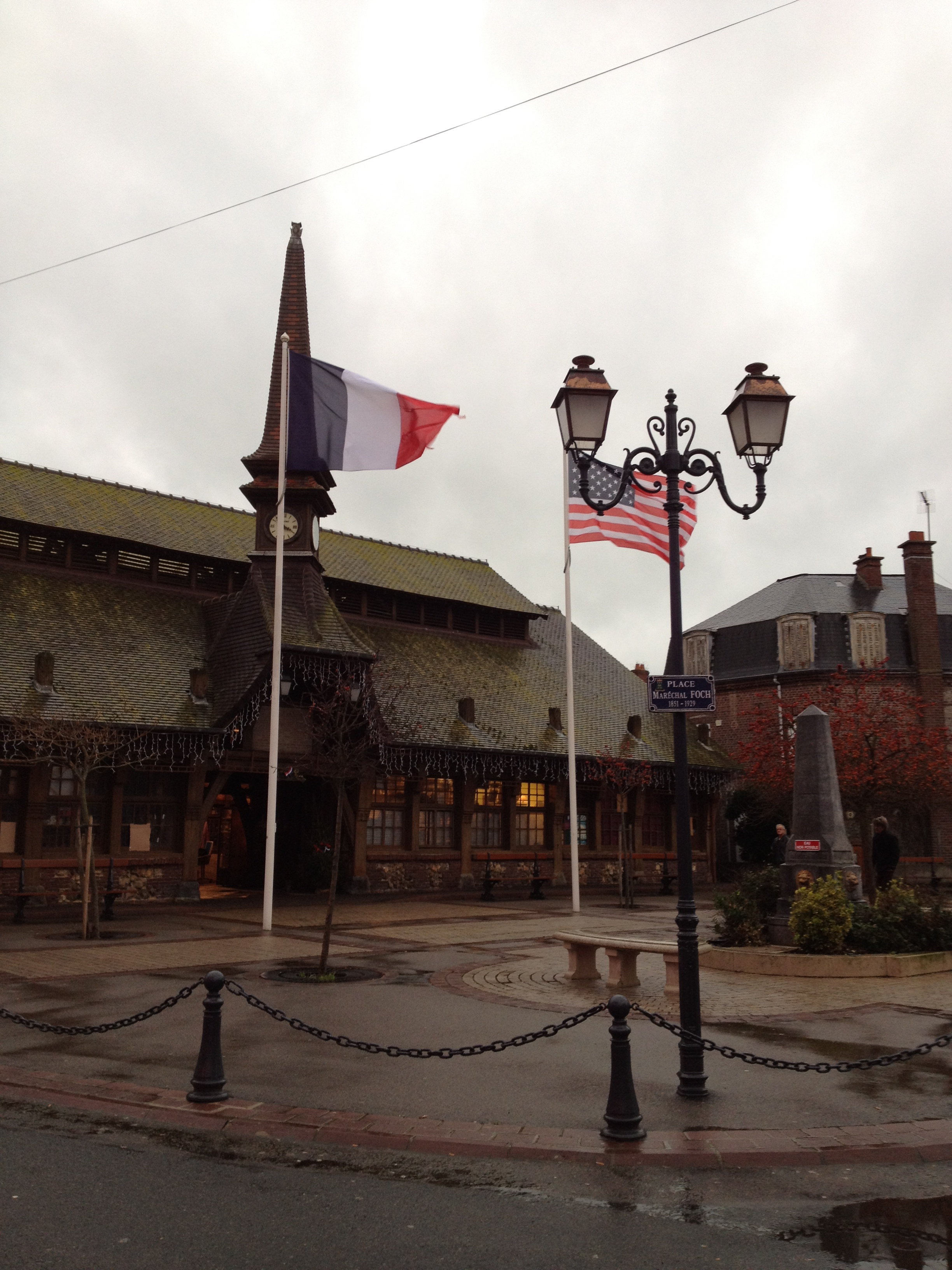
Flags and Market Hall, Etretat, NormandyLamp post, Etretat beach front, Normandy

But the action is centered on the seafront. The paved boardwalk has these shapely lampposts all along it. Or you can go right down onto the pebble beach, like the children did, and play in and out of the vigorous waves.

And should you find yourself here on New Years Day, bring your bikini/trunks. Because the only way to start the new year in Étretat on New Years Day is with ‘le grand frisson’ – the big chill. Baptize yourself in the frosty Atlantic waters and you start the year with a clear head and the confidence that you’ve kept at least one resolution. Then top it off by sharing a glass of champagne on the beach.

Normandie : Le grand frisson du nouvel an | Paris Normandie.

For more information about Étretat and other things to do in Normandy, visit Normandy in the Press.
Share this:

  • Share on X (Opens in new window) X
  • Share on Facebook (Opens in new window) Facebook
  • Share on Pinterest (Opens in new window) Pinterest
  • Email a link to a friend (Opens in new window) Email
Like Loading...

A Winter Market in France

09 Monday Jan 2012

Posted by chaumierelesiris in Food, France, Normandy, Things to do

≈ 13 Comments

Tags

coquilles Saint-Jacques, Food, France, holly, Market, mistletoe, Normandy, oysters, wild mushrooms

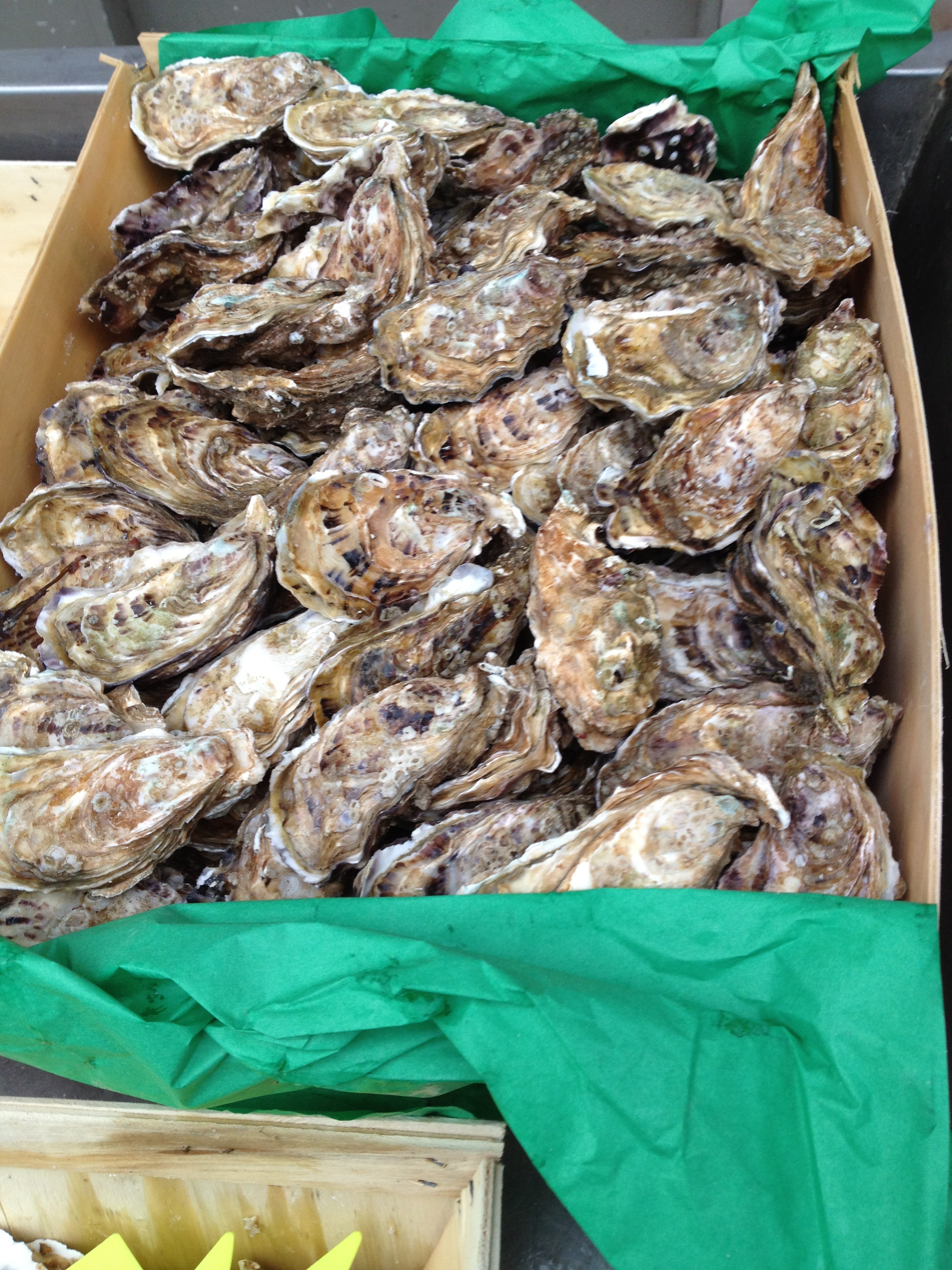
What comes to a local market in the dead of winter? Very little, you would think – the fields are empty, the trees are bare, there’s nothing but rain and a dull grey sky. You’d be surprised. Here are some of the delights we found at our Norman market at the end of December.

Boxes and boxes of the freshest oysters, only a squirt of lemon needed.

Mistletoe, France

Holly and mistletoe grow everywhere in Normandy. Look up any old tree in the winter and what looks like a messy kind of birds nest is probably mistletoe. And there is a whole forest of holly, la Forêt d’Eu, in the Seine-Maritime. But if you don’t have time to collect your own, you can buy some at market.

Guinea fowl, France

I think these are guinea fowl but please tell me if I’m wrong. There were plenty of geese and roosters too. No one looked squeamish about buying fowl with the head and feet still on. Even in the supermarket, the packaged free range chickens have more feathers and blood left on than their sterile UK counterparts.

coquille st jacques

The pretty coquilles Saint-Jacques are a Normandy specialty which have been awarded the prestigious “label rouge” in recognition of their quality. (Does everything in France have a label?) Here is a video about the fishermen who catch them, and a recipe which, like all the best Norman recipes, is packed with wild (if you can get them) mushrooms and crème fraîche.

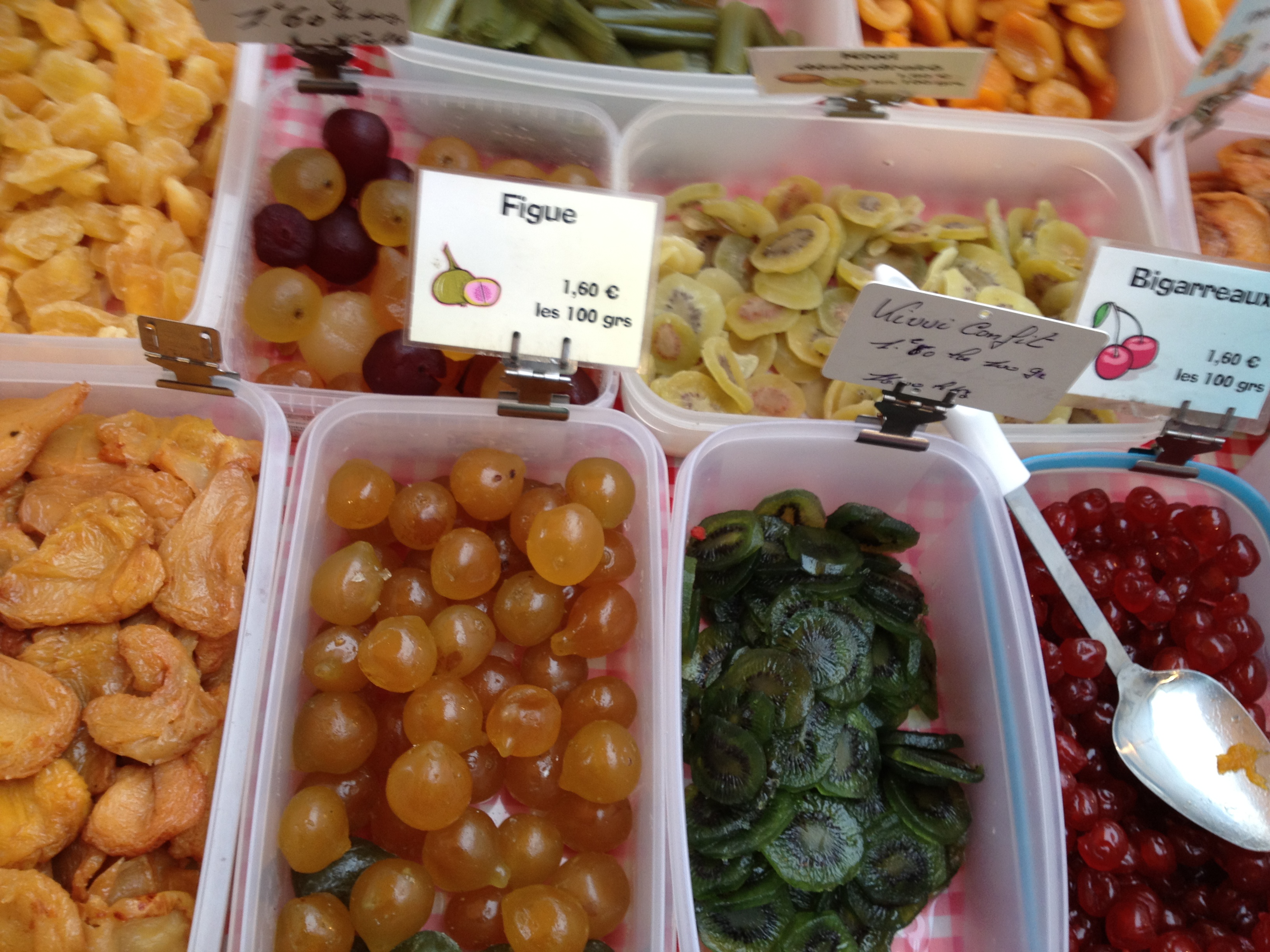
Candied fruit, FranceCandied fruit

The candied fruit sparkled like cheap jewelry under the fluorescent lights of the market stalls. It seemed that every imaginable fruit – and even vegetable – had been candied. Pears, mango, carrots, tomatoes, kiwi, pineapple, peaches, cherries, lemons, clementines, figs and more. No gallon tins of chocolates needed here to keep spirits up in the dead of winter.

Flowers, French market

And then a hint of the season to follow. All these bright bulbs poking out of the soil, promising even better come springtime.

Share this:

  • Share on X (Opens in new window) X
  • Share on Facebook (Opens in new window) Facebook
  • Share on Pinterest (Opens in new window) Pinterest
  • Email a link to a friend (Opens in new window) Email
Like Loading...

Britpop Revisited, and a French Connection

12 Monday Dec 2011

Posted by chaumierelesiris in Culture, Food, France

≈ 2 Comments

Tags

Blur, Britpop, cheese, France, Le Touquet, London, Music, Walking

Last week I wrote about taking an autumn walk in Normandy, and shortly afterwards I came across this column on walking. Writing in the Telegraph, former Blur bassist Alex James ponders the pleasures of walking–seemingly a whimsical luxury in our zippy 21st century lives. He puts it rather well:

There is no better way of seeing the world, or yourself, than walking. Nothing really ever happened then and nothing really happens now. Once we saw a stoat. Sometimes there is a dead thing. Walking is a feeling more than what happens.

I seem to have been walking a serendipitous path myself this week. No sooner had I read that article, than I found myself at a launch party in East London curated by none other than Alex James.

The evening was filled with excellent music and cheese, James having re-invented himself as a gentleman farmer and cheese-maker. One of his cheeses is marvellously named after New Order’s Blue Monday, and his book about this unusual career transition, All Cheeses Great and Small, comes out next year.

There is a French connection here and we’ll get to it in a moment.

With Alex James popping up all over the place, I pondered how little I know about Britpop. I was away from the UK at university and working in New York during the early Britpop years. Social Distortion, Liz Phair, Pavement and Nirvana were the alt rockers du jour. Had I missed one of the most important cultural moments of my youth?

A colleague, who has always struck me as more PPE than pop, surprised me with his enthusiastic recommendation of James’s account of the Britpop years, Bit of a Blur.

So I picked up Bit of a Blur, and discovered that James is quite a fan of France. He studied French at Goldsmiths (where he was a student alongside his mate, artist Damien Hirst). Years later, in an effort to sober up and find some focus, he learned to fly, and developed a fondness for  Le Touquet, which I’ve written about here. He regularly flew himself from Elstree to Le Touquet, which took about 40 minutes in his Beechcraft Bonanza. Here he explains what he likes about Le Touquet.

Coasting in at France, Le Touquet, Paris Plage, is the second town on the right. In days gone by it was the exclusive playground of the rich and famous. More recently they huddle together at the southern end of France on its grisly private beaches and within its gated communities. It’s all the same people you see in New York and London down there. Northern France, and particularly Le Touquet, are a well-kept secret. The expansive beaches are deserted and the whole place has a natural glamour…..There are chocolate shops, a casino, and silly things to rent and do. There are restaurants galore and hotels from the grand to the grounded.  After a while, I began to like the cheap hotels. They have the most character. Luxury looks the same in Le Touquet as it does in Leeds. You lose all sense of luxury if you never step outside of it. We all need a bit of rough with our smooth.

I couldn’t agree more with his assessment of the south, and of the relative charms of Northern France.

Now here’s what I’ve been wondering. What are the French pop music movements I have missed? I remember listening a lot to Air’s Moon Safari in the late ’90s. Has France had its own version of Britpop?

Share this:

  • Share on X (Opens in new window) X
  • Share on Facebook (Opens in new window) Facebook
  • Share on Pinterest (Opens in new window) Pinterest
  • Email a link to a friend (Opens in new window) Email
Like Loading...

Five reasons to buy in France

29 Tuesday Nov 2011

Posted by chaumierelesiris in France, Property in France

≈ 5 Comments

Tags

Buying a house in France, Notaire, Property

Everyone gave us reasons not to buy a house in France. The impenetrable legal system. Totalitarian mayors. Unthinkable plumbing and sewage systems. The Euro! (This last, in retrospect, was probably the best reason). Everyone we knew seemed to have a friend who had had terrible trouble with a property transaction in France. Practical strangers volunteered their (mostly negative) opinions. We had bought and sold homes in London, never in France. London had not been easy. We expected the worst.

In the event, the transaction couldn’t have gone more smoothly. (I have written elsewhere about the bits that were difficult – finding the right house in the first place, and dealing with the French bank.) There are many places where you can read about the legal process of buying a house in France, including FrenchEntrée, Angloinfo and French Connections. Here are some of the books we found helpful:

These are the five top things we most enjoyed about the transaction.

  1. No gazumping! Rather wonderfully, the written purchase offer, the offre d’achat, prevents the seller from showing the house or considering any other offers after yours has been accepted. Having been gazumped (outbid after our offer was accepted) a few times in London, this started things out on a positive footing, for once.
  2. No surveyor! Surveyors feature prominently in London property exchanges, though it remains unclear to me what value they add. The sale price never seems to change, no matter what horrors the surveyor finds in the house you are buying. And there is always something that is not discovered by the surveyor – the boiler, inevitably, breaks down beyond repair the week after you move in. In France, our seller had kept excellent records of all works done on the cottage. He was a retired builder from Paris’s 16th arrondissement, and he had looked after the cottage carefully. Moreover, the French legal system requires the seller to secure independent reports on heating, electrics, asbestos and much more. Those reports were more thorough than anything we had paid a surveyor for in London.
  3. No lawyers! In UK property transactions, every step you take, every move you make is a legal one. The lawyers wrangle over which surveys can be done and which appliances are included in the sale and what will be done on which date. In France, property exchanges are overseen by the notaire, a public official who conducts searches, prepares documents, and collects the taxes. The same notaire acts for both parties. The process is heavily regulated and requires extensive disclosures from the seller, meaning we didn’t need a lawyer to secure the right documentation or set an appropriate timeline.
  4. Meet the notaire! In the UK, completion is purely a legal act, done by fax and email. It is quite possible that you might never meet the seller in the flesh. (They are running away before you discover all those faults the surveyor didn’t spot). In France, the Acte de Vente is an event. The buyer and the seller meet at the notaire’s office. Our notaire was based in a low-slung, modern building near the centre of a market town. The entrance had the feel of a GP’s office, but inside the corridors and offices were lined with traditional glass-fronted mahogany book cases that were stuffed from floor to ceiling with fat, ancient legal texts. The notaire was youngish, very tall, and utterly professional. During the previous weeks he had proven particularly effective at convincing French bank clerks to do their jobs in a timely manner. Intriguingly, there was no sign of a computer in his office. The huge desk which stretched diagonally across the room, leaving the rest of us an odd triangular space in which to arrange ourselves, was entirely covered with untidy stacks of case files. The meeting lasted about an hour. The notaire went through the paperwork section by section, checking that all was in order. Finally we all signed each page of the contract, and by the end my hand ached. And then we all shook hands with each other several times, and the notaire hurried us out and went off to greet his next appointment.
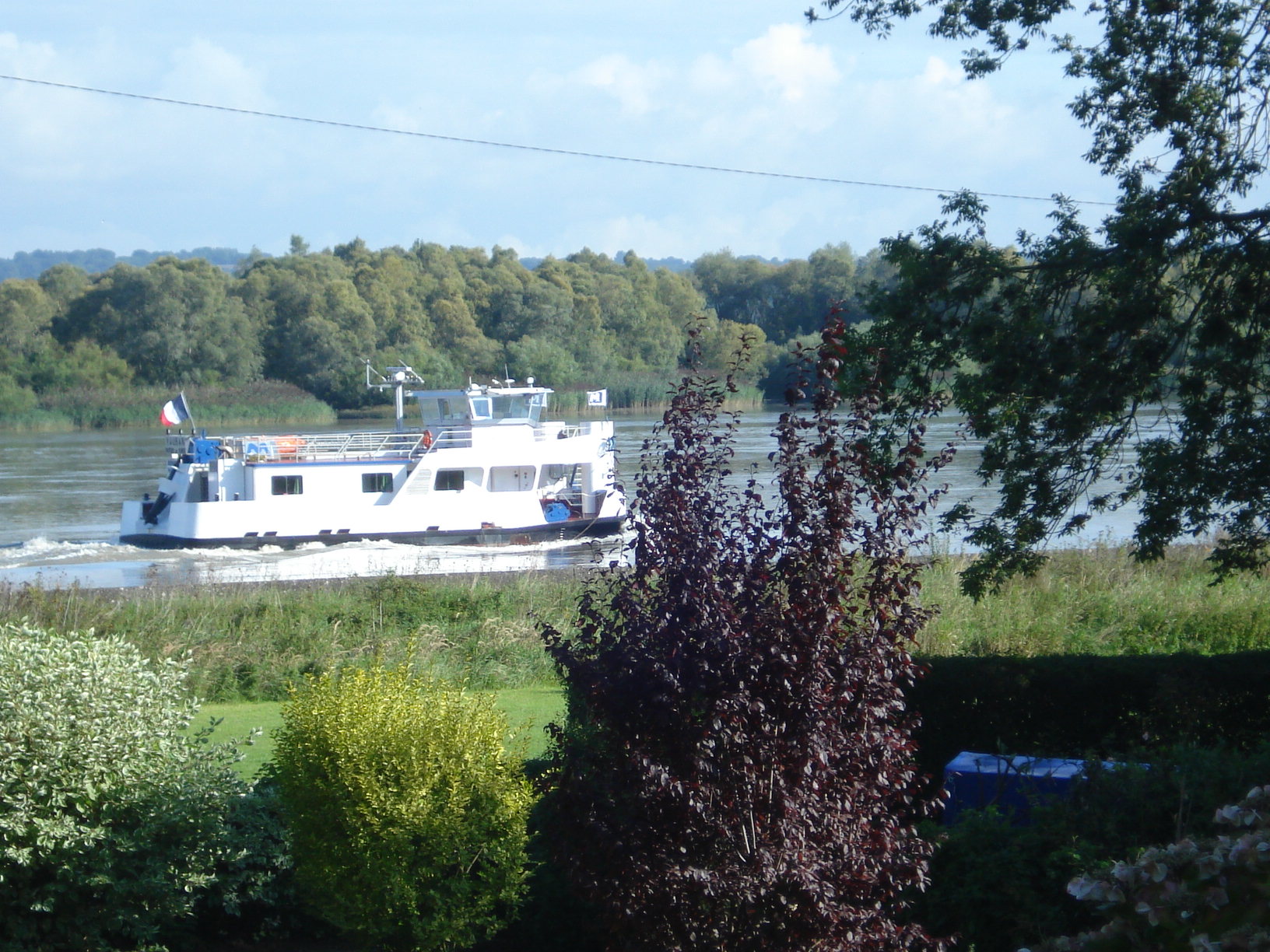
  5. Welcome home! Like sellers in London, estate agents tend to disappear from the scene once the exchange is done. In France, our estate agent – mid fifties, easy-going and athletic, always up for a drink and chat and never even a bit pushy – had made other arrangements. We would all, he announced, go back to the cottage after the completion. And so we did – the estate agent, the seller, as well as the seller’s daughter and granddaughter, a couple from down the street, and the children from next door. We drank champagne which the estate agent had arranged with the seller to chill at the cottage in advance. Boat on Seine, NormandyThere were candies and cakes for our children. Our seller, glass in hand, took us around the house again – showing us every light fixture, where the pipes were situated, how the electrics worked, hidden cupboards he had designed, and we could see how much he loved the cottage and how sad he was to leave. We knew he would be returning to the area for medical check-ups, and we invited him to visit when he did, and knew that he would. And then everyone left, and we walked down to the end of our garden and finished the champagne, watching the boats go past on the Seine.

Share this:

  • Share on X (Opens in new window) X
  • Share on Facebook (Opens in new window) Facebook
  • Share on Pinterest (Opens in new window) Pinterest
  • Email a link to a friend (Opens in new window) Email
Like Loading...

Off-Season Honfleur

19 Saturday Nov 2011

Posted by chaumierelesiris in France, Normandy, Things to do, Travel

≈ 7 Comments

Tags

Art, Carousel, Honfleur, Normandy, Quebec, restaurant, Travel

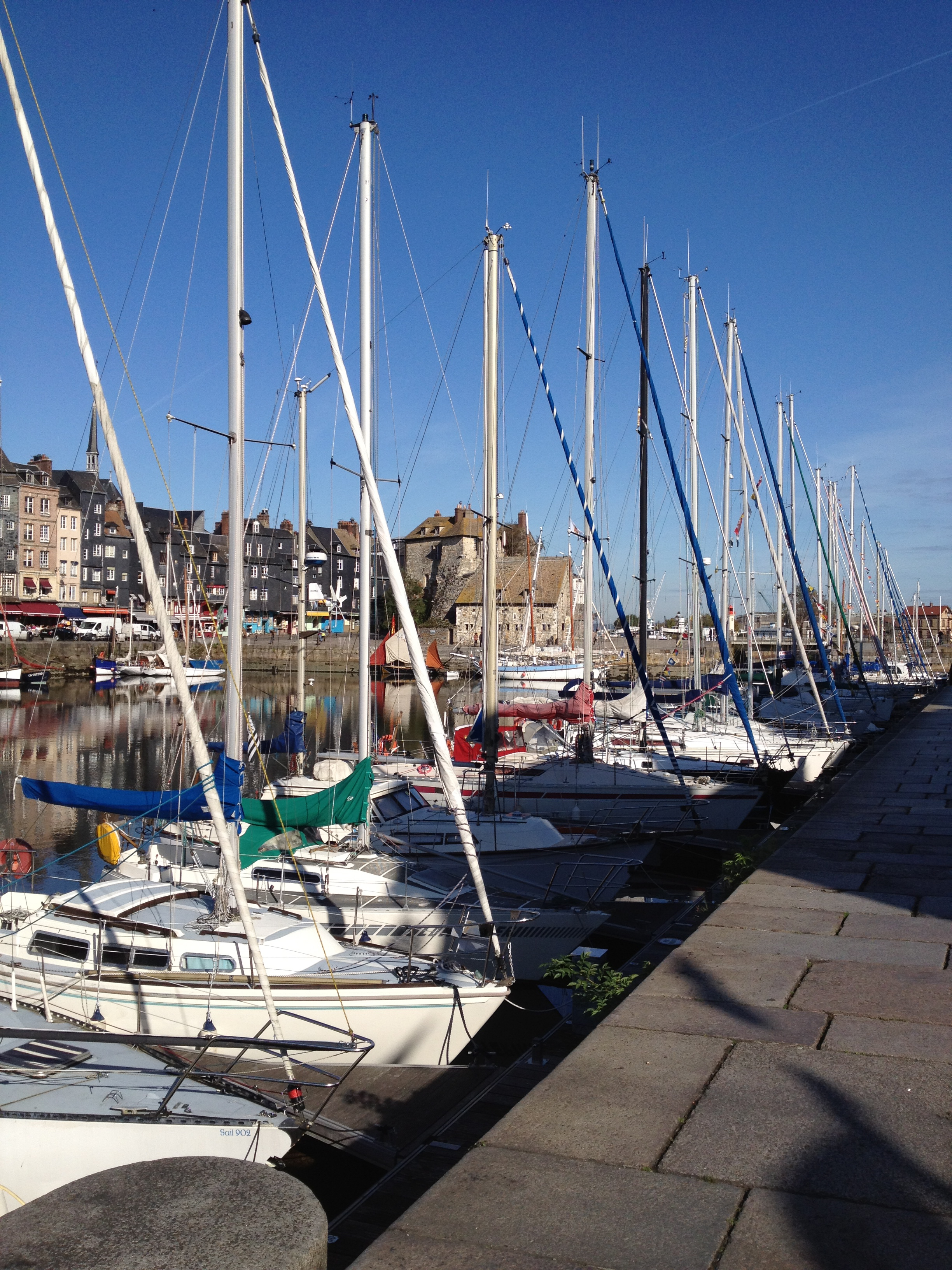
A few miles west along the Seine from our chaumiere is Honfleur, one of Normandy’s most picturesque fishing villages. Honfleur has long been important to Normandy, as a safe harbour during the Hundred Years’ War, then as a centre of maritime trade. French explorer and diplomat Samuel de Champlain, the founder of Quebec City, left for Canada from Honfleur in 1608.

HonfleurHonfleur

Today Honfleur attracts many tourists in the summer months. We have visited only in spring and fall, when it buzzes gently with weekending couples, and there’s enough watery sun shining for the restauranteurs around the rectangular harbour to keep a few tables outside.

Honfleur

This restaurant, right on the harbour, looks perfect for colder days: they provide a blanket on each chair to pull around your shoulders. We had a wonderful meal at the tiny Bistro des Artistes, which is on an upper floor of one of those tall buildings by the harbour. The menu is short but all freshly made. You access the restaurant from the street behind, and get a table by the window for a fabulous and unobstructed view out over the harbour.

Honfleur carousel

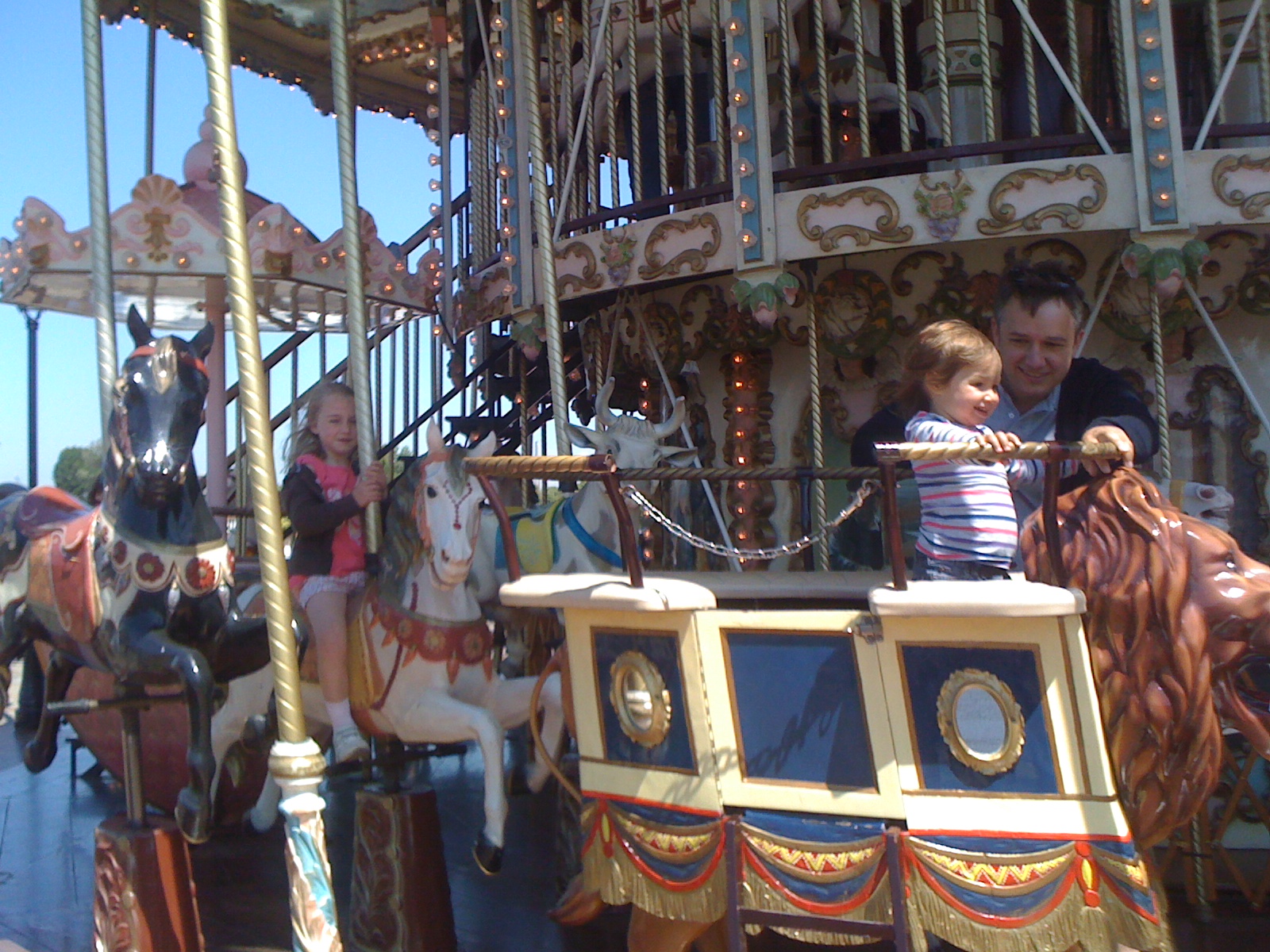
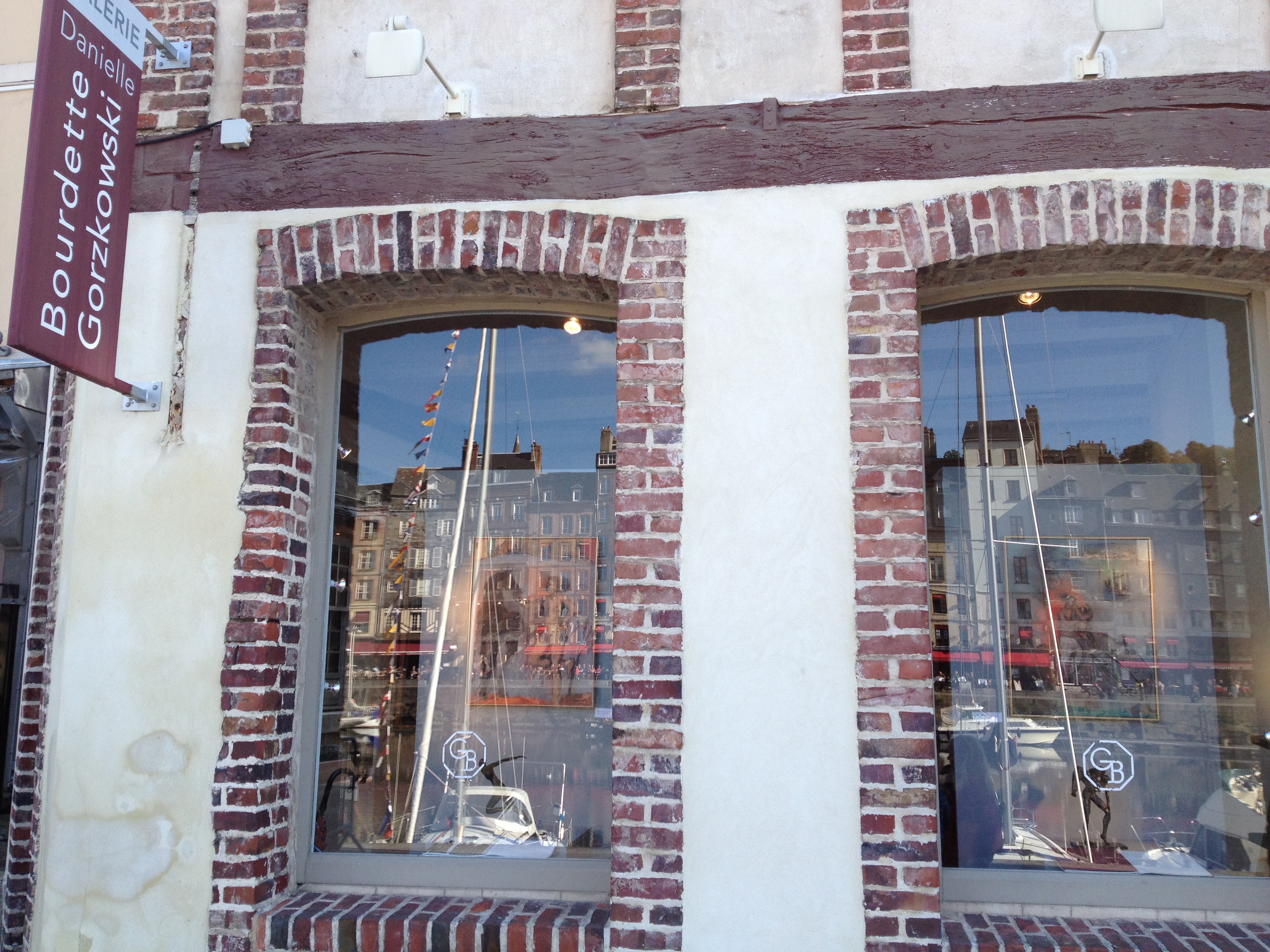
Honfleur is a lovely place to wander through. In the spring and summer there is an old-fashioned carousel by the harbour. (We are becoming aficionados of carousels in Normandy: there is another in Le Touquet which I have written about here.) There are many interesting shops to explore – gourmet food; incredible chocolate shops with elaborate seasonal creations in their windows; and a host of art galleries.

Honfleur galleryHonfleur gallery

We haven’t needed to stay overnight in Honfleur, but at this B&B, the proprietors were very kind when we needed to find a toilet for a toddler, quickly. It is set off the street around a charming courtyard, filled with flowers.

Honfleur shopLa Cour Sainte Catherine

There are many museums and historical sites in Honfleur. We haven’t visited most of them yet: we have been having too much fun eating and walking around. There are markers in the harbour recording the departure of Samuel de Champlain’s fleet. Quite striking and worth a look is the Eglise Sainte Catherine which, unusually for a large ecclesiastical building, is made entirely of wood. It was built by shipwrights in the 15th century, and the interior does have a nautical feel.

Samuel de ChamplainLavoir

We were fascinated by this public lavoir or wash house, fed by natural streams, up on the hill behind the harbour. It was closed on the day we visited, but is apparently still in use for much of the year.

Update: Here is a useful guide to Honfleur from The Telegraph: Honfleur, France: a cultural guide, 15 November 2011

Share this:

  • Share on X (Opens in new window) X
  • Share on Facebook (Opens in new window) Facebook
  • Share on Pinterest (Opens in new window) Pinterest
  • Email a link to a friend (Opens in new window) Email
Like Loading...

Market Day in Pont-Audemer

30 Sunday Oct 2011

Posted by chaumierelesiris in Food, France, Normandy, Travel

≈ 4 Comments

Tags

autumn, Food, France, Hermes, Market, Pont-Audemer, Travel, wild mushrooms

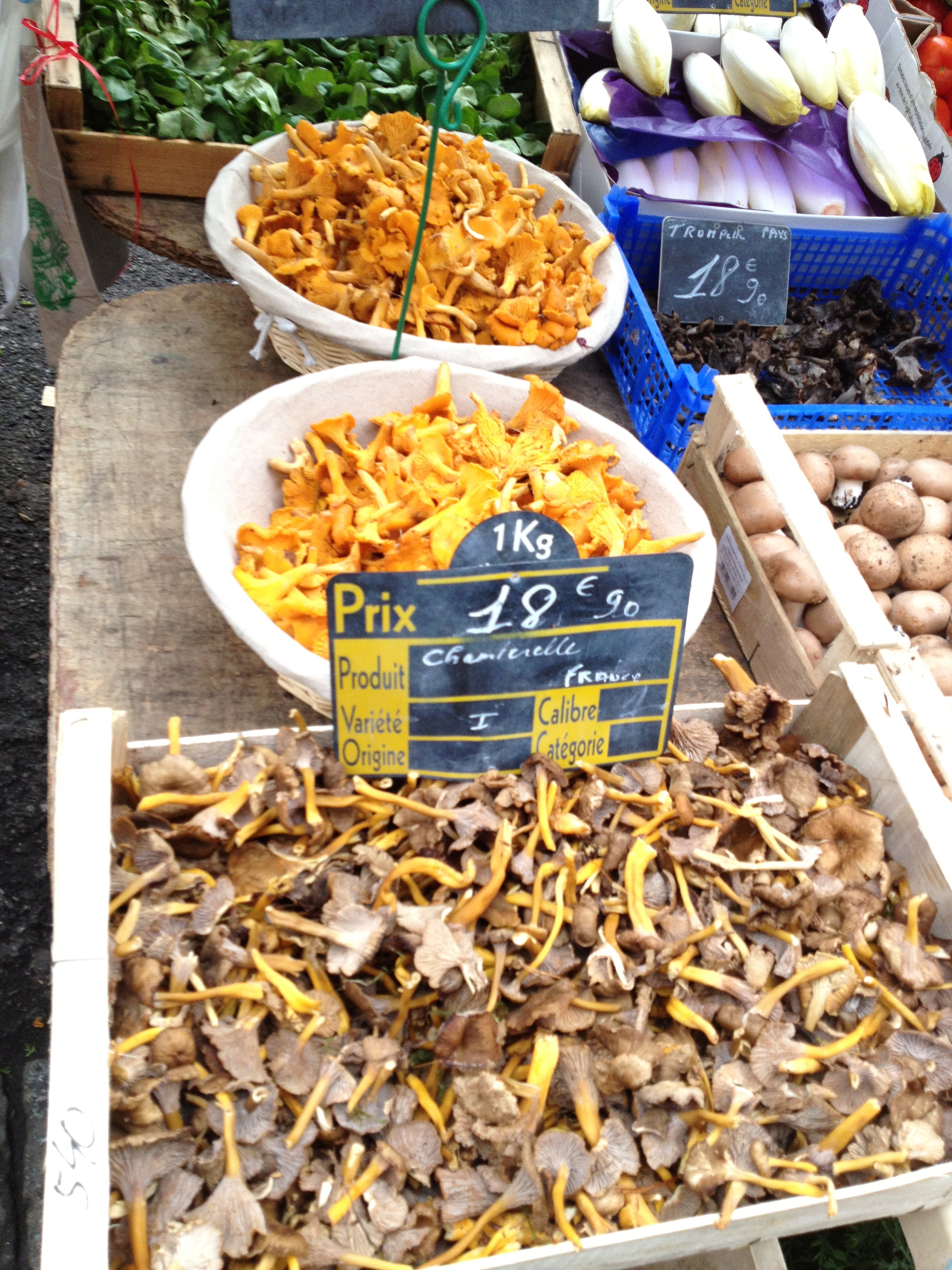
Is there any better shopping experience than a Norman market in October? The apples and pears are ripe; the wild mushrooms have been collected; the ducks are plump; la chasse is in full swing, and the seafood from the Atlantic coast is bountiful.

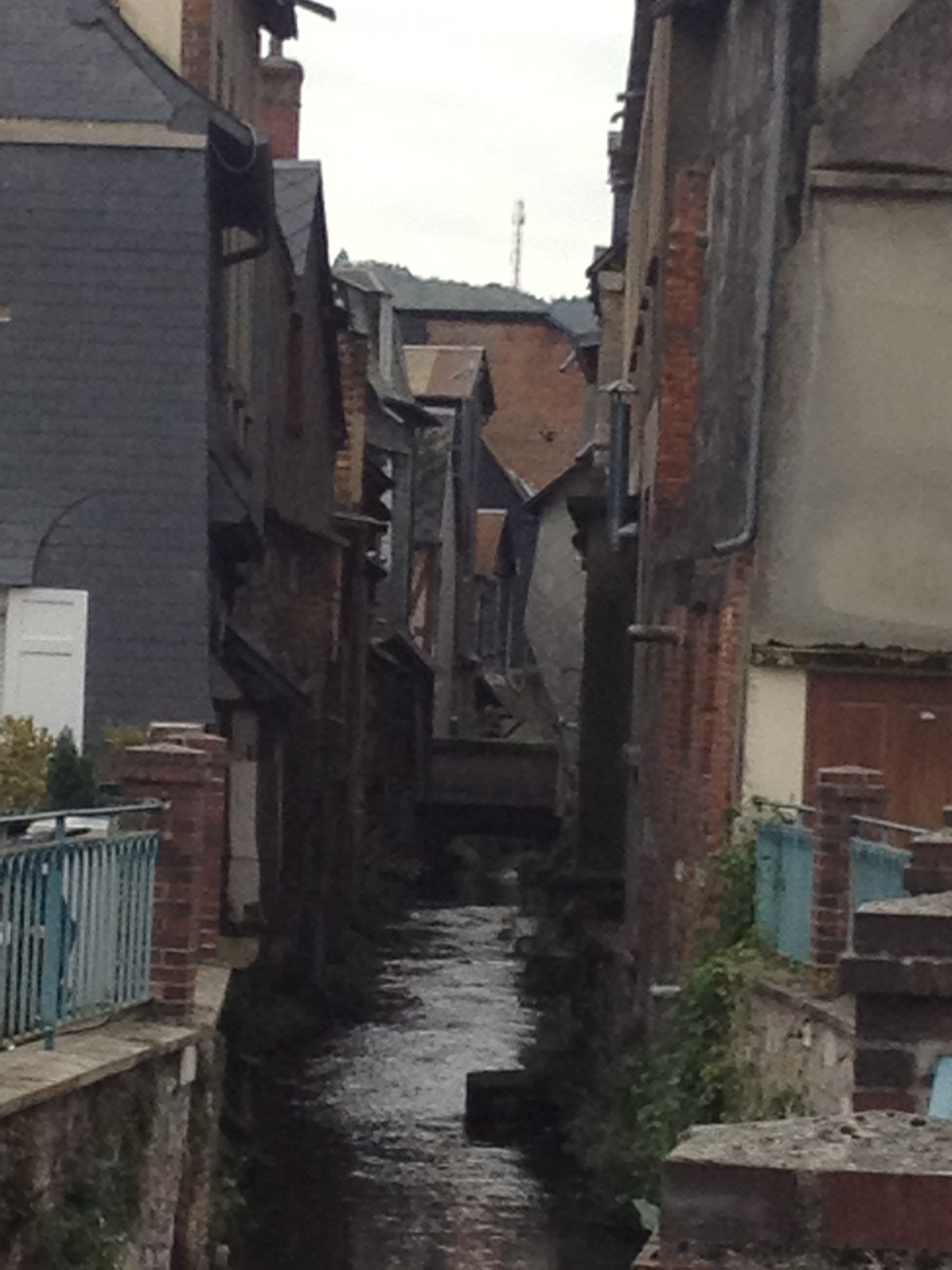
Our local market is in Pont-Audemer, a country commercial centre that, while charming, doesn’t have the tourist appeal of its neighbours Honfleur and Deauville. Some have called Pont-Audemer the Venice of Normandy, for its canal system that once served its famous tanning trade (the Hermès family hailed from here). I think the comparison’s a stretch. No palazzos in sight: but plenty of half-timbered Norman houses, narrow cobbled streets, a gothic church noted for its stained glass, and a bustling, bountiful market on Mondays and Fridays.

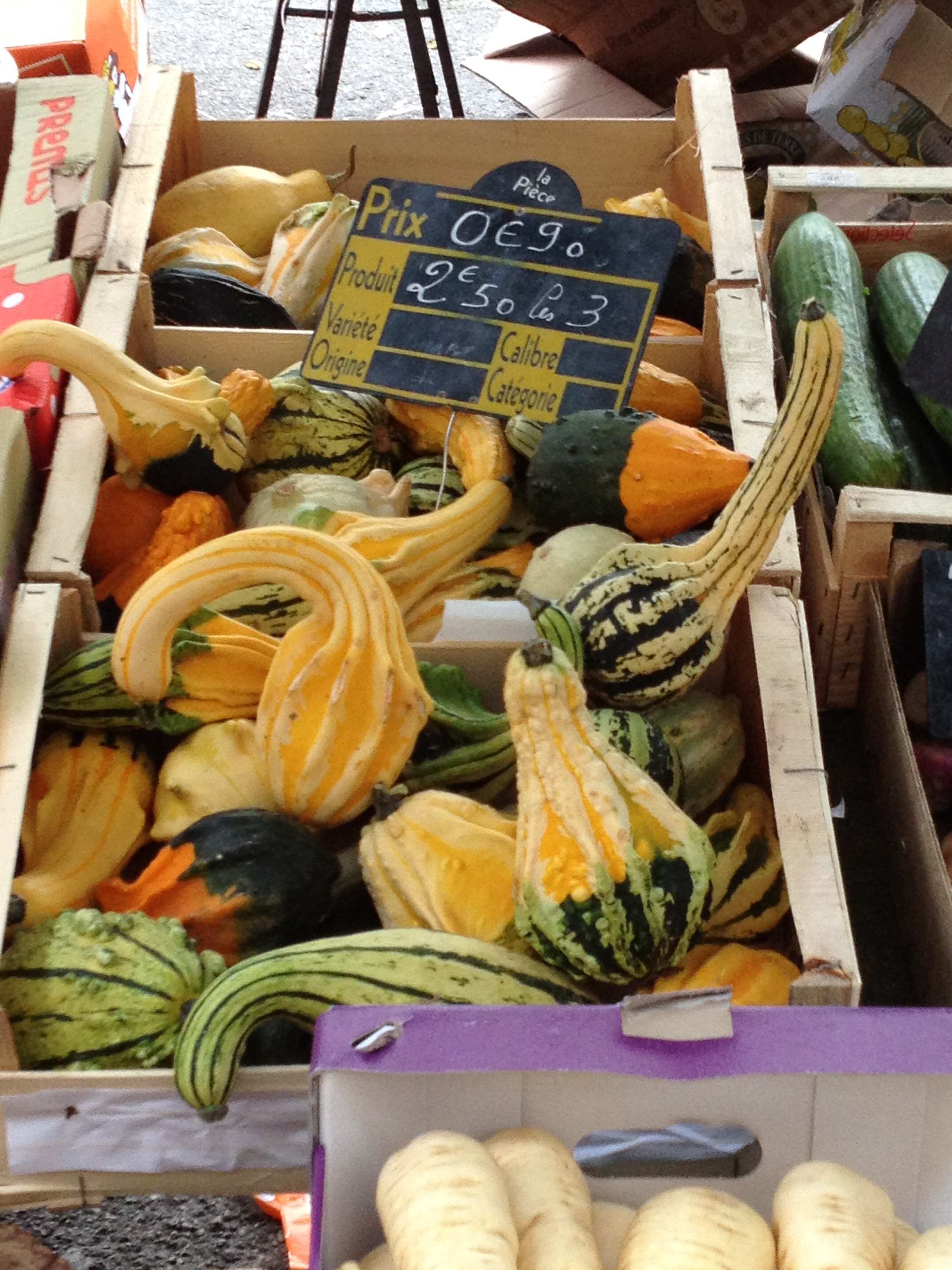
We love these unusually shaped squashes that you can find in Norman markets. They decorate our table from October until the Christmas decorations come out in December.

I wish I had taken a picture of the neatly stuffed ducks lined up and glistening in their rows. There were all shapes and sizes of box balls, smartly manicured in their pots. A hundred varieties of goats cheese – some brand new and dewily mild, others aged and pungent.

And, should you have a rush chair that needs to be fixed, there is man here who will do that for you. Wonderful.

Share this:

  • Share on X (Opens in new window) X
  • Share on Facebook (Opens in new window) Facebook
  • Share on Pinterest (Opens in new window) Pinterest
  • Email a link to a friend (Opens in new window) Email
Like Loading...

A Celebration of the Stinging Nettle

15 Saturday Oct 2011

Posted by chaumierelesiris in Food, France, Normandy, Things to do

≈ 3 Comments

Tags

Food, France, Normandy, Recipes, Stinging Nettles

In La Haye-de-Routot, in Upper Normandy, is a collection of heritage museums exploring aspects of Norman and French culture: traditional bread making (which I have written about here), the history of clogs, the linen house, and La Chaumière aux orties, a celebration of all things nettle. That’s right: l’ortie piquante, the common and much hated stinging nettle.

I

I am a city girl, and nettles, like cow dung, are annoyances, to be got past quickly, ideally gotten rid of. I only remember one sort of nettle celebration in my childhood.  At the boys’ boarding school my brother attended in the South Downs in the late 1970s, there was a field of nettles, thigh-high. The small boys would run through the nettles, their bare, white legs sticking out under grey flannel shorts. It was a badge of honour, to show no pain.

In fact, the nettle has long been celebrated for its many good qualities: as a medicinal herb, a nutritious food, and as fibrous material used in canvas and rope. The nettle is rich in vitamins, iron and protein. It is known for its re-vitalizing qualities and is used both as a tea plant and as a vegetable.

On some Sundays at La Chaumière aux orties there are cooking demonstrations. We were lucky enough to visit on a damp August afternoon. Shivering in our thin summer clothes, we were delighted to find a huge open hearth, a pot bubbling away, and a delicious smelling spread of food on a table: beignets, crumbles, cups of warm soup, a pie.

A chef was giving a demonstration of open hearth cooking and handing out recipes. She invited us to taste. Of course we accepted. It was only as the food was going into our mouths – including the mouths of our young daughters – that I noticed the basket of nettles on the hearth, and the pictures of nettles on the wall. I asked my husband what an ortie was. Too late.

And just as well, because the recipes were delicious. The soup, the beignets, the crumble and the pie: all wonderful, and not a hint of sting. Even our daughters went back for more.

I took copies of the recipes with the best intentions. But I’m having a hard time reconciling the hated nettle with that delicious food. Maybe soon I’ll get over it, put on my gloves, and go nettle collecting. There’s a forest of nettles along the side of the path at the end of our garden, just waiting for me.

Share this:

  • Share on X (Opens in new window) X
  • Share on Facebook (Opens in new window) Facebook
  • Share on Pinterest (Opens in new window) Pinterest
  • Email a link to a friend (Opens in new window) Email
Like Loading...

Our Daily Bread

08 Saturday Oct 2011

Posted by chaumierelesiris in Culture, Food, France, Normandy, Things to do

≈ 2 Comments

Tags

boulanger, bread, brioche, Food, France, la four a pain, Normandy, St Fiacre, Travel

Bread is given three definitions in the Merriam-Webster Dictionary:

  1. a usually baked and leavened food made of a mixture whose basic constituent is flour or meal
  2. livelihood <earns his bread as a laborer>
  3. food, sustenance <our daily bread>

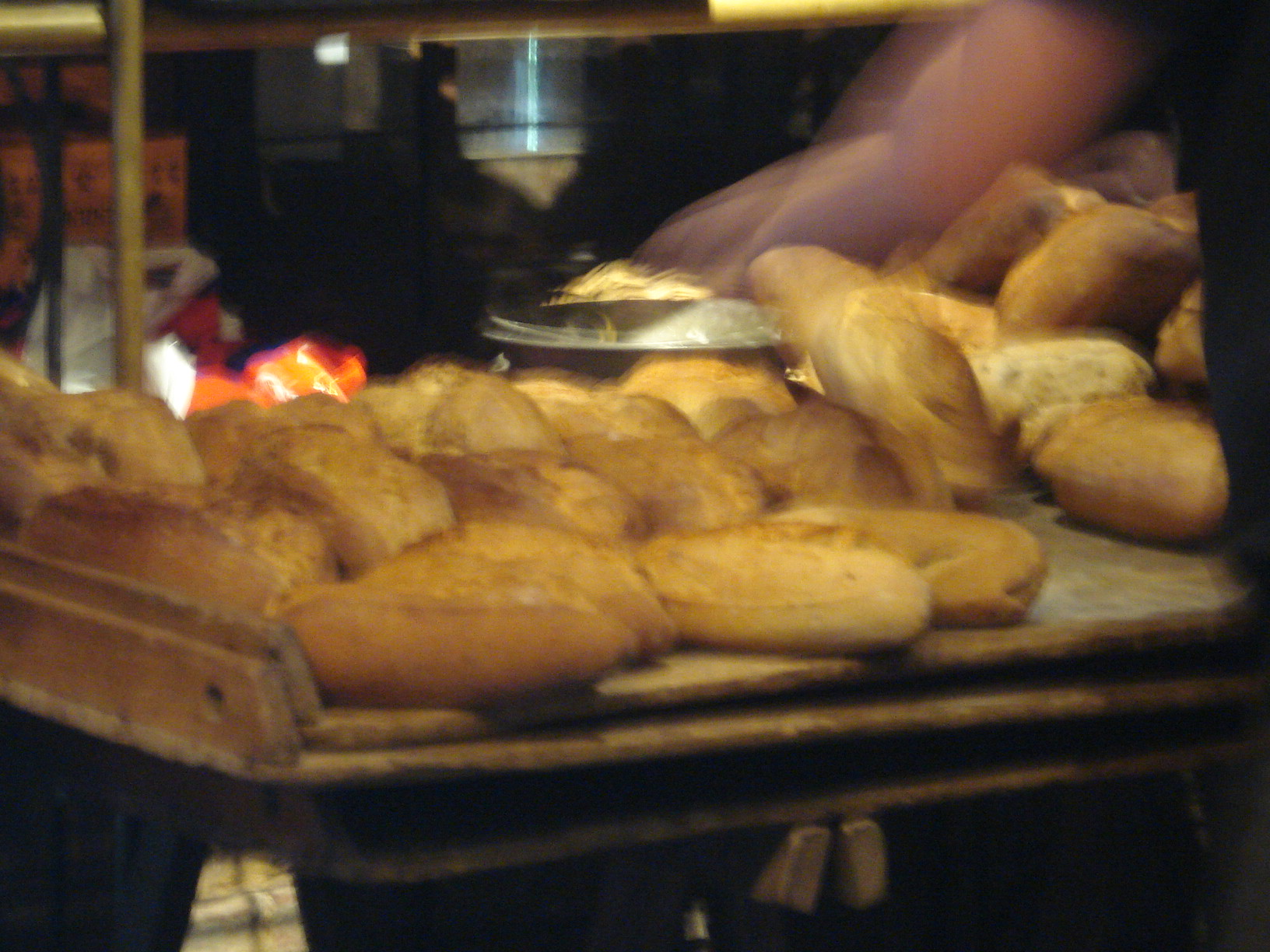
It is in search of bread under its first definition, a baked food made from flour, that we go as soon as we set foot on French soil. A truism, still true: bread never tastes quite like it does in France. For baguettes and croissants, an early morning run up the hill to our local artisanal bakery, Le Fournil de la Roselière in Sainte Opportune La Mare,  does the trick. Although it stands alone in a quiet village, I’ve never seen it empty. Cars and trucks are constantly pulling in and owners whisking out with their daily bread in hand.

In a nearby village, La-Haye-de-Routot, is Normandy’s Bread Oven Museum. Every Sunday afternoon during the year, and every day in the summer, there are bread-making demonstrations.

The bread oven cottage is small and dark, and the bread oven is enormous, filling half of the cottage. It’s the kind of oven Grimm’s witch might have tried to push Hansel and Gretel into. Our children are sceptical, and they keep their distance. The boulanger is large and muscular and has a booming kind of voice. He starts us from the beginning, showing how he heats the oven and removes the coal and ash. It’s hard and hot work, requiring patience.

While he works Monsieur le Boulanger keeps up a comic patter with the audience, telling jokes about the clueless Parisians who take his bread-making courses. He only bakes in the traditional way, he tells us. Baking and keeping alive the art of traditional bread making is quite literally his livelihood.

He shows us how he shapes and decorates the bread, using a special tool for the detail. A pinch here, a prod there, a few seconds of extra work and people will pay three times more for a loaf, he chuckles.

While the bread is baking we go for a walk and return to the smell the baking bread. Now the children are keen, gathering close to the boulanger. Each has a go at helping to remove the bread. The paddle is carefully inserted under a few loaves and then the bread is pulled out with a fast, powerful tug.

Afterwards the fresh bread is sold. We leave with the warm loaves nestled in their white bags, ready for the evening meal.

With most meals in France we eat bread, freshly made and often hot: daily sustenance. One Saturday evening there is a mass in the village chapel, to honour the feast day of the village’s patron saint, St Fiacre. He probably started off as Fiachra, an Irishman, who travelled to France and built a hospice for travelers. Legend has it that St Fiacre furrowed a great garden with his staff. He is the patron saint of gardeners and taxi drivers. This seems fitting for our village with its beautiful cottage gardens, and I like the anomalous conflagration of rural and urban. It’s the story of our lives.

We arrive at the chapel just as mass is starting and are invited to sit in the only free seats, uncomfortable and ancient wooden pews at the front. Next to us is an unexplained heap of warm brioches. Brioche is made in a similar way to bread, but is enriched with egg and butter. It was often used as blessed bread in French churches, and was sold at market in the butter centres of northern France.

The mass is long and the chapel is full. We are hungry and the brioches smell so good. Finally as mass is ending, the priest and the mayor come forwards. The priest blesses the special St Fiacre brioches, sprinkling them with holy water: bread of life. The mayor invites the congregation for a glass of sparkling wine in the mairie, and the brioches are distributed. In the morning for breakfast, is the glistening golden brioche all the more delicious for having been blessed?

Share this:

  • Share on X (Opens in new window) X
  • Share on Facebook (Opens in new window) Facebook
  • Share on Pinterest (Opens in new window) Pinterest
  • Email a link to a friend (Opens in new window) Email
Like Loading...

Money for Nothing: A French Bank Odyssey

01 Saturday Oct 2011

Posted by chaumierelesiris in France, Property in France

≈ 1 Comment

Tags

buying a house, Club Med, French bank account, Property, Relevé d’Identité Bancaire, RIB

Everyone told us that buying a house in France would be hard. For us, buying the house was the easy part. Our seller and the estate agents were a true joy to work with. The hard thing – the thing that nearly scuppered the whole deal  – was our French bank account.

We were warned to get a French bank account even before we found a property. That dealing with French banks was hard. We didn’t believe it could be that hard. For four reasons.

  1. My husband has worked for two of the major French banks
  2. Among my husband’s clients today are all of the major French banks
  3. My husband speaks fluent French
  4. My husband already had a bank account in France

In a past life, my husband did a stint as a G.O., or Gentil Organisateur, at Club Med. This involved a bit of teaching tennis, a bit of acting, a bit of customer service, and a lot of partying by the beach in Corsica.

* Image is representative only

Incredibly, he was paid for this work, and the money went into a French bank account. And stayed there for two decades, while he embarked on his proper, respectable career. Then one day my husband went looking for his account details to help buy a property in France.

As soon as we had our offer on the house accepted, we got in touch with the bank. The account was pre-digital: there was no cheque book, no credit card, and no cash card. And most importantly, no RIB. The RIB, or rélévés d’identité bancaire, is a piece of paper that shows your bank account details and address. To do anything financial in France, you need the RIB. To get a utilities account. To pay the phone bill. To get insurance. To buy a house.

The bank assigned us a Conseillère personelle, or customer advisor. She was polite and well-spoken. She advised that it would be no problem to get an RIB, cheque book and bank card. This was two months before we needed the RIB.

A week later, we had a phone call. Copies of our passports were needed. We promptly had these notarised and sent them on. We also started transferring funds into the account.

Two weeks passed. Nothing arrived in the mail. We phoned, and discovered our conseillère had taken her summer holidays and would be returning two weeks before our deadline. We were assured this would not cause a problem as everything was in order. We went on holiday.

We returned to find a hand-written letter from our conseillère. An apology? No – a request to see our wedding certificate and proof of the source of the funds we had transferred into our French bank account. Just in case we were up to something. No RIB could we issued until it was confirmed we were not terrorists.

We sent off the requested evidence. We started to panic. With only ten working days to go before we closed on the house, we had to transfer funds to the notaire’s account (a sort of escrow account), or we would not be able to close.
Five days passed. And then, joy! The RIB arrived. Now we would be able to transfer funds to the notaire. We phoned our conseillère. But once again, she was on holiday. But it was no problem they told us – she would be back in two days’ time, the day before we were due to close. And no, there was no one else who could, or would, help us.

At this point, two things happened. First, my husband logged a complaint with his contact at the bank. Second, the notaire, nervous about getting his fee, decided to take things into his own hands. He called the bank.

And then everything fell into place. Our funds were transferred. We closed on the house. We still haven’t, however, received a cheque book or a bank card. We wonder whether our conseillère was reprimanded, and is now exacting her revenge. We’re considering changing banks. But could we really go through the pain, again?

Share this:

  • Share on X (Opens in new window) X
  • Share on Facebook (Opens in new window) Facebook
  • Share on Pinterest (Opens in new window) Pinterest
  • Email a link to a friend (Opens in new window) Email
Like Loading...

From Calais to Normandy: Montreuil, Baie de Somme, Le Touquet

25 Sunday Sep 2011

Posted by chaumierelesiris in France, Travel

≈ 1 Comment

Tags

Baie de Somme, Calais, Carousel, Le Touquet, Montreiul-sur-Mer, Seaside

In the Telegraph this weekend we read that more than half of Britons who own holiday homes in France drive rather than fly. Most are going to Normandy and Brittany, not Dordogne and Provence as all the summer holiday chatter would lead us to expect. And at a 40th birthday party, a friend tells me she takes her children to Montreuil-sur-Mer every year.

I have never visited Montreuil-sur-Mer (note that it’s a bit inland from the sea despite its name). She is convincing about its merits. Just an hour from Calais, it is faster to get to than many of the UK seaside resorts. The food is wonderful. The town is surrounded by medieval ramparts. It is the setting for much of the early part of Les Misérables.

We have two favourite stops along the drive from Calais to Normandy. On the A16 just north of Abbeville is the Aire de la Baie de Somme. As a rule of thumb, autoroute rest stops get better in France the further south you go. The Aire de la Baie de Somme is an exception.

It’s a fairly new, airy structure, with a local produce shop, good coffee, and a playground. There is a pond with enormous, threatening fish, ducks paddling among the reeds, and a viewing tower. It’s a bright, windy place, with shifting light.

Read more about La Baie de Somme – France Today.

West of Montreuil-sur-Mer is Le Touquet – a lively, chic, yet still traditional seaside resort with a wide sandy beach and wonderful art deco architecture. We stop here if we have time for lunch in the busy town centre, a walk on the wide sandy beach, and a ride on the classical carousel.

Here are some more resources about Le Touqet.

Eurofile | The Paris Plage. The New York Times neatly deconstructs the social signals of Le Touquet and Deauville.

Perfect break: Le Touquet – Telegraph. Recalls swinging down to Le Touquet in the ’20s.

Le Touquet – YouTube. Selling holidays, but some nice imagery that gives an idea of the place.

Share this:

  • Share on X (Opens in new window) X
  • Share on Facebook (Opens in new window) Facebook
  • Share on Pinterest (Opens in new window) Pinterest
  • Email a link to a friend (Opens in new window) Email
Like Loading...
Newer posts →

Abbey Aizier Anglo-Norman architecture Armada Art autumn Birds Books bread brocante buying a house Buying a house in France calvados Carousel chaumiere Christmas Christmas tree churches Cleres cycling decorations Easter Etretat Europe Flaubert Flowers Food France Gardens Gemma Bovery Gertrude Jekyll guests Halloween History home decor Honfleur House in France Jumieges Le Bec-Hellouin Le Havre Les Iris Le Touquet London Madame Bovary Market Michelin Monet museum Normandy Olympics oysters paintings photography pictures Pont-Audemer Pont-l'Évêque Property Recipes Renoir restaurant reviews Romanesque Rouen ruins Seine shopping shops sport St Fiacre thatched cottage Tour de France Travel Walking wild mushrooms

Twitter Updates

Tweets by lesirisnormandy

Instagram

No Instagram images were found.

Enter your email address to follow this blog and receive notifications of new posts by email.

Categories

  • Culture
  • Food
  • France
  • Les Iris
  • Normandy
  • Property in France
  • Things to do
  • Travel
  • Uncategorized

Archives

  • September 2020
  • May 2019
  • April 2019
  • August 2018
  • May 2018
  • December 2017
  • July 2017
  • March 2017
  • February 2016
  • August 2015
  • May 2015
  • September 2014
  • July 2014
  • May 2014
  • October 2013
  • August 2013
  • June 2013
  • April 2013
  • March 2013
  • February 2013
  • January 2013
  • December 2012
  • November 2012
  • October 2012
  • September 2012
  • August 2012
  • July 2012
  • June 2012
  • May 2012
  • April 2012
  • March 2012
  • February 2012
  • January 2012
  • December 2011
  • November 2011
  • October 2011
  • September 2011
  • RSS - Posts
  • RSS - Comments

Create a free website or blog at WordPress.com.

Privacy & Cookies: This site uses cookies. By continuing to use this website, you agree to their use.
To find out more, including how to control cookies, see here: Cookie Policy
  • Subscribe Subscribed
    • chaumierelesiris
    • Join 78 other subscribers
    • Already have a WordPress.com account? Log in now.
    • chaumierelesiris
    • Subscribe Subscribed
    • Sign up
    • Log in
    • Report this content
    • View site in Reader
    • Manage subscriptions
    • Collapse this bar
 

Loading Comments...
 

    %d