• Home
  • Les Iris
  • Normandy in the Press
  • About
  • Rent the Cottage

chaumierelesiris

~ A fairy-tale cottage by the Seine in Normandy

chaumierelesiris

Category Archives: Things to do

The most famous garden in Normandy

13 Wednesday Jun 2012

Posted by chaumierelesiris in Culture, France, Normandy, Things to do, Travel

≈ 1 Comment

Tags

Art, Flowers, Gardens, Giverny, Monet, Normandy, paintings

Giverny–where Claude Monet lived and painted for 43 years–is certainly the most famous garden in Normandy, perhaps in all of Europe or even the world. It was here that he created the water garden with its iconic Japanese bridge that he painted over and over and which hangs, in reproduction, on a million institutional walls.

A visit to Giverny, however, doesn’t start with the lily pond, but with the rather fabulous–and previously unknown to me–Clos Normand, his magnificent wildflower garden.

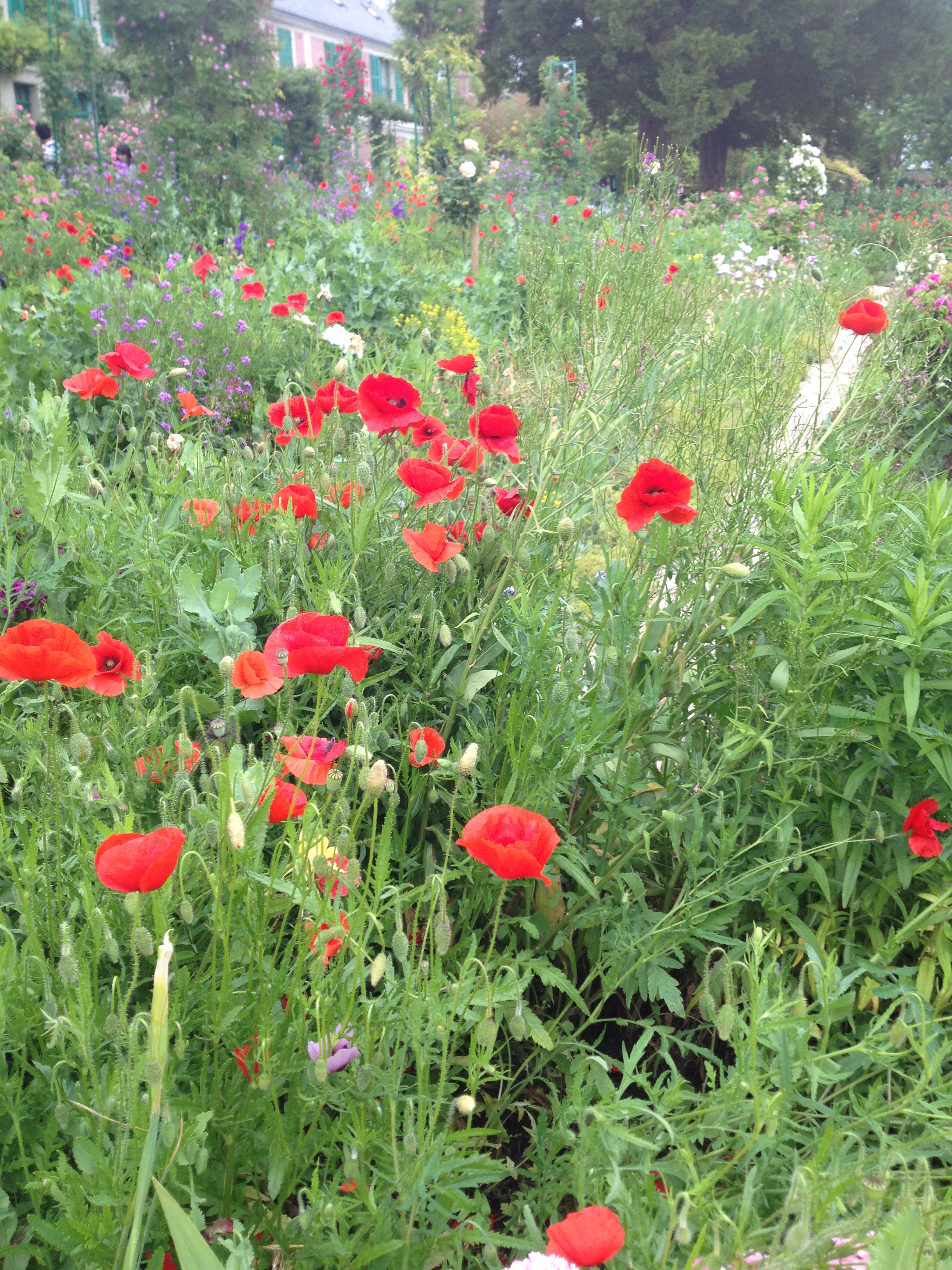
The garden, which fronts his house, is laid out in corridors of colour: one purple, one yellow, one pink. Flowers and rose arches rise on either side. Even though it’s crowded – on a midweek afternoon during school season we waited 20 minutes for our tickets – you can lose yourself wandering through the fragrant lanes.

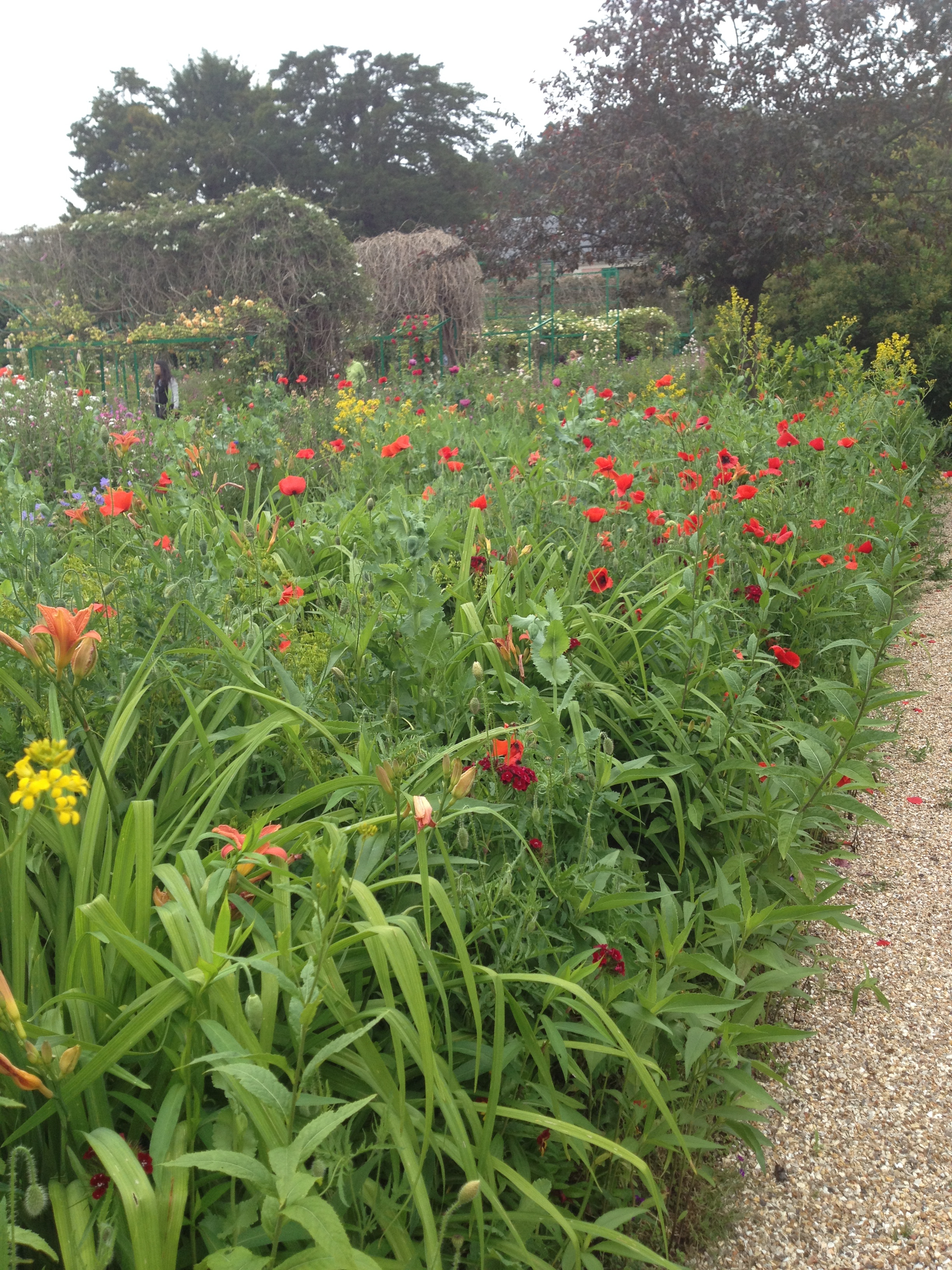
Flower garden, Giverny

Flower garden, Giverny

Le Clos Normand, GivernyFlower Garden, GivernyGarden, GivernyFlower garden, GivernyFlower garden, Giverny

We visited in early June, and the flower garden was bursting with colour, all poppies and peonies and hollyhocks and irises.
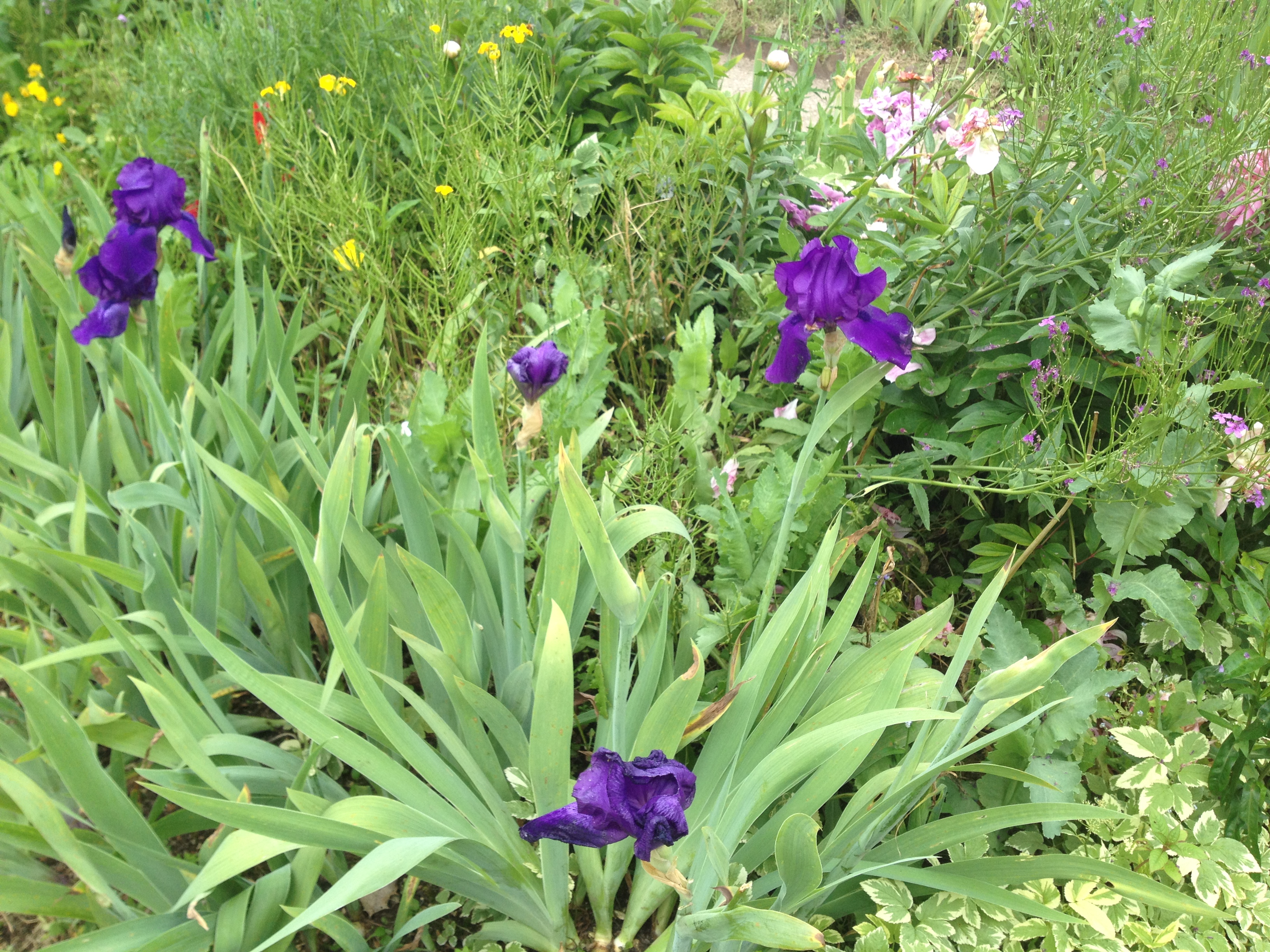
Irises, Giverny

Peonies, Giverny

Hollyhocks, GivernyPoppies, GivernyPoppies, Monet's Garden, Giverny

All those poppies recall the Monet print that hung in my childhood nursery, the one of a girl and her mother walking through a poppy field, the girl wearing a boater not unlike my school uniform hat, and the mother wearing a scarf and carrying a parasol.

The gardeners were busy at work, tending to all that wildness.
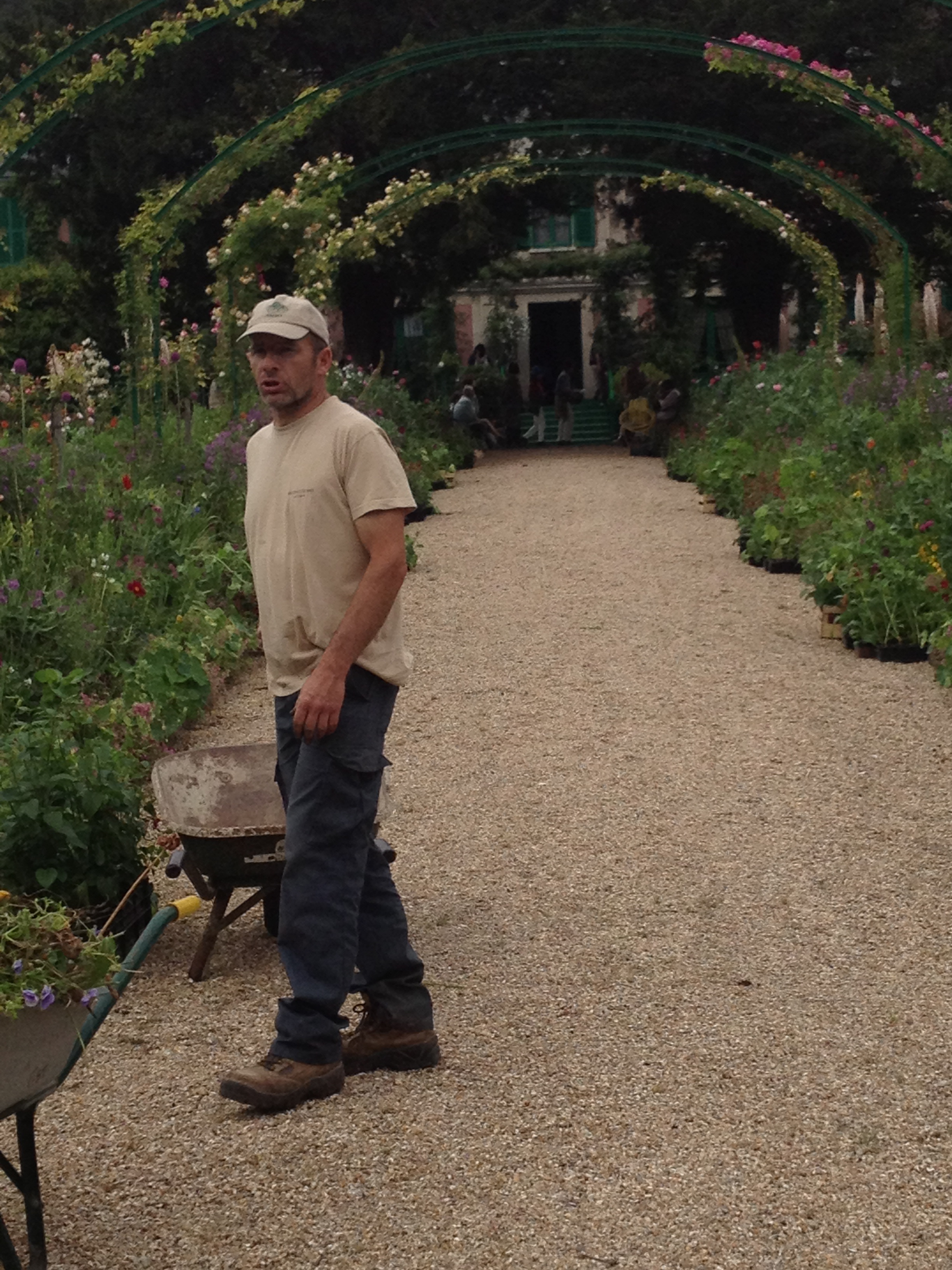
Gardener, GivernyGardener, Giverny

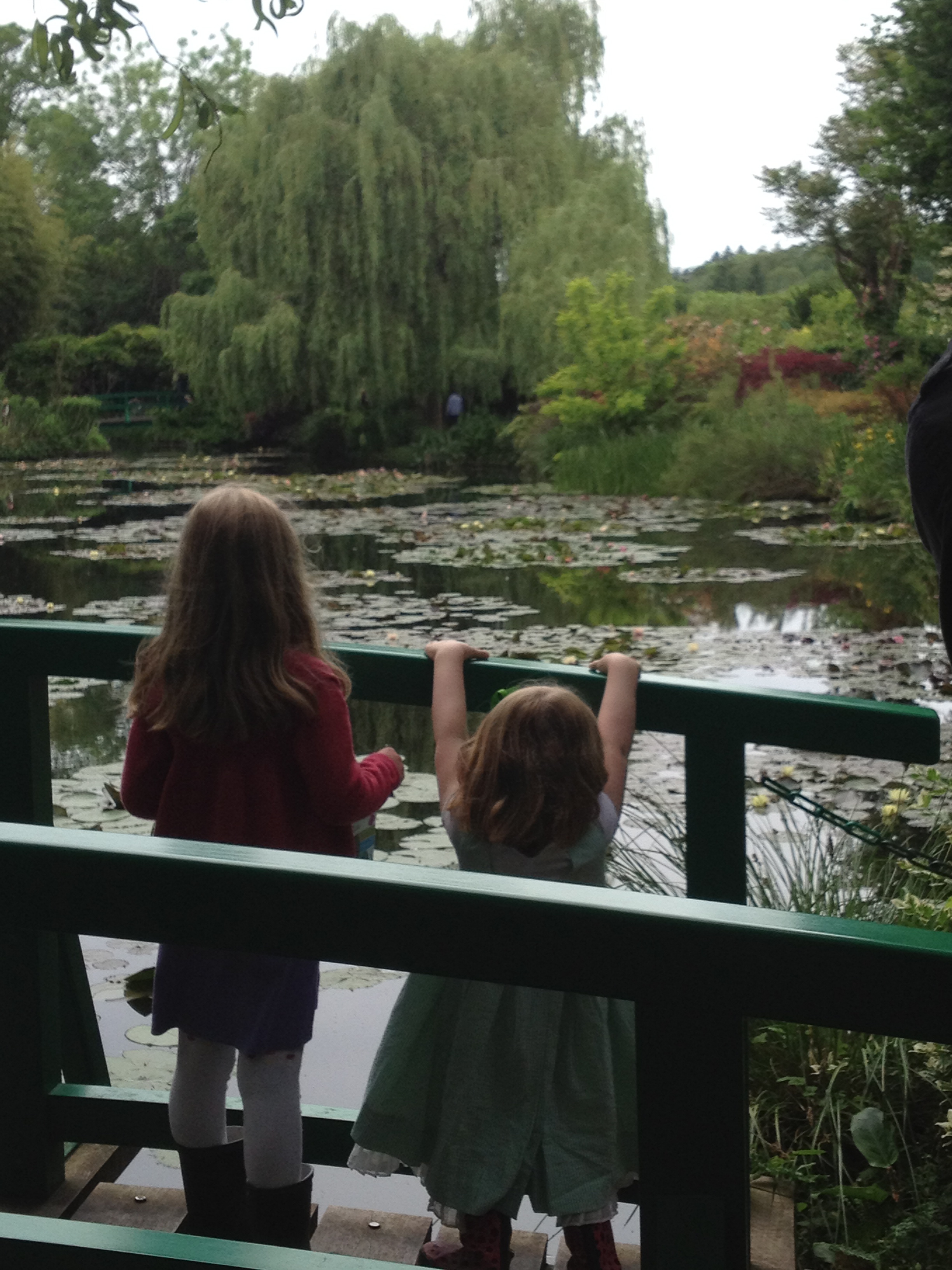
If the flower garden offered more than I expected, then the water garden was slightly underwhelming. The two gardens are intersected by a busy road, and there is noise from the traffic on the road. And to be fair the day was grey, the light flat. The pond is really very small, and not as lovely as it is painted in oil and hanging on the walls of the world’s great museums. It reminded me of visiting the most famous gardens in Japan. Like this one they were perfect on a small scale, and elbow to elbow as crowds of tourists sought just the right picture for their holiday blog.
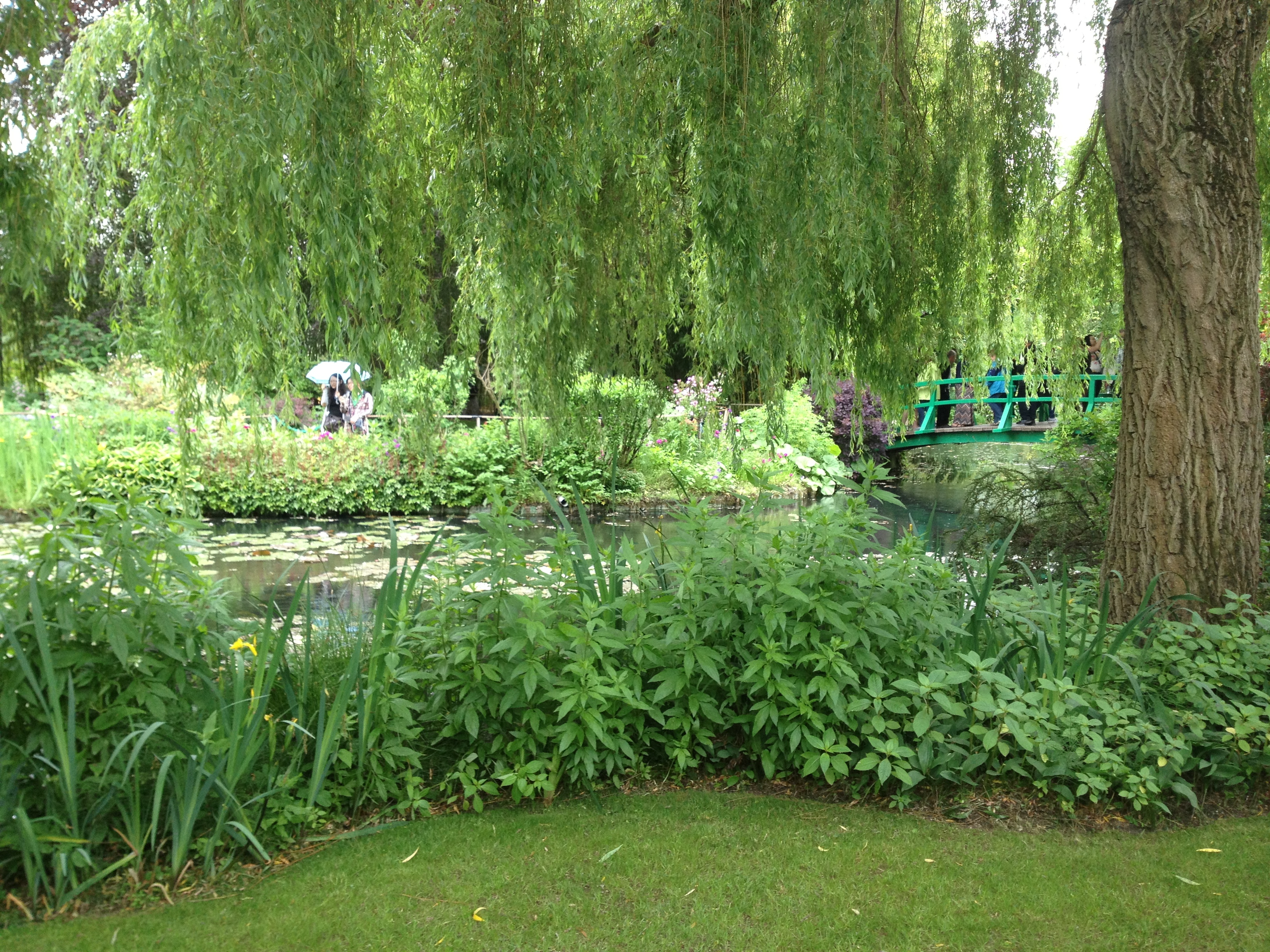
Le Jardin d'Eau, Claude Monet, GivernyLe Jardin d’Eau, GivernyMonet's Water Garden, Giverny

Monet’s house is worth a look. It has been renovated recently, and rooms on both floors are open for viewing. The bedroom overlooks the gardens. The painter’s bed is curiously small for two people, and the ensuite bathroom is luxurious. What is known as the yellow kitchen is in fact a dining room with a large table, with a smart blue kitchen beyond it. It seems that the Monet family enjoyed their entertaining–and who wouldn’t, in such a spot?
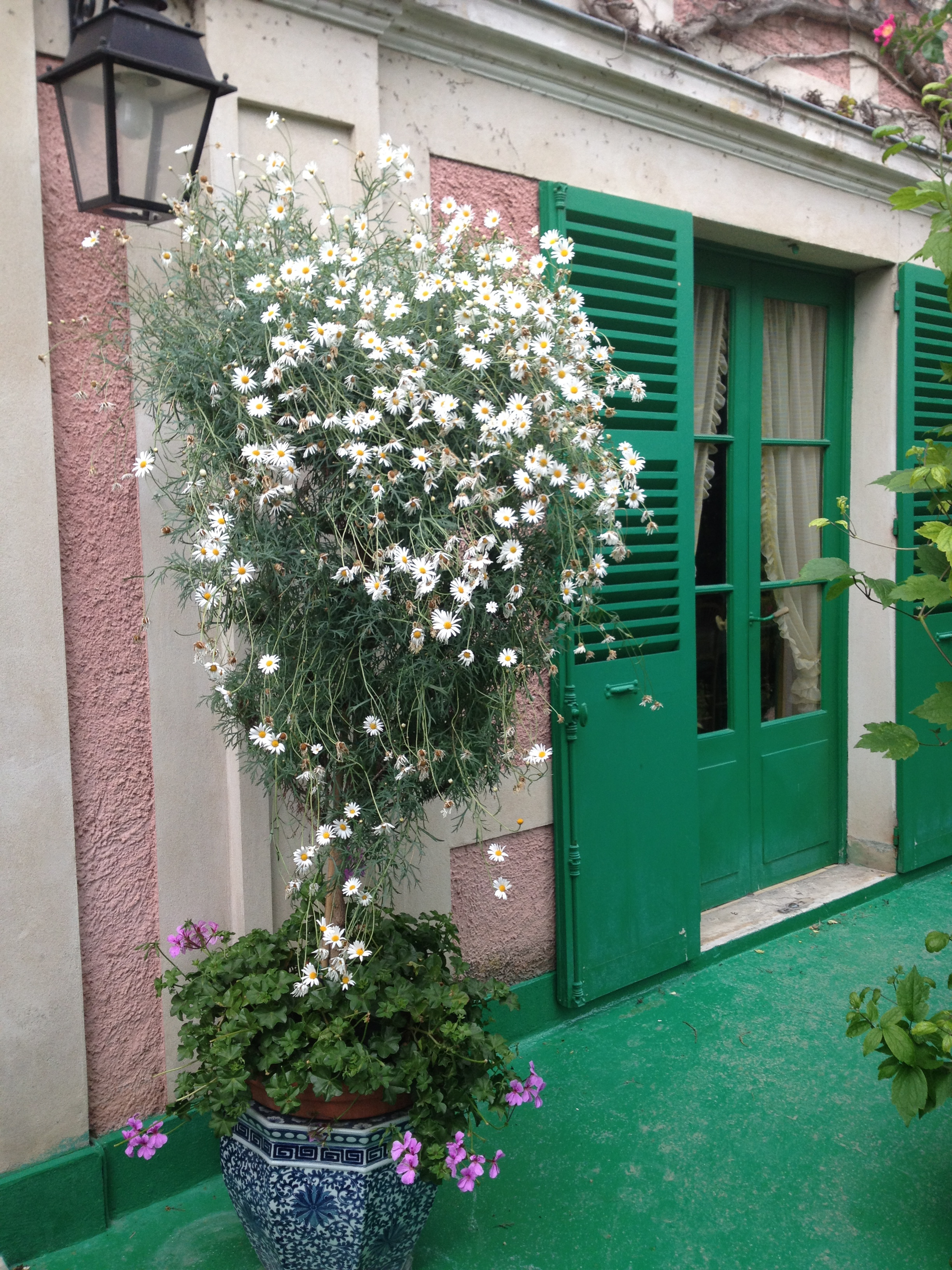
Door to Monet's house, Giverny

The children brought along The Magical Garden of Claude Monet, which takes a child and a dog on a tour of house and gardens. They enjoyed discovering the places shown in the book – especially Monet’s boat.

There are a number of official and unofficial websites dedicated to Giverny, of which we found the best for visitor information to be the Claude Monet Foundation website.

Share this:

  • Click to share on X (Opens in new window) X
  • Click to share on Facebook (Opens in new window) Facebook
  • Click to share on Pinterest (Opens in new window) Pinterest
  • Click to email a link to a friend (Opens in new window) Email
Like Loading...

Le Havre in Rain and Sun

07 Monday May 2012

Posted by chaumierelesiris in Culture, Food, France, Normandy, Things to do, Travel

≈ Leave a comment

Tags

architecture, Art, Auguste Perret, Easter bells, Eglise Saint-Joseph du Havre, Food, Le Havre, Market, Musée Malraux, Oscar Neimeyer volcano, Renoir, sardines

Le Havre probably isn’t top of your list of things to do in Normandy. It certainly wasn’t top of mine–even though it’s on the Unesco World Heritage list.  For me, Le Havre has always been a ferry port on the way to somewhere nicer, famous for having been bombed to bits by both sides during World War II.

But my ever adventurous husband kept encouraging me to go. He wanted to know where all the boats that pass by the end of our garden were coming from; and he was interested in seeing the largest container port, and second busiest overall port, in France. So we left behind the bucolic blossomy Easter week countryside and drove off in search of urban grit.

Le Havre port

We arrived in a shower of rain, found parking, and ran into the nearest shelter, a large concrete doorway. I stumbled in, looked up, and then had one of those blinking-into-the-gloom moments that you get in the great medieval cathedrals like Notre Dame, Salisbury or Reims. Except here I was in a dramatic modernist space, the Eglise Saint-Joseph du Havre, made entirely from reinforced concrete. Built in the 1950s, the cathedral was designed by Auguste Perret, the architect who led the reconstruction of Le Havre after the war. It’s quite hard to describe the effect of stepping into this cathedral, and pictures don’t do it justice. The concrete is hard and cold and ugly, and yet the overall effect is uplifting and awe-inspiring. If you do one thing in Le Havre, go there.

The rain stopped, the sun came out (every day in Normandy contains about 7 days of weather in other places) and we headed towards the port, stopping along the way at the covered market for sandwiches and where we admired the traditional Easter bells and other chocolate on display.

Easter chocolate, Le Havre

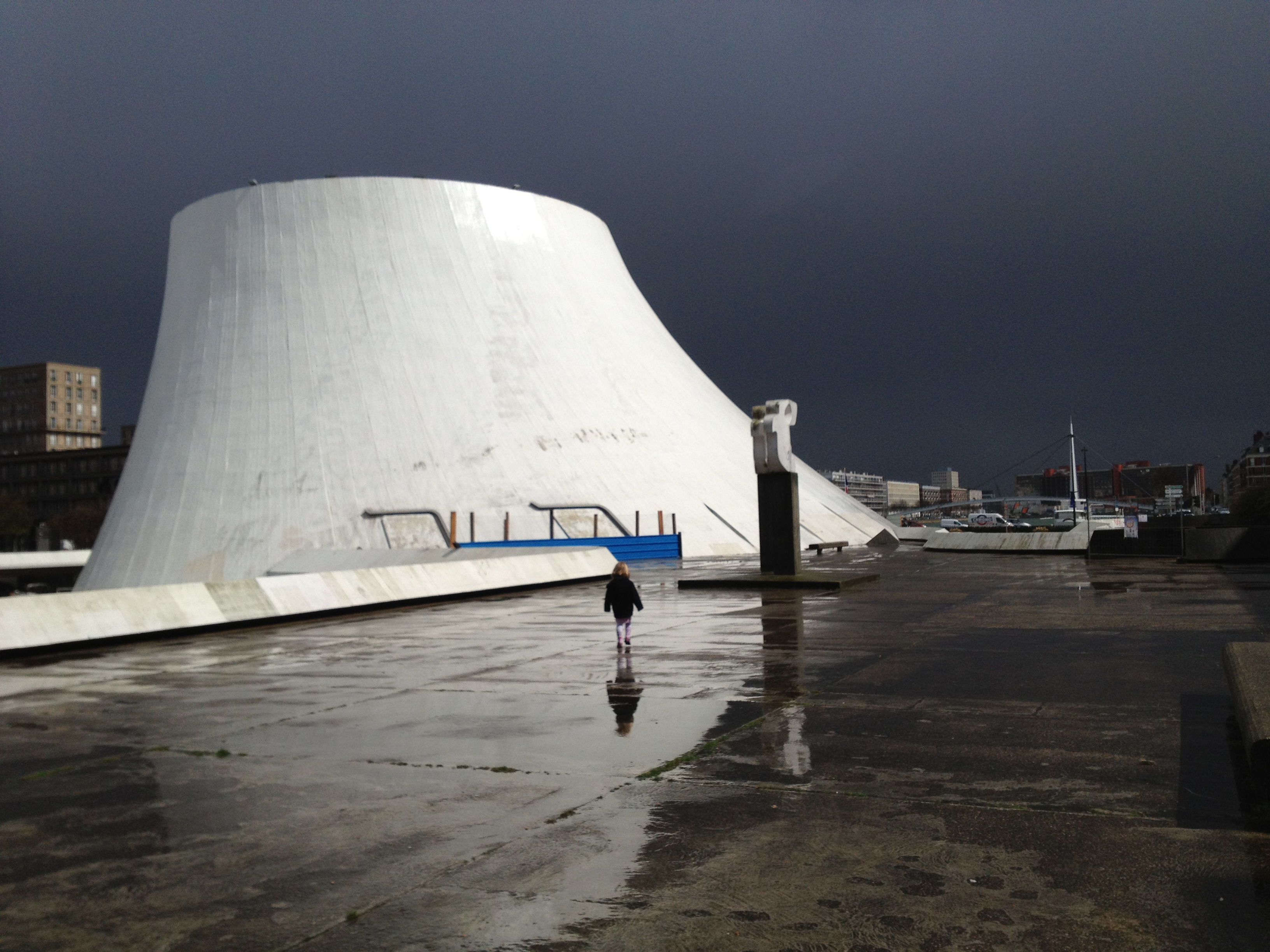
Dotted around the port are some interesting sculptures, and this unusual Oscar Neimeyer designed volcano, which houses a cultural centre.

Oscar Niemeyer Volcano in the rain, Le Havre

Then on to the Musée Malraux, known as MuMa, and its excellent collection of impressionist art in another modernist space that’s more attractive inside than out.

Musee des Beaux-Arts Andre Malraux Le Havre

There are works by Boudin, Monet, Dufy, and many of the impressionists; I particularly liked the several portraits by Renoir, as well as the way the museum windows let the changing Normandy light right inside.

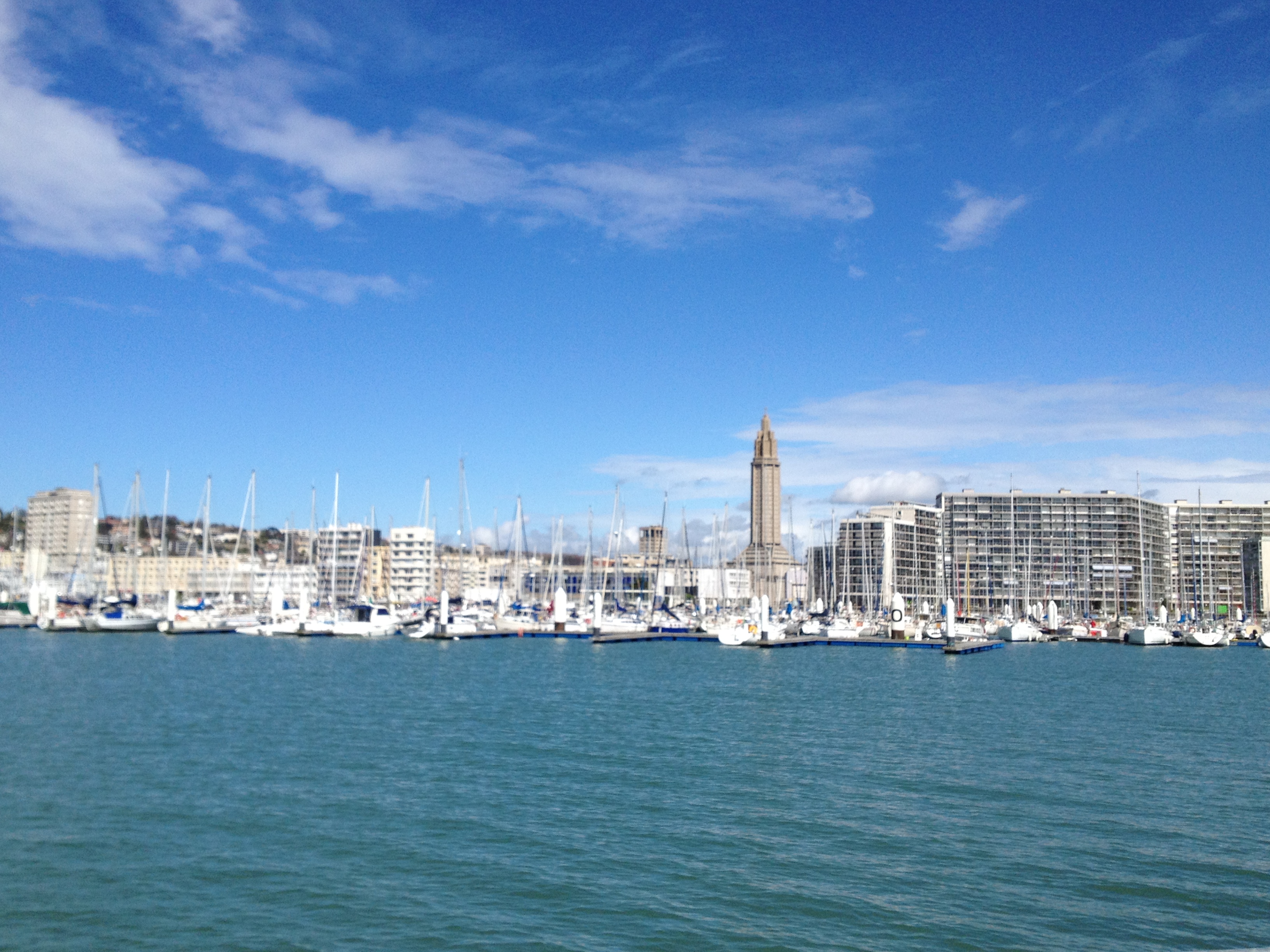
Along the seafront from the museum, boats were being taken out of dry dock by men with a small crane. We walked out along the long pier. Retired couples out for a stroll greeted us warmly, and a class of small student sailboats bobbed about at the end of the pier. Looking back was a rather lovely view of the port, smart new apartments, and the Perret cathedral tower.

Le Havre harbour and Auguste Perret tower

Do look out for the seafront shop, La Belle-Iloise, which has walls and walls of these brightly coloured tins of sardines. What wonderful gifts.

La Belle-Iloise, Le Havre

Le Havre seems to me something like a beautiful easter egg hidden in an old bag, full of delightful surprises that it’s worth taking the time to savour.

Share this:

  • Click to share on X (Opens in new window) X
  • Click to share on Facebook (Opens in new window) Facebook
  • Click to share on Pinterest (Opens in new window) Pinterest
  • Click to email a link to a friend (Opens in new window) Email
Like Loading...

An Abbey in April

29 Sunday Apr 2012

Posted by chaumierelesiris in France, Normandy, Things to do

≈ 1 Comment

Tags

Abbey, Benedictines, cycling, France, Jumieges, Le Bec-Hellouin, most beautiful villages in France, Norman Conquest, Normandy, Tooting Bec

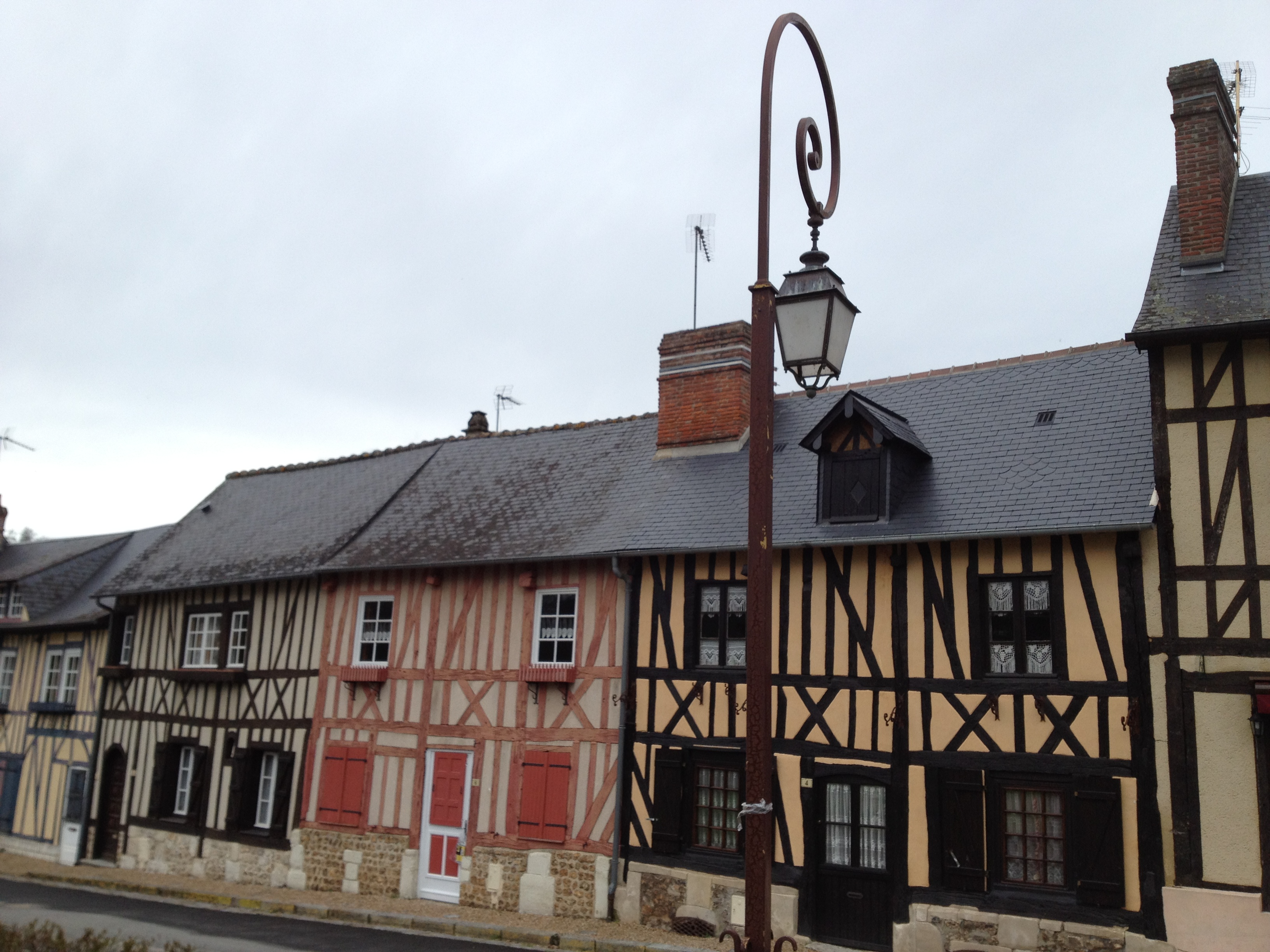
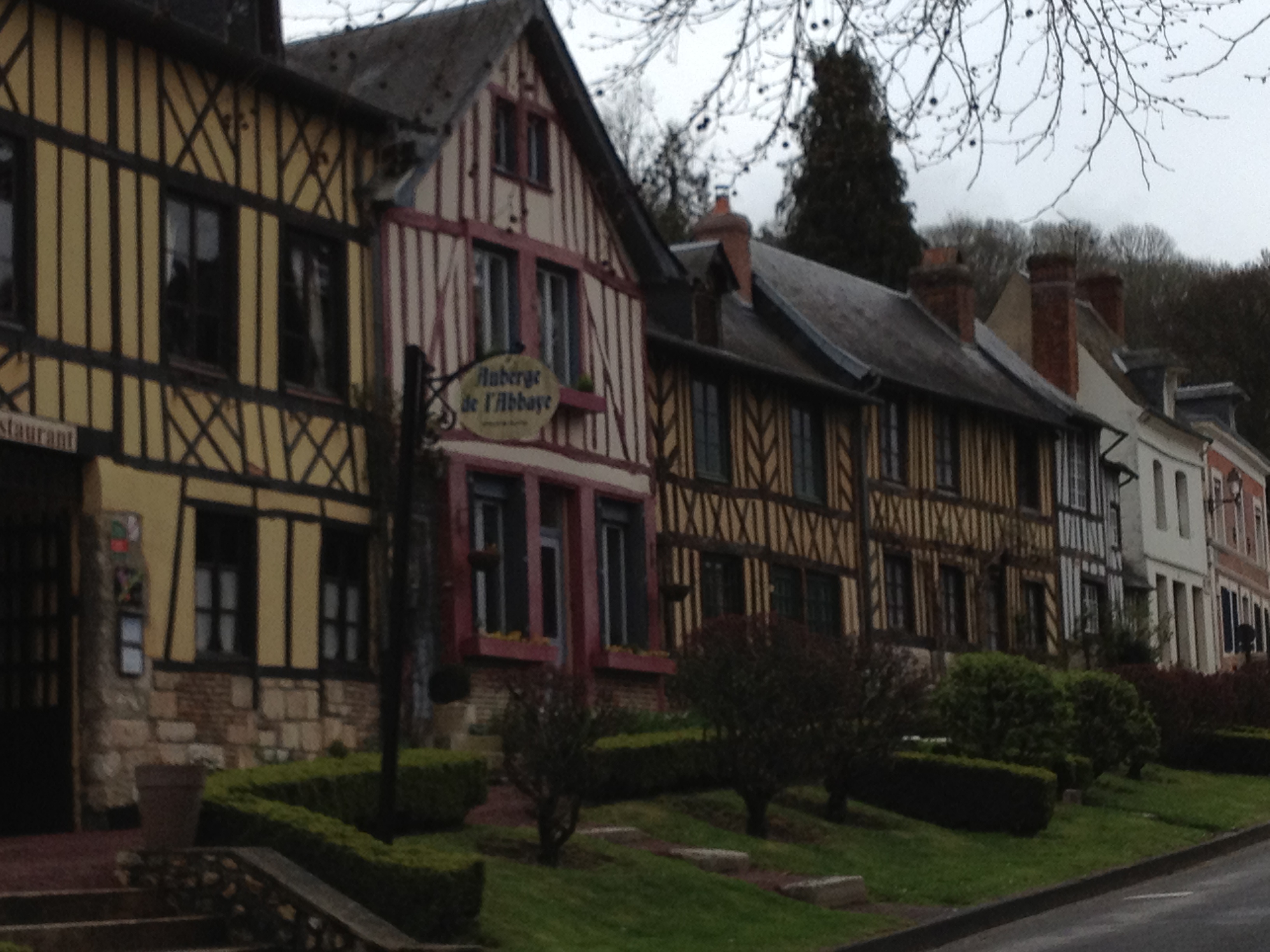
We are lucky enough to live near three of Normandy’s important abbeys: the great ruins at Jumièges, and the Benedictine abbeys at St-Wandrille and Notre-Dame in Le Bec-Hellouin. This last is famous not only for its abbey and monastic community but for its situation in one of the most beautiful villages of France.

Le Bec Hellouin, Eure, NormandyLe Bec Hellouin, Eure, Normandy

We set out to visit Le Bec-Hellouin on the kind of drizzly grey April day that tries to make everything look depressed but just can’t seem to manage to wipe away the green blossominess of a Normandy April.

Le Bec Hellouin

As is so often the case in Normandy, the history of Bec starts out in France then gets knotted up with England. The abbey was founded in 1034 by a Norman knight, and quickly became an important intellectual centre for the Catholic church. A number of the monks from Bec went on to become Archbishops of Canterbury.

Le Bec Hellouin, Eure, NormandyBell tower, Le Bec Hellouin

After the Norman Conquest, the abbey was enriched with properties in England. The then village of Tooting Bec belonged, at one point, to the abbey, and was named after it. If you stand in the global-suburban-London bustle outside the Tooting Bec tube station today it’s hard to imagine any kind of connection to this quiet valley in northern France.

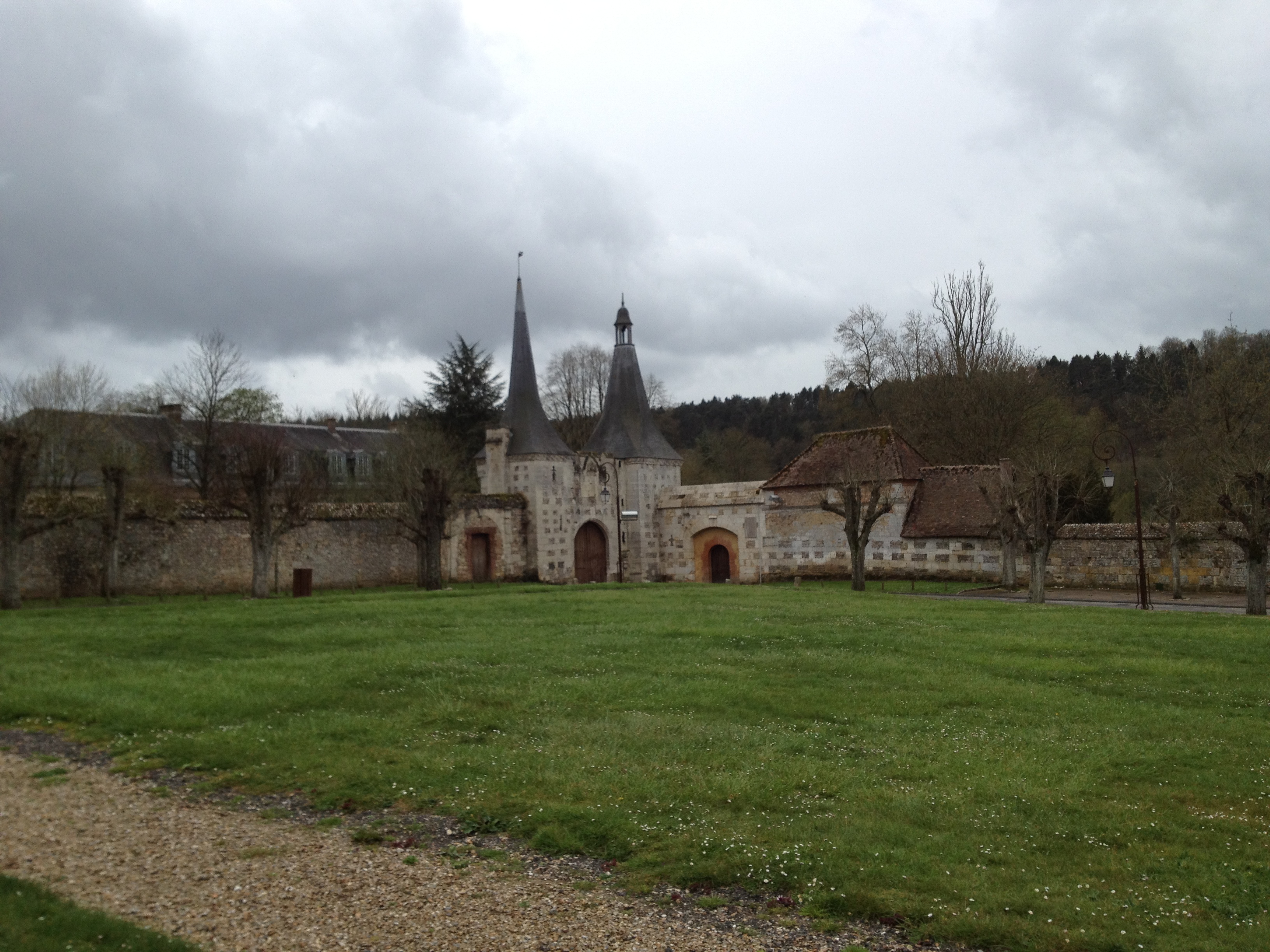
Abbey, Le Bec HellouinAbbey, Le Bec Hellouin

The abbey suffered after the Revolution, and only the medieval belltower remains. After the Revolution the abbey was used as a cavalry barracks, and elegant buildings were added in the eighteenth century. In 1948 the abbey was reinstated, and today it hosts an active Benedictine community.

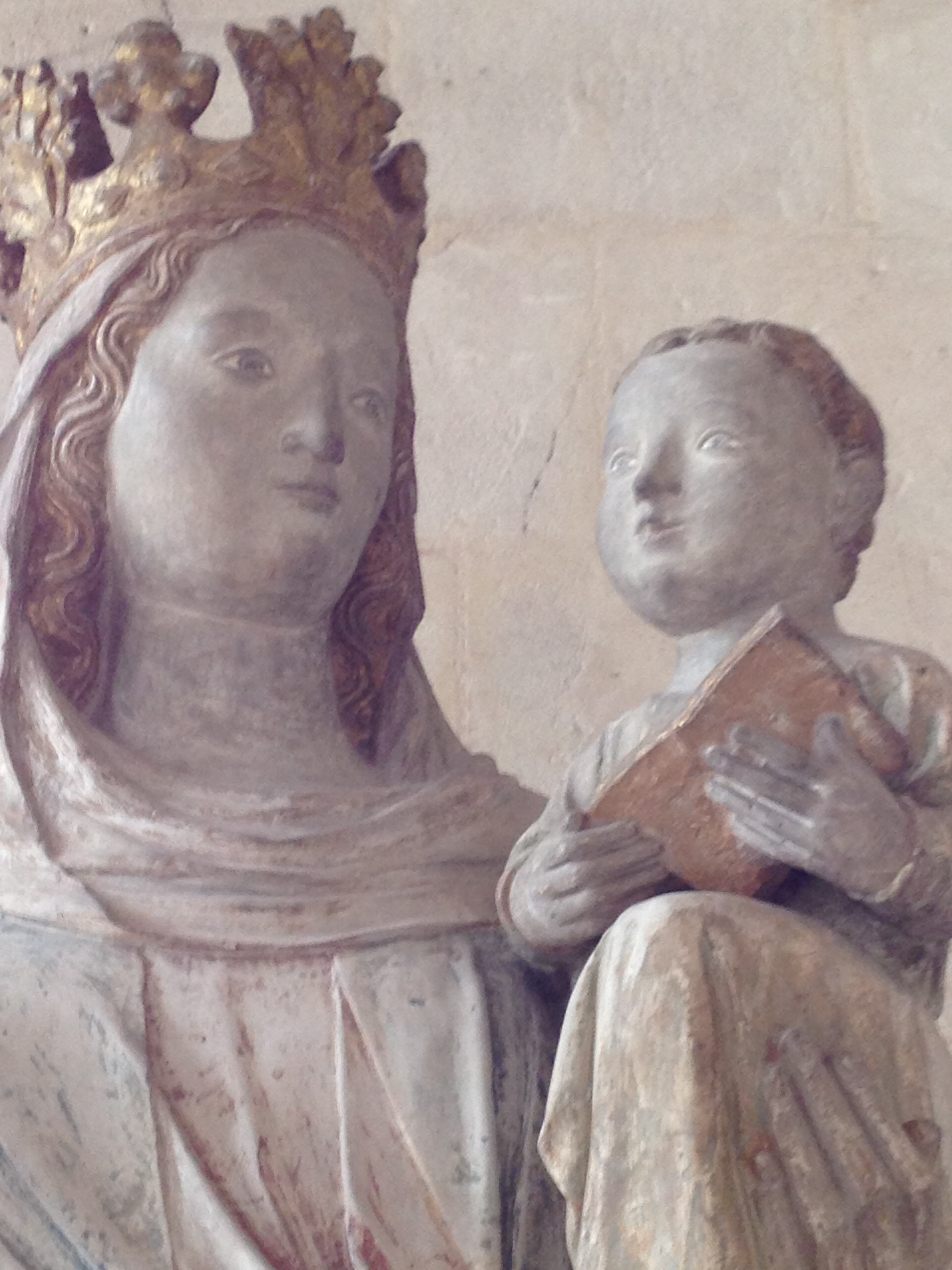
Abbey, Le Bec HellouinStatue in the chapel, Abbey, Le Bec Hellouin

The monks sing vespers most Sunday evenings in the simple chapel. There is an excellent bookshop with Benedictine products including ceramics manufactured by the monks in residence.  It’s peaceful yet quietly active place, busy with visitors taking walks through the parkland, groups on spiritual retreat, and the monks in white-hooded robes going about their daily life.

Abbey, Le Bec HellouinCycle route, Le Bec Hellouin

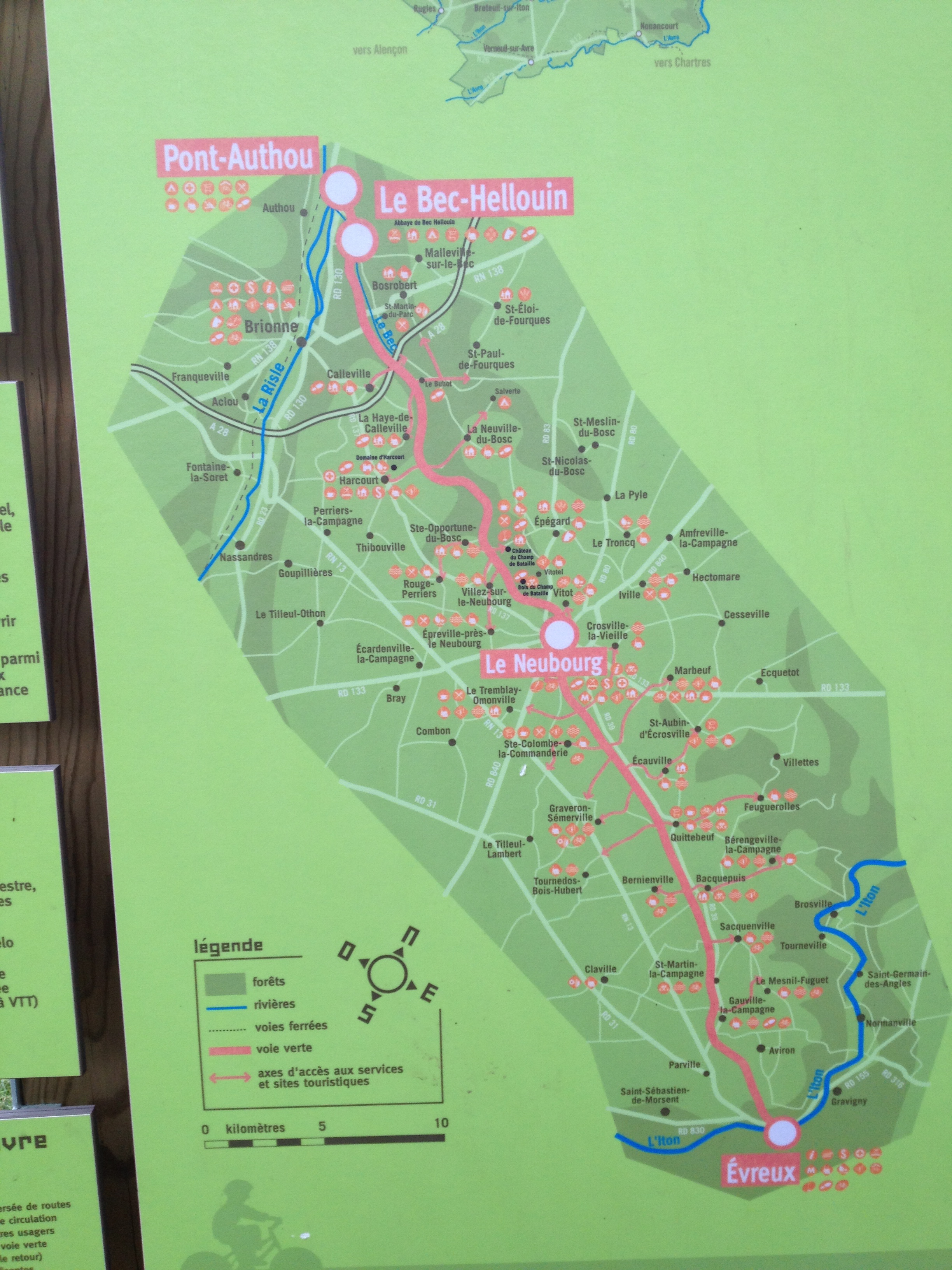
For the best views of the abbey, it’s worth turning left out of the gates and across a little bridge towards the old railway station. Look back to the abbey accross the fields. At the old railway station there’s a cycle path running along the former railway line towards Evreux which seems a wonderful way to visit this countryside.

Share this:

  • Click to share on X (Opens in new window) X
  • Click to share on Facebook (Opens in new window) Facebook
  • Click to share on Pinterest (Opens in new window) Pinterest
  • Click to email a link to a friend (Opens in new window) Email
Like Loading...

If You Go Up To The Woods Today

06 Friday Apr 2012

Posted by chaumierelesiris in Normandy, Things to do, Travel

≈ 2 Comments

Tags

Aizier, Archeology, France, History, Leper Colony, Leprosy, Romanesque, Walking

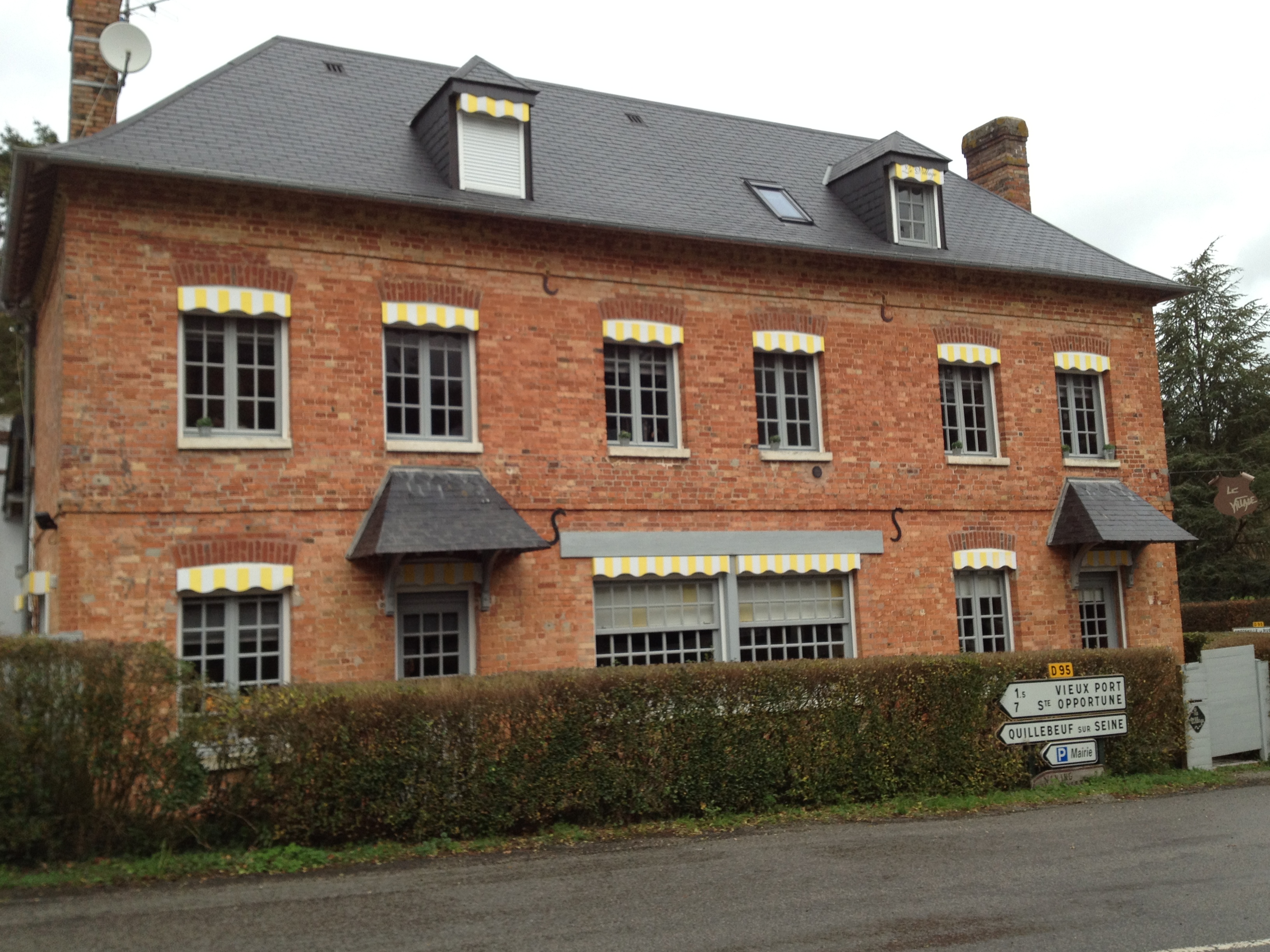
Vieux-PortThis is a post about a walk in the woods to a mysterious place not far from our cottage. From the village and from nearby Azier, there are signs pointing to the Chapelle Saint-Thomas, up in the hills. Follow the signs and you will find yourself climbing this wooded road.

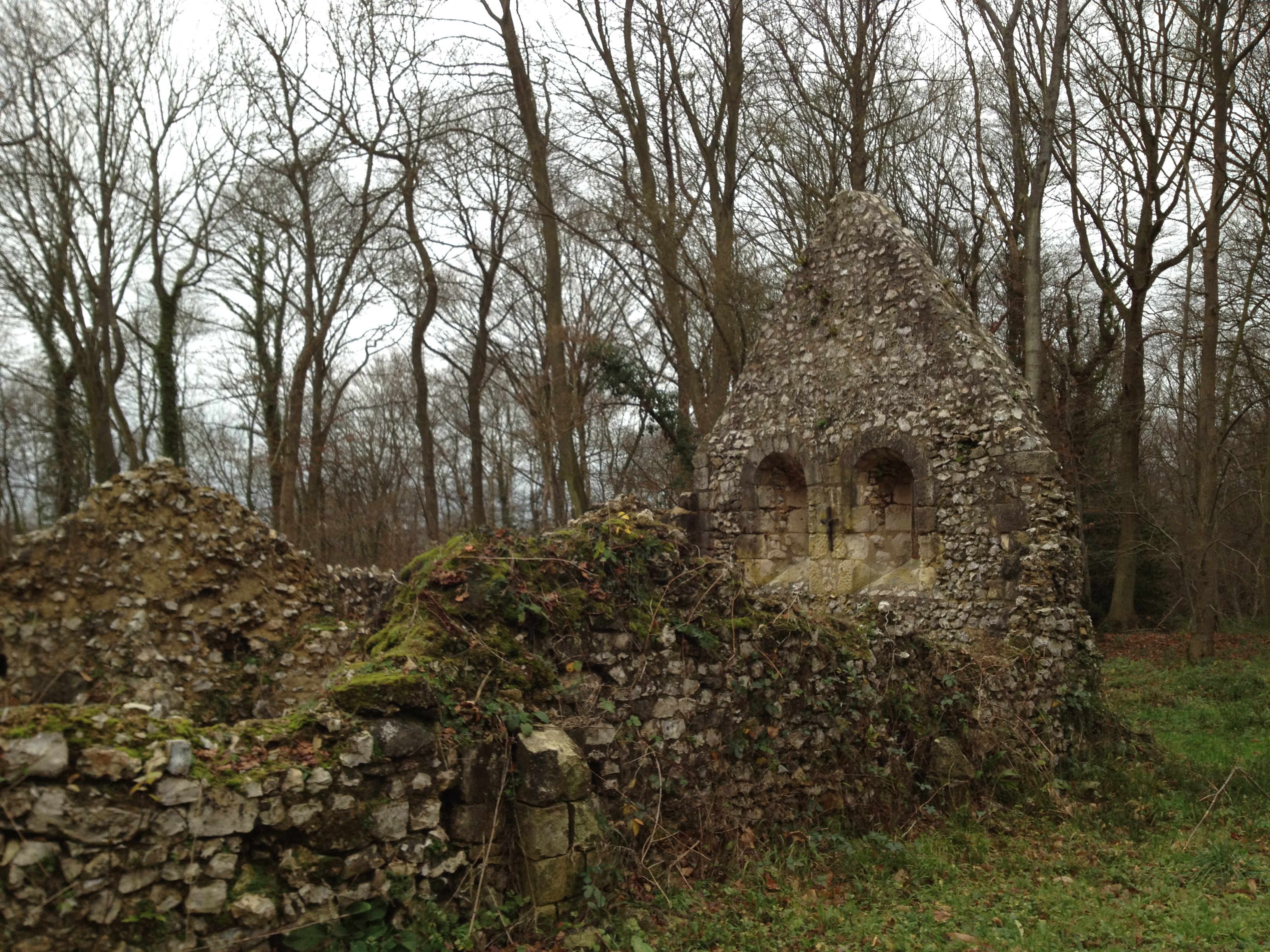
Chapelle Saint-Thomas isn’t listed in the guidebooks yet. It’s been around since the 1200s, and was inhabited until the eighteenth century. Over the last decade, the site has been the subject of an archeological excavation to expose the foundations and history of the Leproserie de Saint-Thomas d’Aizier.

How did medieval lepers live? In Biblical society (it’s Holy Week, I’ve been thinking about the gospels), leprosy was a symbol of sin, and lepers were stigmatised and lived on the margins of civilisation. That’s why it’s a story worth telling when Jesus engages with lepers. Who would do that? You can’t imagine that wherever the Biblical or medieval lepers ended up living was much of a place.

Seine, from Vieux-Port

But here, overlooking a curve in the Seine (which is visible through the leafless trees in winter), is the loveliest place, all silvery birches and green velvet moss. There is an excellent set of display boards marking out the various areas of the settlement – the living and working areas, the Romanesque chapel, the cemetery. Not a slum at all, it seems, but rather a working, monastic-type community and hospital.

Chapelle Saint-Thomas 

People still come to think and pray in this peaceful, verdant spot. Lovers  knot branches which grow up in these strange curved shapes as the years go on.

Knotted wood, Chapelle Saint-Thomas

Share this:

  • Click to share on X (Opens in new window) X
  • Click to share on Facebook (Opens in new window) Facebook
  • Click to share on Pinterest (Opens in new window) Pinterest
  • Click to email a link to a friend (Opens in new window) Email
Like Loading...

From Vieux-Port to Aizier

31 Saturday Mar 2012

Posted by chaumierelesiris in France, Normandy, Things to do, Travel

≈ 2 Comments

Tags

Aizier, national park, Normandy, Romanesque, Seine, Travel, Walking

Walking is one of our great joys in Normandy. In London, the city buzzes around us all the time.  Cars speed up and down our street of terraced Victorian houses, while overhead planes cruise towards Heathrow from dawn into the night. We walk in the city too, but mainly to get somewhere, and in a hurry. It’s a luxury to set off on foot without any particular agenda.

A national park footpath starts just beyond the end of the garden and runs east for a few kilometers along the Seine to Aizier. It’s a great walk for the children, flat, and lined with blackberry bushes, and with neat stepping stones across a vigorous stream. The path ends at a large picnic ground, from where you can turn right into the attractive village of Aizier.

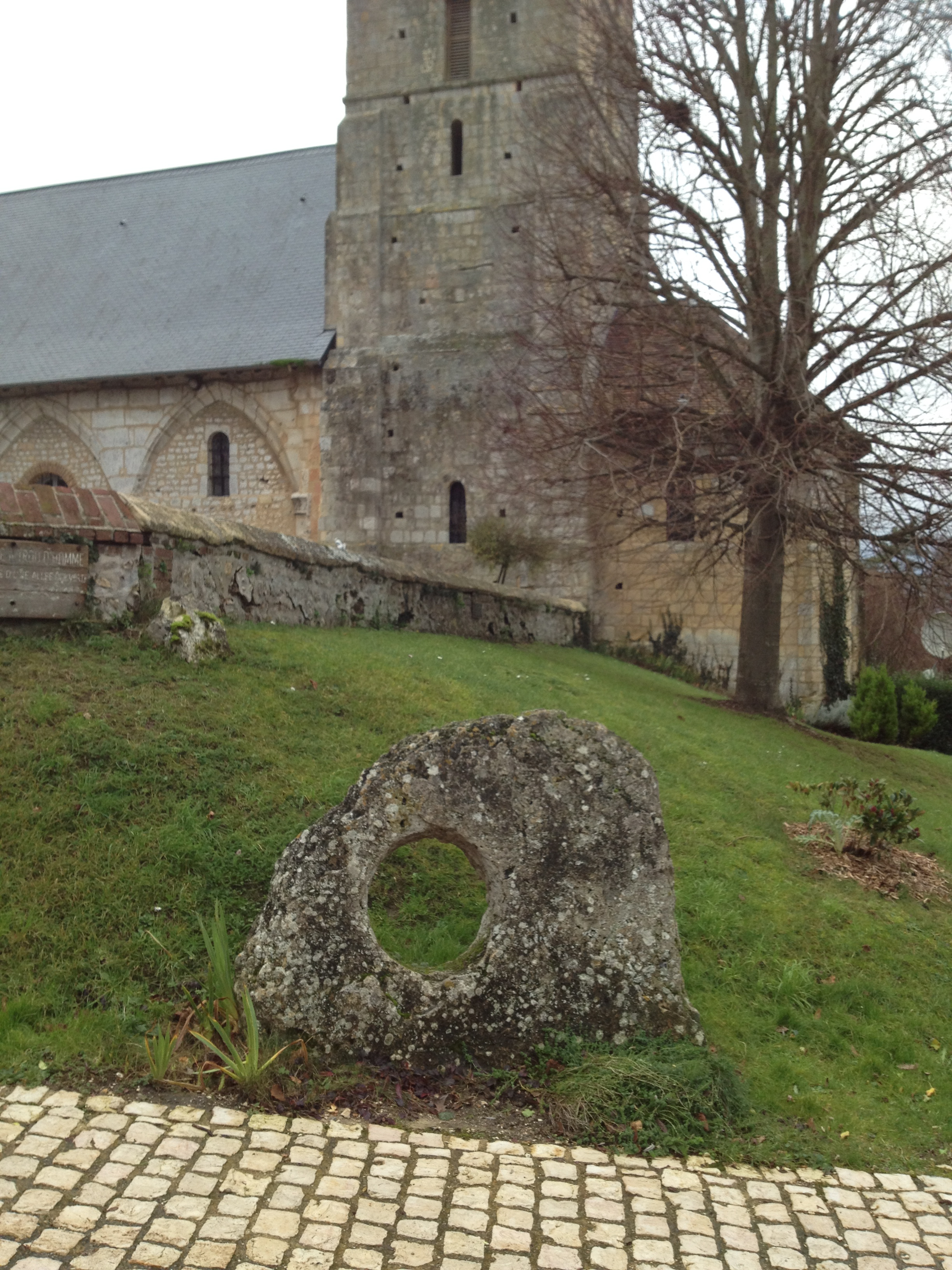
Church, Aizier, Eure, NormandyAizier, Eure, Normandy

Aizier’s Romanesque church dates from the 11th century. Even older is a mysterious stone with a large round hole in it. Discovered in the 1870s, it is thought to be 4000 years old, and marked the position of a neolithic burial ground.

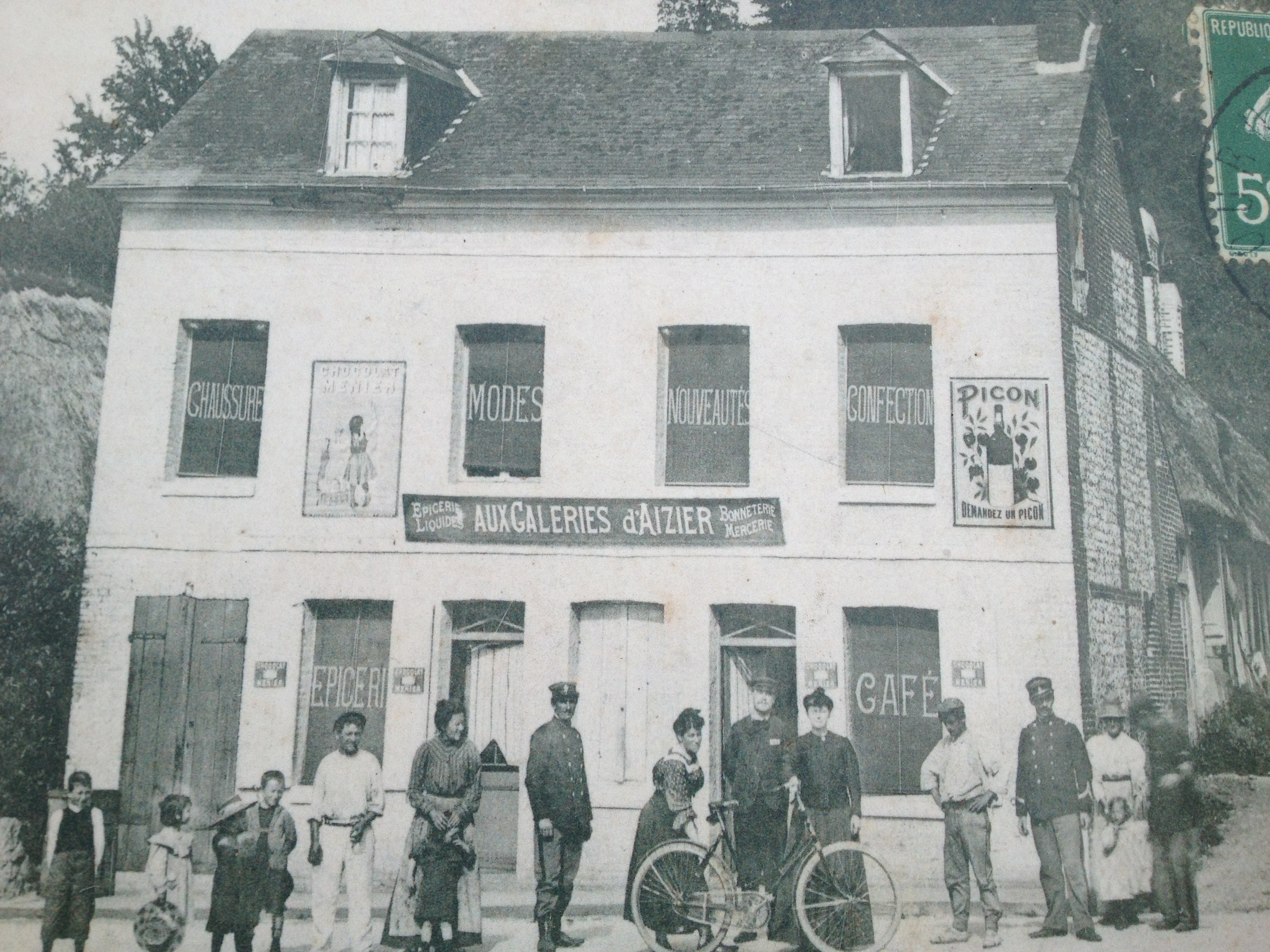
Around the church there is a short historical walk with archived photographs of the village.

AizierAizier

Look at all those people – the policeman, the deliveryman, the baker, the schoolchildren – squinting smartly into the sun in front of the general store. You’d be hard pressed to round up anyone in sleepy Aizier today.

Aizier

What was once the petrol station is now smartened up and reborn as the swanky La Bonne Auberge

From here, return to Vieux-Port either back along the river or along the road. Better, extend the walk by taking the small road up the hill towards the recently excavated Chapelle Saint-Thomas.

Share this:

  • Click to share on X (Opens in new window) X
  • Click to share on Facebook (Opens in new window) Facebook
  • Click to share on Pinterest (Opens in new window) Pinterest
  • Click to email a link to a friend (Opens in new window) Email
Like Loading...

Boudin in Normandy

28 Saturday Jan 2012

Posted by chaumierelesiris in Culture, Normandy, Things to do, Travel

≈ 1 Comment

Tags

Art, Boudin, Honfleur, Le Havre, Normandy, Normandy art museums, paintings, Trouville

Do make time for the Musée Eugène Boudin if you find yourself, as we recently did, in Honfleur on a rainy winter’s day. Boudin (1824-1898), a native of Normandy, is known for his paintings of the outdoors, and was a great influence on Monet and the Impressionists.

Boudin Museum ticket, Honfleur

The museum is spacious and the collection not too large; allow one to two hours. The collection includes work by pre-Impressionist and contemporary Norman artists, as well as displays of traditional Norman costumes and artefacts. The heart of the collection is the Boudin paintings.

Woman with a Parasol on the Beach might be my favourite. You see the same lady later in Monet, and in Winslow Homer on the opposite side of the Atlantic. There’s the wonderful contrast between the dark formal dress and the sweep of beach and wind-pushed clouds. Is she talking on her mobile?

Boudin worked a great deal on the Normandy coast, especially at the fashionable resorts of Trouville and Deauville. He painted a number of scenes similar to On the Beach at Trouville between the 1860s and 1890s.

Boudin is extensively collected around the world, and I have created my own Boudin in Normandy collection at the lovely Artfinder.

I’ve written elsewhere about visiting Honfleur and Étretat. Here Boudin paints The Jetty and Lighthouse at Honfleur and The Cliffs at Etretat.

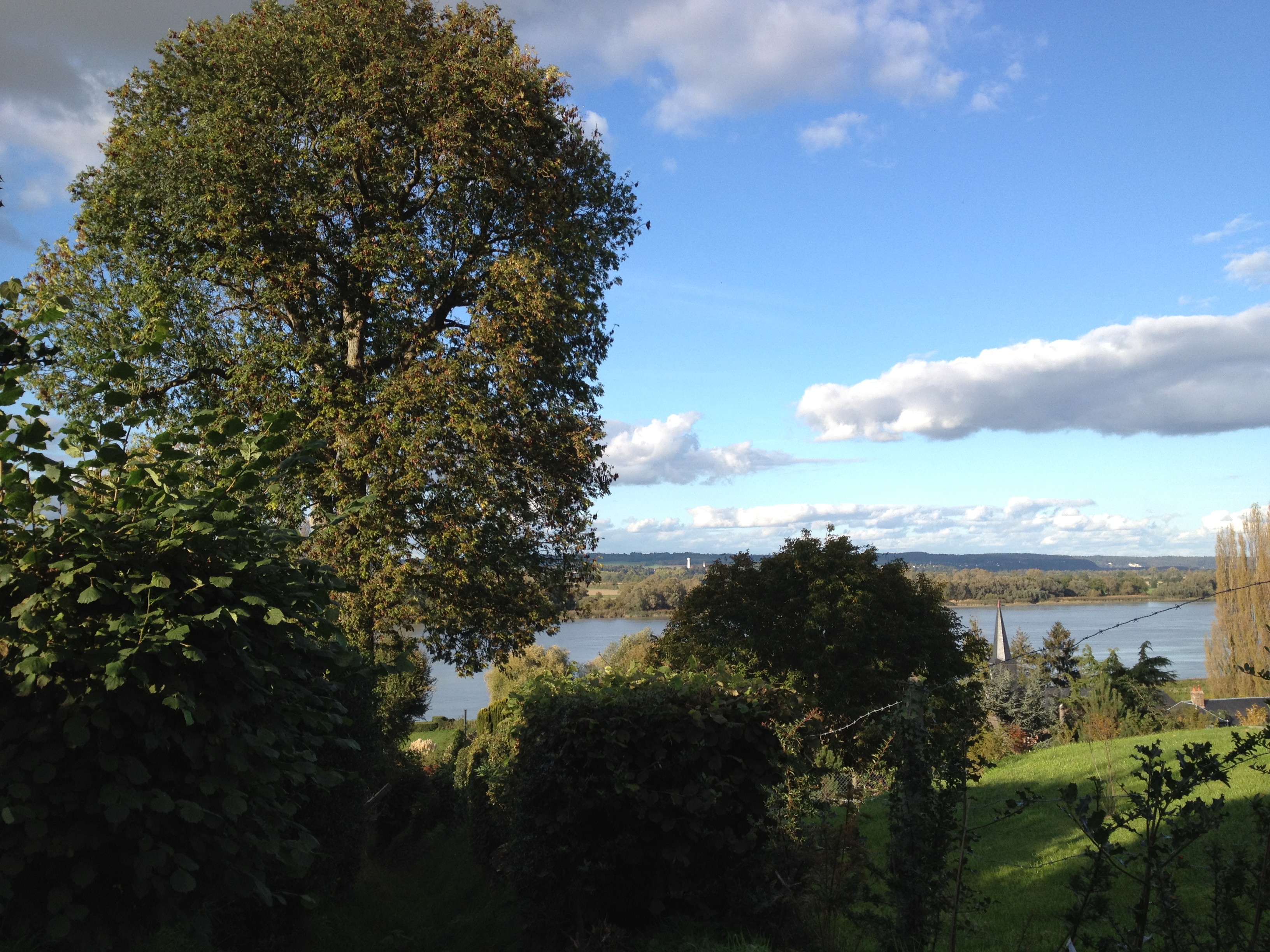
This painting of the Seine near Rouen looks so much like the view of the Seine from the bottom of the garden at Les Iris. I wonder where Boudin painted it.

I love the business of this scene outside the Casino de Trouville. Look at the children, and the dogs, and the tipped-over rush chair at the front.

It seems to me that being a C19 pre-impressionist painter was an excellent gig: you got to hang out in the loveliest places like The Beach at Trouville and Deauville. Check out those bathing machines.

Now here is a view that has changed. Le Havre has been extensively re-built and is on the UNESCO World Heritage List for its post-war architecture. Boats have changed too, although every 5 years or so, an armada of tall ships gathers on the Seine in Normandy. The next gathering is in June 2013.

And here’s a view that hasn’t changed, apart from a few parasols. Life goes on in the same way year after year on the beach: the resort wear, the sailing lessons, the children ducking in and out of the white-capped waves, their screams of delight echoing down the years.

Share this:

  • Click to share on X (Opens in new window) X
  • Click to share on Facebook (Opens in new window) Facebook
  • Click to share on Pinterest (Opens in new window) Pinterest
  • Click to email a link to a friend (Opens in new window) Email
Like Loading...

New Years Day in Étretat, Normandy

14 Saturday Jan 2012

Posted by chaumierelesiris in France, Normandy, Things to do, Travel

≈ 5 Comments

Tags

Art, beach, Etretat, Impressionists, Monet, New Years Day, Normandy, paintings

Is there a good way to start the new year? Celebrate midnight in style, and you wake up with a headache and a mess to tidy up, and at least one resolution broken in the first twenty-four hours. This year, with guests to entertain, we decided the headaches had to be ignored. And the mess: we decided to leave it behind.

But where to go? New Years Day was both a Sunday and a bank holiday. Northern France was closed for business. Not a museum or a restaurant to be visited. There were many small children in our party, so a walk in the forest wouldn’t be easy. That left the beach. Perfect.

I like beaches best in the dead of winter. Preferably stony, with the wind whipping salt through my hair, and a moody slate-grey sea. I am not the bikini type: for one thing, my skin fries in the heat, and another is I get bored just lying around. The beach we settled on for New Years Day was at Étretat.

Etretat, Normandy

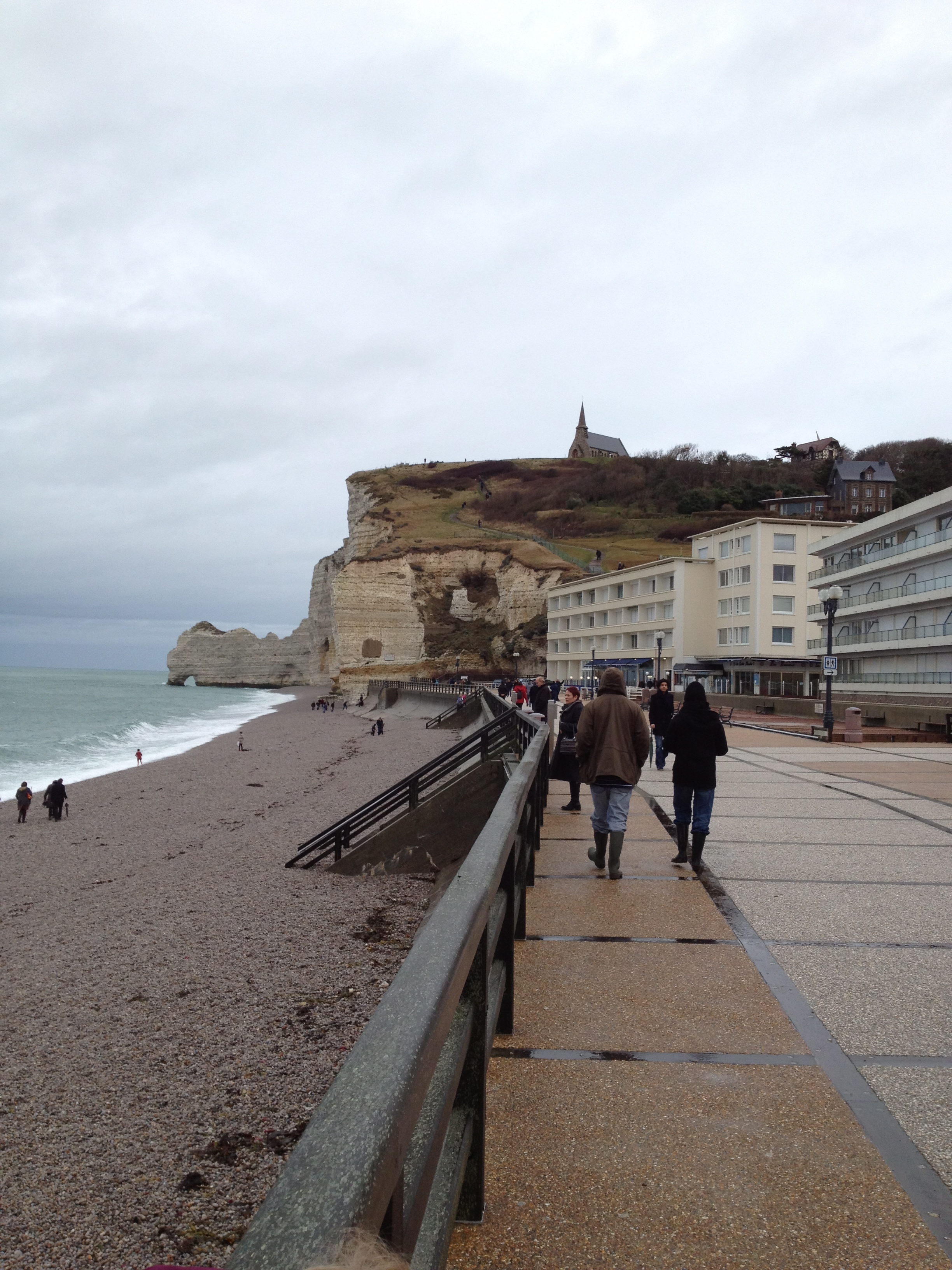
Étretat isn’t the closest beach to Les Iris, but the 45 minute cross-country drive on narrow farm roads through open fields and villages is pretty. Étretat is famous for its alabaster cliffs, or falaises, which were painted by Monet, Courbet and Boudin among others. There is plenty of parking in town; park as close to the seafront as you can. Two famous rock formations are visible from the town. As you face the sea, to the left is the Porte d’Aval. There is a path to hike up to the top, from which a further falaise can be seen.  At the top there is also a spectacularly situated golf course.

The Cliffs at Etretat after the storm, by Gustave Courbet.

We decided to hike in the opposite direction, up the Porte d’Amont. There were some steep steps, but overall it looked a shorter climb for the children.

Etretat, Normandy

Etretat, beach and the Porte d’Amont, by Claude Monet.

It took us about 30 minutes to climb to the top. There are tables overlooking the town on the way up which would make a lovely picnic spot in warmer weather. On the clifftops, cows were grazing. There is a small church. There are no fences: hold on to your children.

Falaise, Etretat, NormandyEtretat, Normandy

A few minutes along from the church there is a path that goes a little way down towards the sea from which you can look northwards. The views of the cliffs are timeless. You feel that you have been here before, that you’ve walked into a painting. Etretat, Normandy

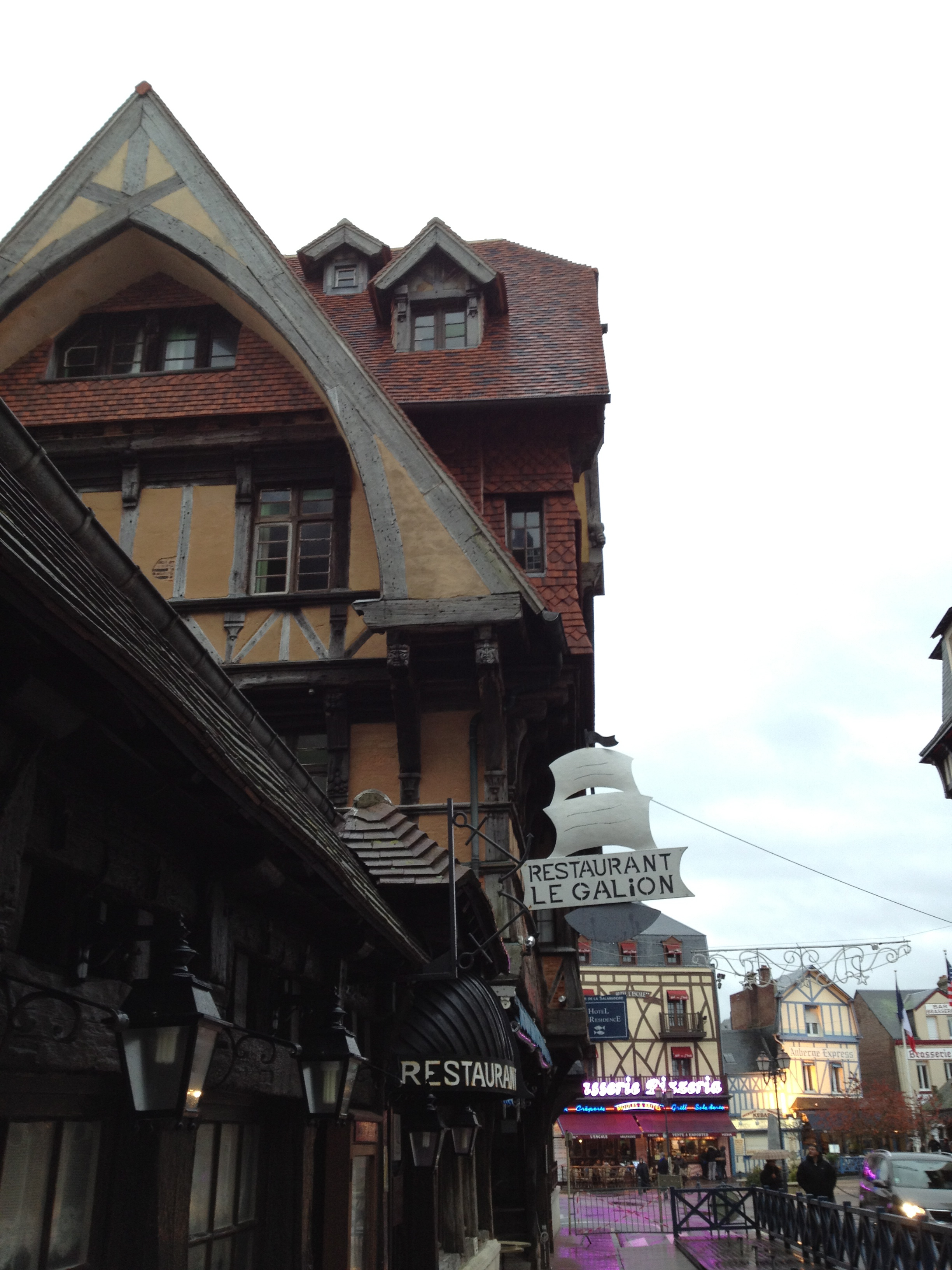
The town itself is attractive, with typical Norman architecture, and restaurants and boutiques (all closed, of course, on New Years Day).

Restaurant, Etretat, NormandyEtretat, Normandy

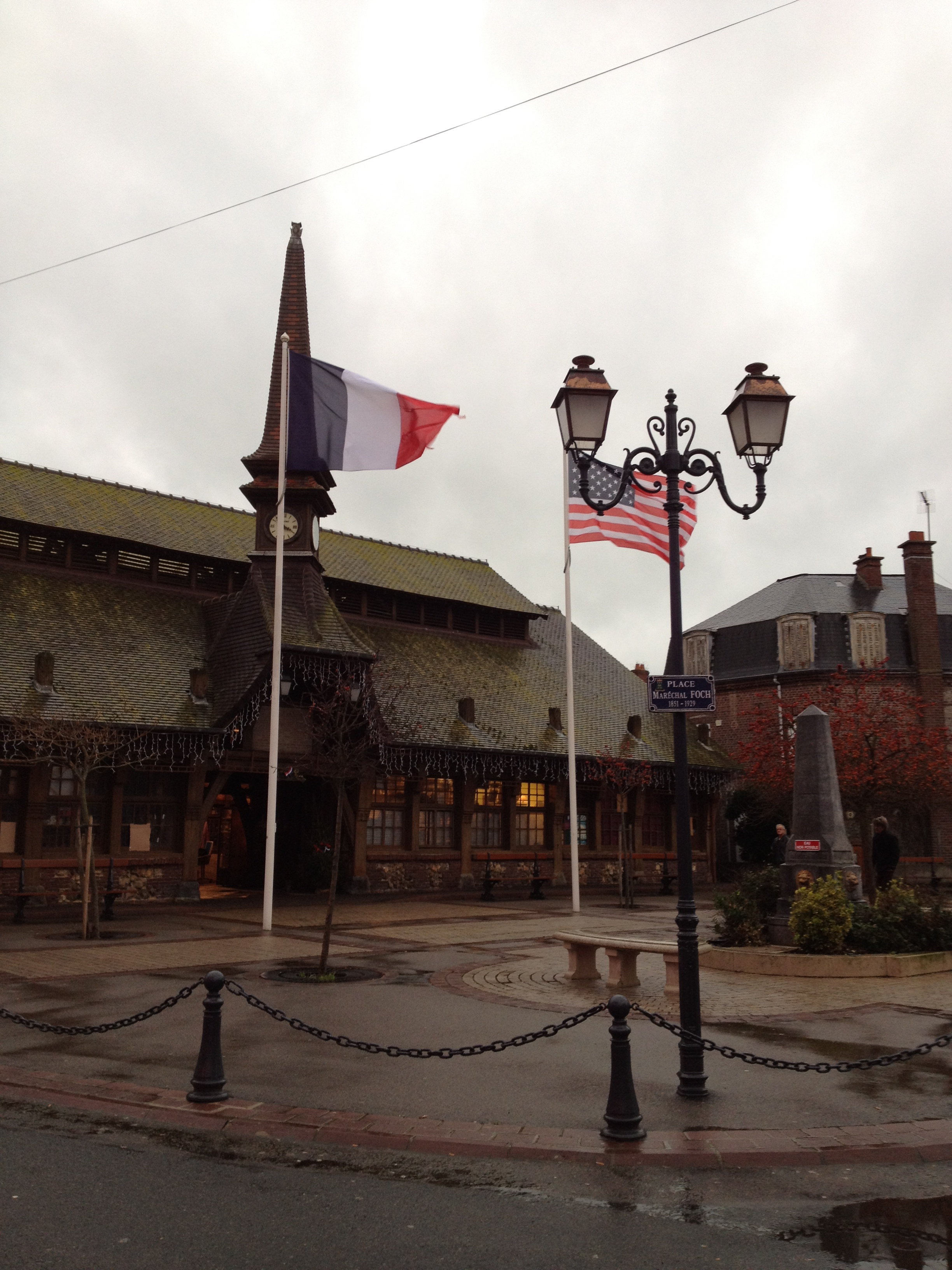
There is a small casino, a restored covered market in the main square, and a war memorial.

Flags and Market Hall, Etretat, NormandyLamp post, Etretat beach front, Normandy

But the action is centered on the seafront. The paved boardwalk has these shapely lampposts all along it. Or you can go right down onto the pebble beach, like the children did, and play in and out of the vigorous waves.

And should you find yourself here on New Years Day, bring your bikini/trunks. Because the only way to start the new year in Étretat on New Years Day is with ‘le grand frisson’ – the big chill. Baptize yourself in the frosty Atlantic waters and you start the year with a clear head and the confidence that you’ve kept at least one resolution. Then top it off by sharing a glass of champagne on the beach.

Normandie : Le grand frisson du nouvel an | Paris Normandie.

For more information about Étretat and other things to do in Normandy, visit Normandy in the Press.

Share this:

  • Click to share on X (Opens in new window) X
  • Click to share on Facebook (Opens in new window) Facebook
  • Click to share on Pinterest (Opens in new window) Pinterest
  • Click to email a link to a friend (Opens in new window) Email
Like Loading...

A Winter Market in France

09 Monday Jan 2012

Posted by chaumierelesiris in Food, France, Normandy, Things to do

≈ 13 Comments

Tags

coquilles Saint-Jacques, Food, France, holly, Market, mistletoe, Normandy, oysters, wild mushrooms

What comes to a local market in the dead of winter? Very little, you would think – the fields are empty, the trees are bare, there’s nothing but rain and a dull grey sky. You’d be surprised. Here are some of the delights we found at our Norman market at the end of December.

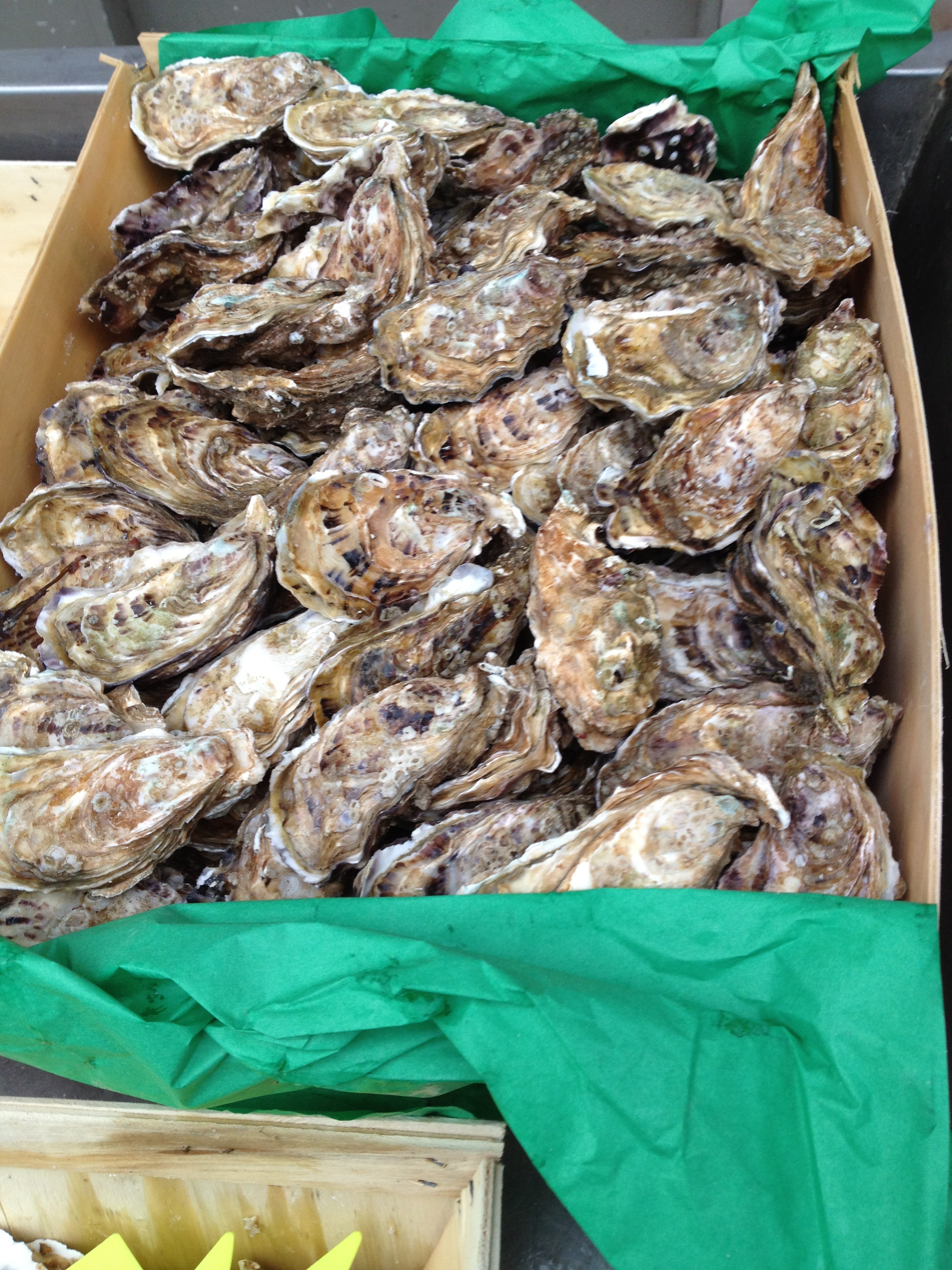
Boxes and boxes of the freshest oysters, only a squirt of lemon needed.

Mistletoe, France

Holly and mistletoe grow everywhere in Normandy. Look up any old tree in the winter and what looks like a messy kind of birds nest is probably mistletoe. And there is a whole forest of holly, la Forêt d’Eu, in the Seine-Maritime. But if you don’t have time to collect your own, you can buy some at market.

Guinea fowl, France

I think these are guinea fowl but please tell me if I’m wrong. There were plenty of geese and roosters too. No one looked squeamish about buying fowl with the head and feet still on. Even in the supermarket, the packaged free range chickens have more feathers and blood left on than their sterile UK counterparts.

coquille st jacques

The pretty coquilles Saint-Jacques are a Normandy specialty which have been awarded the prestigious “label rouge” in recognition of their quality. (Does everything in France have a label?) Here is a video about the fishermen who catch them, and a recipe which, like all the best Norman recipes, is packed with wild (if you can get them) mushrooms and crème fraîche.

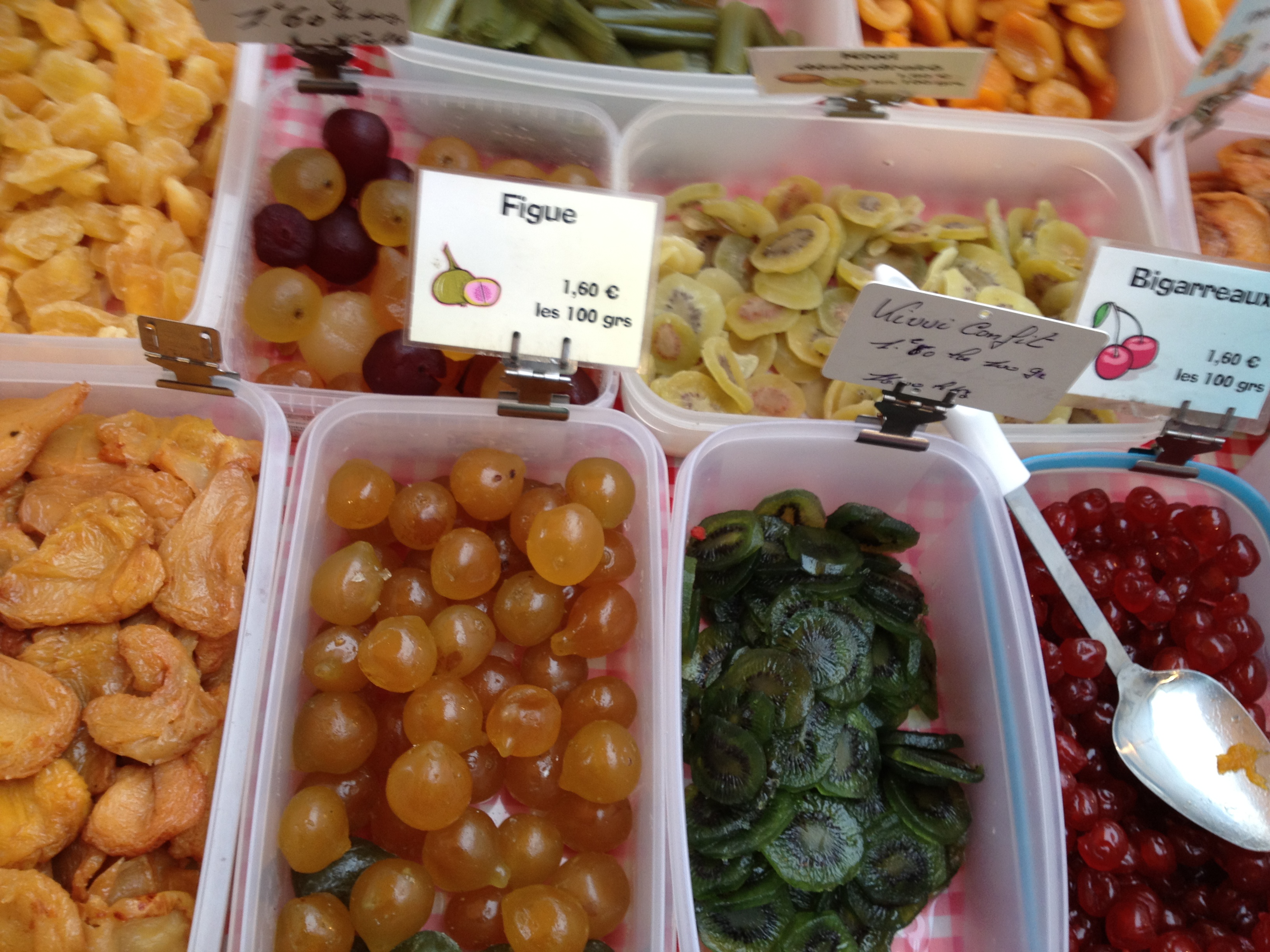
Candied fruit, FranceCandied fruit

The candied fruit sparkled like cheap jewelry under the fluorescent lights of the market stalls. It seemed that every imaginable fruit – and even vegetable – had been candied. Pears, mango, carrots, tomatoes, kiwi, pineapple, peaches, cherries, lemons, clementines, figs and more. No gallon tins of chocolates needed here to keep spirits up in the dead of winter.

Flowers, French market

And then a hint of the season to follow. All these bright bulbs poking out of the soil, promising even better come springtime.

Share this:

  • Click to share on X (Opens in new window) X
  • Click to share on Facebook (Opens in new window) Facebook
  • Click to share on Pinterest (Opens in new window) Pinterest
  • Click to email a link to a friend (Opens in new window) Email
Like Loading...

An Autumn Walk

03 Saturday Dec 2011

Posted by chaumierelesiris in Les Iris, Normandy, Things to do

≈ 3 Comments

Tags

autumn, Boucles de la Seine, Normandy, Pony, Walking

Our village sits on a gentle hill stretching up from the river. The newest houses (there are few of them, and these are the only ones which aren’t thatched) sit on higher ground, next to the forest. The hills are part of the Boucles de la Seine national park and  are densely forested. There are walking paths leading up from the village into the forest. We put the children in tall, strong Hunters before we explore the hills. There are many nettles, as well as wild mushrooms which the locals collect. There are views of the village and across the Seine.

Eure, Normandy

We last walked up the hill in October. It was a bright, crisp day – the best of autumn in Normandy. The path was covered in chestnuts which had dropped from the trees. This tree was resplendent with bright red berries.

Normandy, October

Not so long ago, the village was agricultural. As recently as the early 1980s, cows were kept at our cottage. Our “garage” is a cinder block cowshed, complete with stalls and mangers. The owners took the cows along the road to graze in fields. Today, the villagers are teachers and small business owners, or weekending Parisians. There are few homes with animals – a few chickens, and here, along one of the paths going up into the hills, these tiny shaggy ponies who peered at us from under their long hair.

Pony, Normandy

Share this:

  • Click to share on X (Opens in new window) X
  • Click to share on Facebook (Opens in new window) Facebook
  • Click to share on Pinterest (Opens in new window) Pinterest
  • Click to email a link to a friend (Opens in new window) Email
Like Loading...

Off-Season Honfleur

19 Saturday Nov 2011

Posted by chaumierelesiris in France, Normandy, Things to do, Travel

≈ 7 Comments

Tags

Art, Carousel, Honfleur, Normandy, Quebec, restaurant, Travel

A few miles west along the Seine from our chaumiere is Honfleur, one of Normandy’s most picturesque fishing villages. Honfleur has long been important to Normandy, as a safe harbour during the Hundred Years’ War, then as a centre of maritime trade. French explorer and diplomat Samuel de Champlain, the founder of Quebec City, left for Canada from Honfleur in 1608.

HonfleurHonfleur

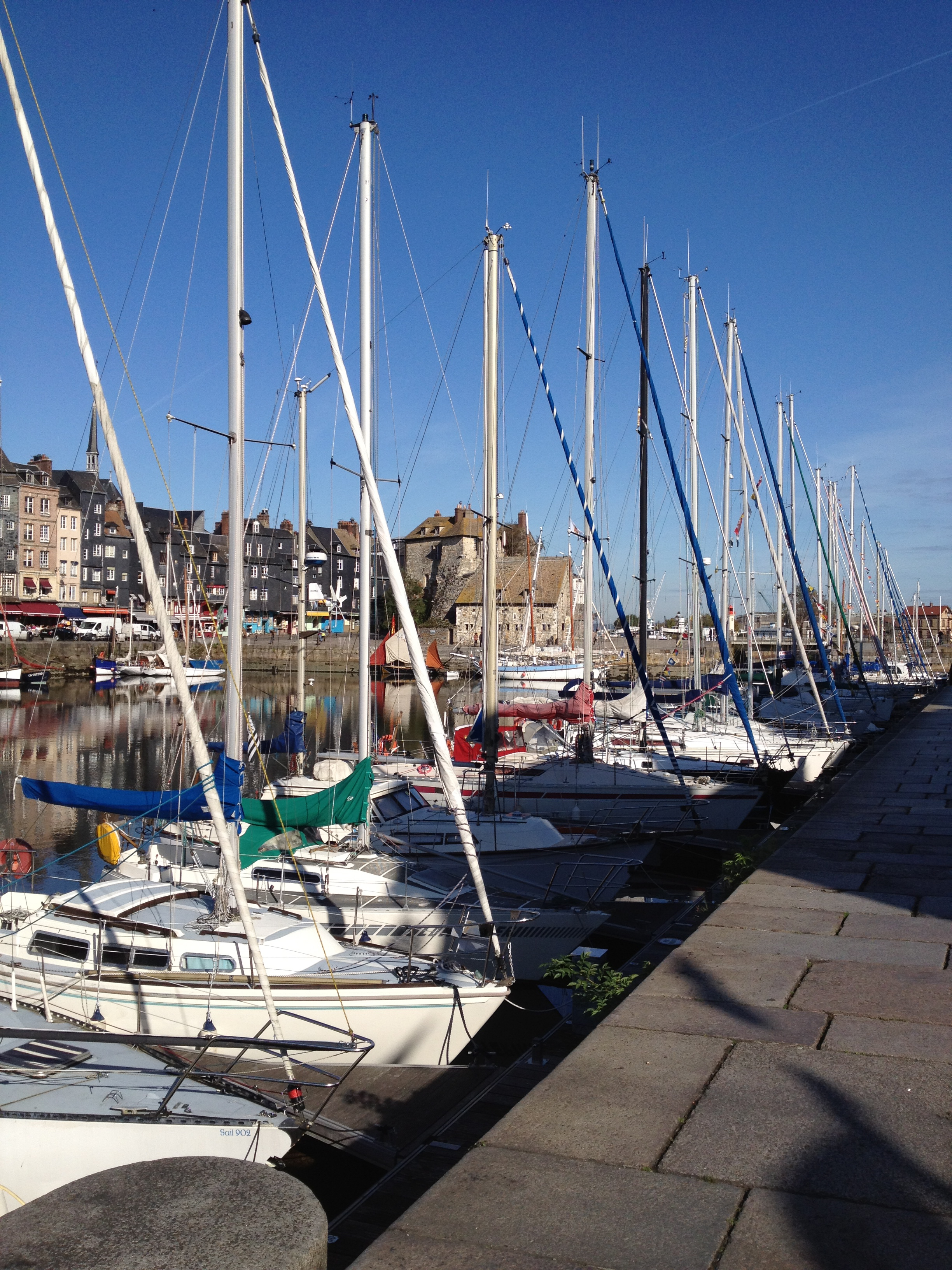
Today Honfleur attracts many tourists in the summer months. We have visited only in spring and fall, when it buzzes gently with weekending couples, and there’s enough watery sun shining for the restauranteurs around the rectangular harbour to keep a few tables outside.

Honfleur

This restaurant, right on the harbour, looks perfect for colder days: they provide a blanket on each chair to pull around your shoulders. We had a wonderful meal at the tiny Bistro des Artistes, which is on an upper floor of one of those tall buildings by the harbour. The menu is short but all freshly made. You access the restaurant from the street behind, and get a table by the window for a fabulous and unobstructed view out over the harbour.

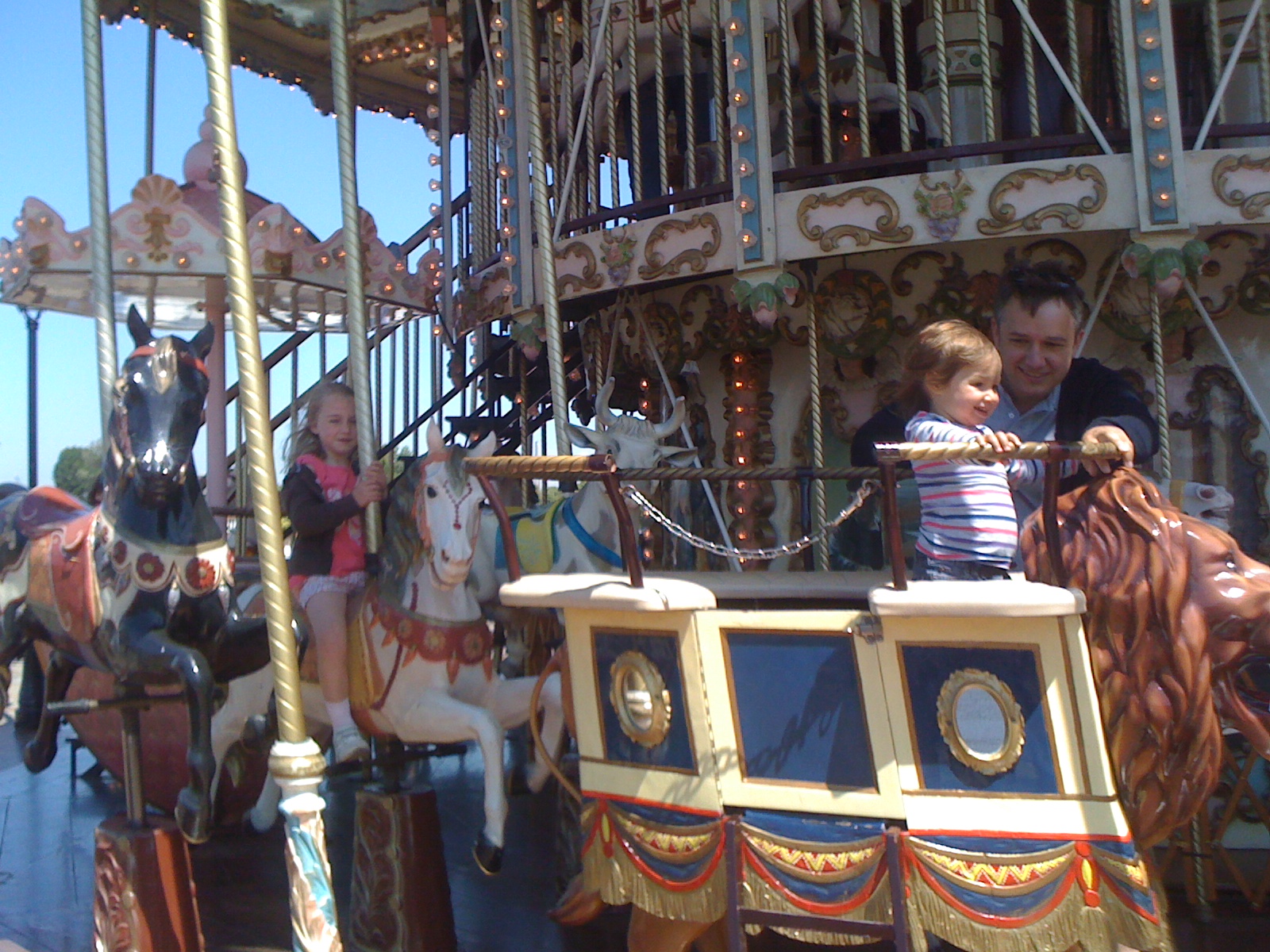
Honfleur carousel

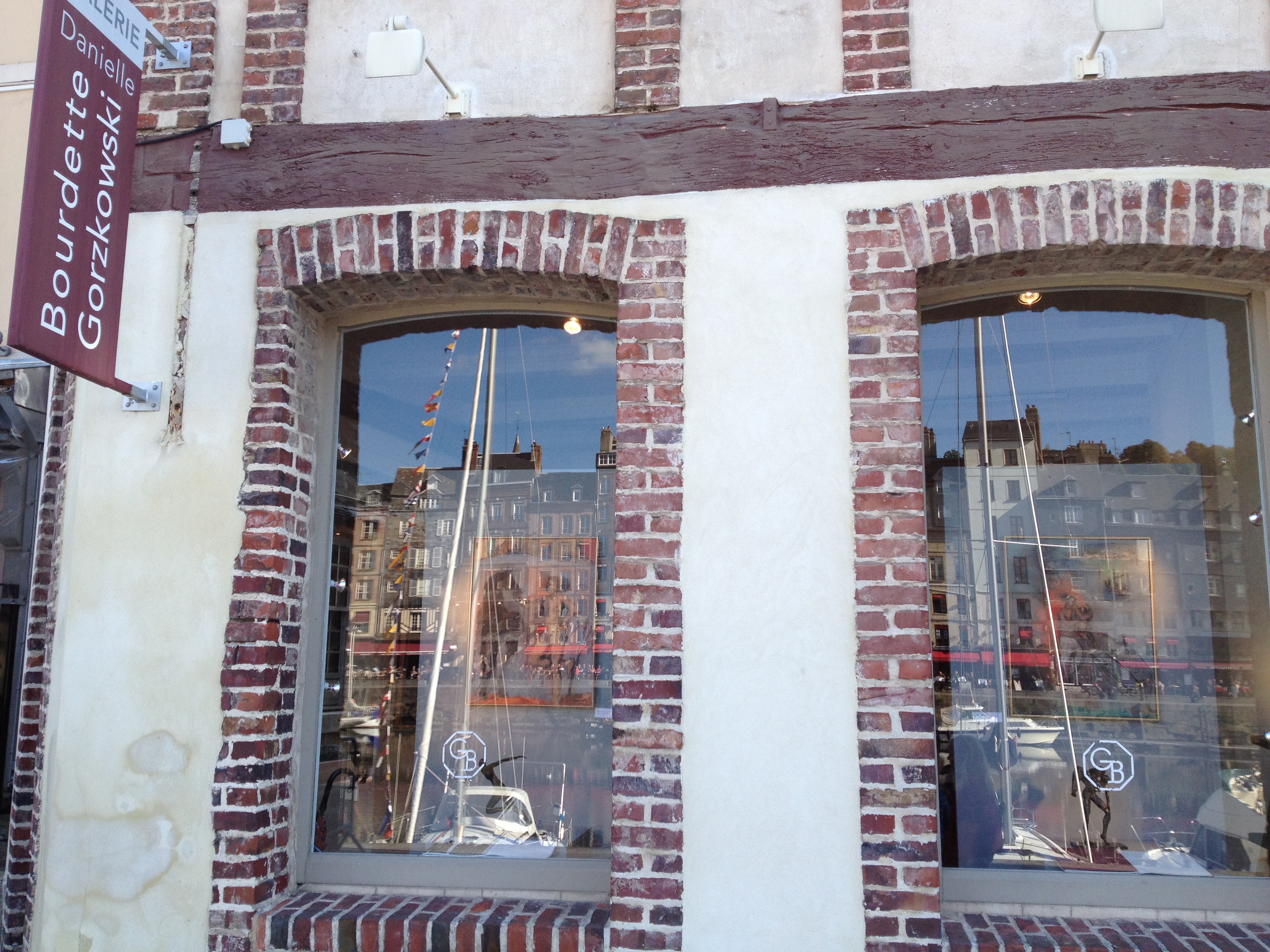
Honfleur is a lovely place to wander through. In the spring and summer there is an old-fashioned carousel by the harbour. (We are becoming aficionados of carousels in Normandy: there is another in Le Touquet which I have written about here.) There are many interesting shops to explore – gourmet food; incredible chocolate shops with elaborate seasonal creations in their windows; and a host of art galleries.

Honfleur galleryHonfleur gallery

We haven’t needed to stay overnight in Honfleur, but at this B&B, the proprietors were very kind when we needed to find a toilet for a toddler, quickly. It is set off the street around a charming courtyard, filled with flowers.

Honfleur shopLa Cour Sainte Catherine

There are many museums and historical sites in Honfleur. We haven’t visited most of them yet: we have been having too much fun eating and walking around. There are markers in the harbour recording the departure of Samuel de Champlain’s fleet. Quite striking and worth a look is the Eglise Sainte Catherine which, unusually for a large ecclesiastical building, is made entirely of wood. It was built by shipwrights in the 15th century, and the interior does have a nautical feel.

Samuel de ChamplainLavoir

We were fascinated by this public lavoir or wash house, fed by natural streams, up on the hill behind the harbour. It was closed on the day we visited, but is apparently still in use for much of the year.

Update: Here is a useful guide to Honfleur from The Telegraph: Honfleur, France: a cultural guide, 15 November 2011

Share this:

  • Click to share on X (Opens in new window) X
  • Click to share on Facebook (Opens in new window) Facebook
  • Click to share on Pinterest (Opens in new window) Pinterest
  • Click to email a link to a friend (Opens in new window) Email
Like Loading...
← Older posts
Newer posts →

Abbey Aizier Anglo-Norman architecture Armada Art autumn Birds Books bread brocante buying a house Buying a house in France calvados Carousel chaumiere Christmas Christmas tree churches Cleres cycling decorations Easter Etretat Europe Flaubert Flowers Food France Gardens Gemma Bovery Gertrude Jekyll guests Halloween History home decor Honfleur House in France Jumieges Le Bec-Hellouin Le Havre Les Iris Le Touquet London Madame Bovary Market Michelin Monet museum Normandy Olympics oysters paintings photography pictures Pont-Audemer Pont-l'Évêque Property Recipes Renoir restaurant reviews Romanesque Rouen ruins Seine shopping shops sport St Fiacre thatched cottage Tour de France Travel Walking wild mushrooms

Twitter Updates

Tweets by lesirisnormandy

Instagram

No Instagram images were found.

Enter your email address to follow this blog and receive notifications of new posts by email.

Categories

  • Culture
  • Food
  • France
  • Les Iris
  • Normandy
  • Property in France
  • Things to do
  • Travel
  • Uncategorized

Archives

  • September 2020
  • May 2019
  • April 2019
  • August 2018
  • May 2018
  • December 2017
  • July 2017
  • March 2017
  • February 2016
  • August 2015
  • May 2015
  • September 2014
  • July 2014
  • May 2014
  • October 2013
  • August 2013
  • June 2013
  • April 2013
  • March 2013
  • February 2013
  • January 2013
  • December 2012
  • November 2012
  • October 2012
  • September 2012
  • August 2012
  • July 2012
  • June 2012
  • May 2012
  • April 2012
  • March 2012
  • February 2012
  • January 2012
  • December 2011
  • November 2011
  • October 2011
  • September 2011
  • RSS - Posts
  • RSS - Comments

Create a free website or blog at WordPress.com.

Privacy & Cookies: This site uses cookies. By continuing to use this website, you agree to their use.
To find out more, including how to control cookies, see here: Cookie Policy
  • Subscribe Subscribed
    • chaumierelesiris
    • Join 78 other subscribers
    • Already have a WordPress.com account? Log in now.
    • chaumierelesiris
    • Subscribe Subscribed
    • Sign up
    • Log in
    • Report this content
    • View site in Reader
    • Manage subscriptions
    • Collapse this bar
 

Loading Comments...
 

    %d