Traditional decorations and the Christmas season in Honfleur

Tags

, , , , , , ,

The last post described my search for French Christmas tree decorations.  In the weeks after writing, I started to feel increasingly pessimistic about my chances of success. No one could tell me where to look. While we were away from Normandy, neighbours kindly decorated our cottage – a touching surprise that the children adored.  The decorations, however, were not quite of the made-in-France variety I was searching for.

Then, driving after dark from Calais to Upper Normandy during the holidays, the flashing Santas and light-dripping evergreens in village after village were as gaudy as anything I had ever seen in suburban America. Did real French Christmas decorations exist?

So I was intrigued when @mrslittleboot suggested Marie Vit in Honfleur, on Rue Haute where it meets L’Homme de bois.
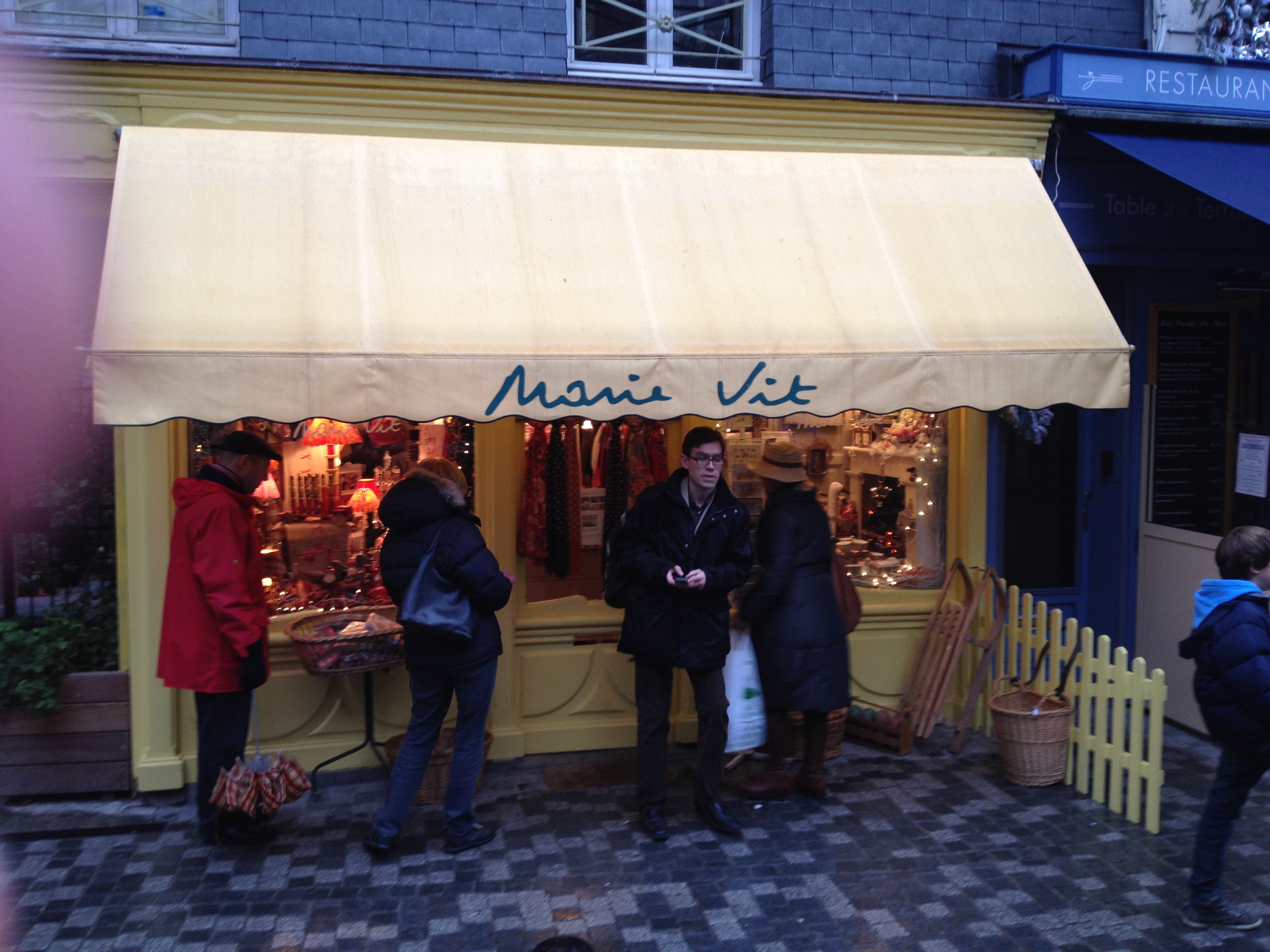
What a gem. Full of charming home decor ideas – including these delightful French Christmas tree decorations. I particularly like the toile hearts.

There are also baskets and baskets of what I thought were paper fans. In fact they are hand-marbled paper lampshades, each one unique. They come in various sizes.  What an attractive stocking stuffer.

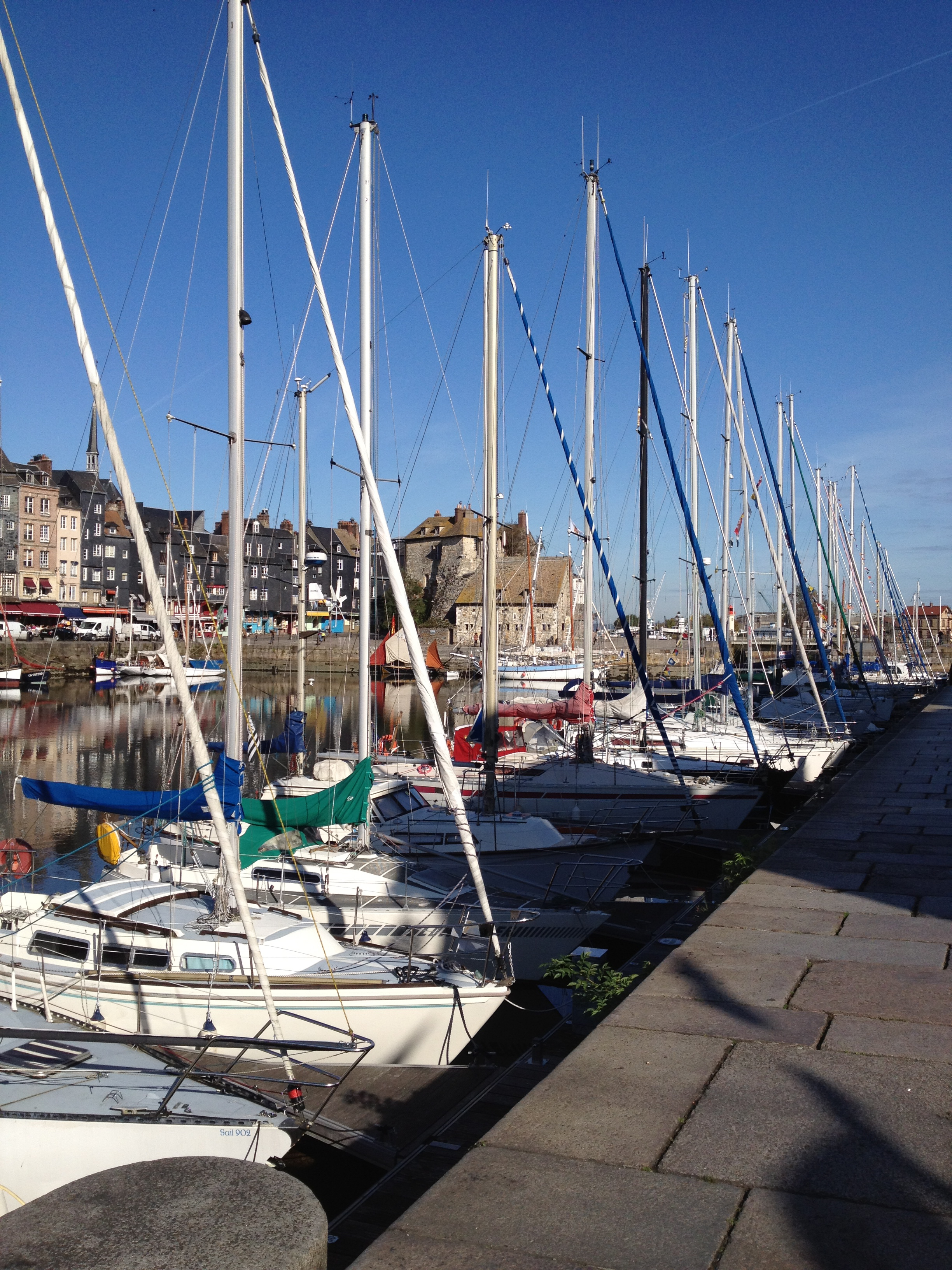
And Honfleur looked elegantly festive with its large fir trees and Christmas lights reflected in the old harbour. All Norman wood and red berried holly, nothing like the gaudy lights across the countryside.
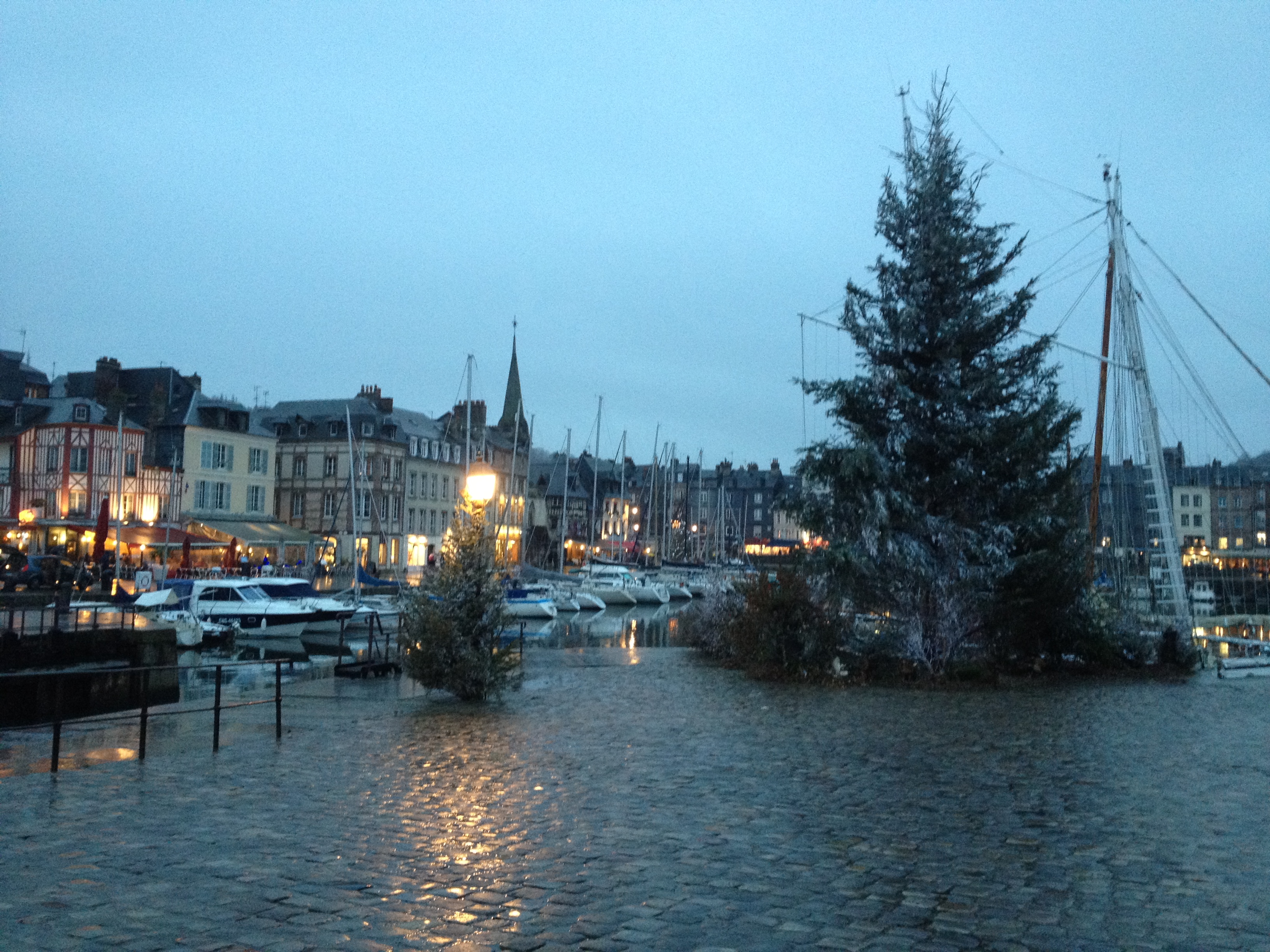
As is traditional during the festive season, we lunched on the freshest oysters with a touch of lemon at a restaurant next to the Honfleur docks. And look at these seasonal table decorations, complete with sticks of cinnamon. Just lovely.

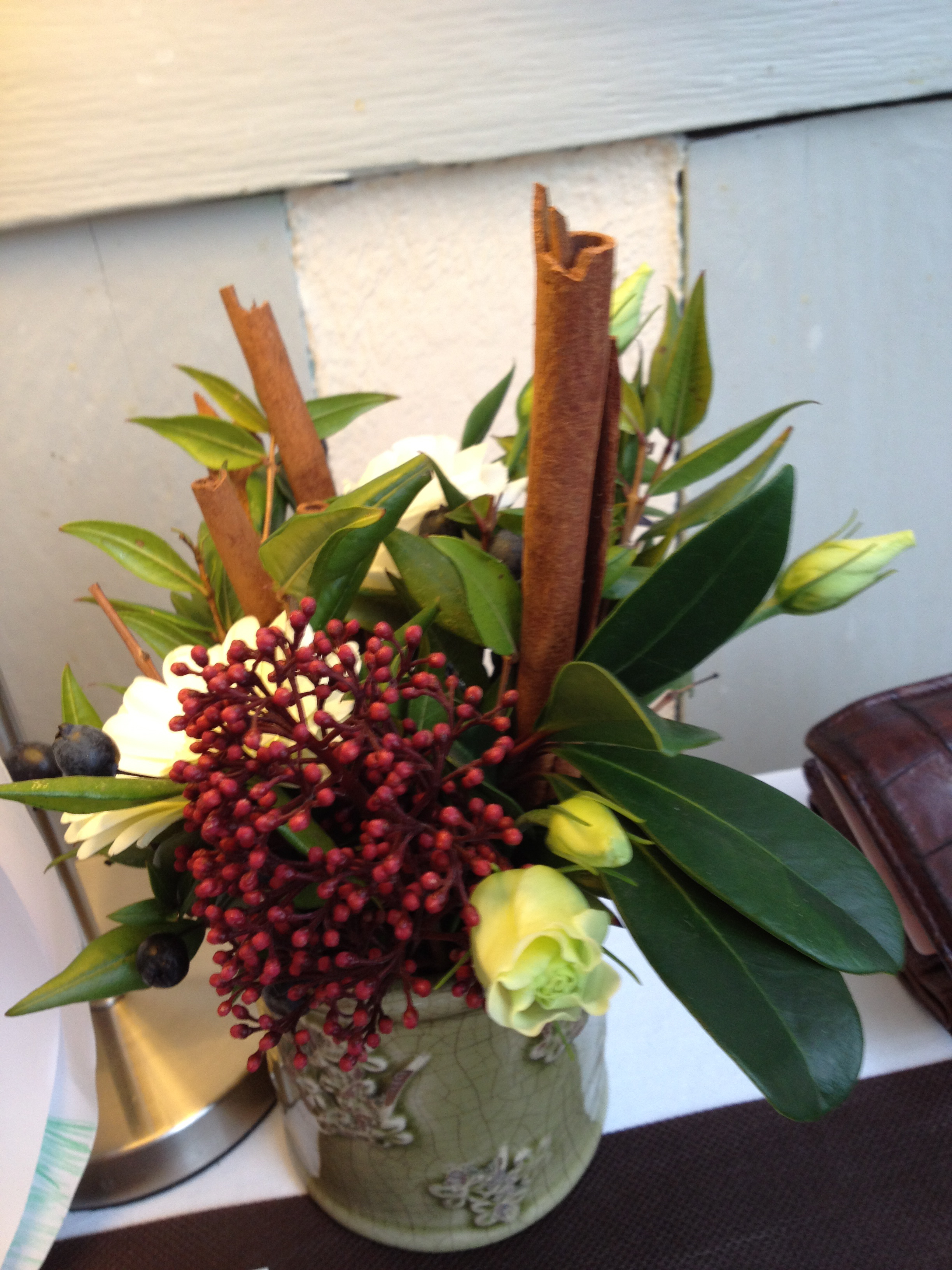
Flower arrangement, Honfleur

The World on our Christmas Tree

Tags

, , ,

When traveling for pleasure we like to find local decorations for the Christmas tree. It’s a way to remember some of the interesting places we have visited. It’s also a great excuse to buy tourist tat without making seriously expensive mistakes. My parents did the same, and their tree is heavy with adventures. My favourite is the wooden cosmonaut they picked up at Moscow airport in 1971. He hangs on the tree, a reminder of a vanished era of aspiration and confrontation.

Here are some of the decorations on our tree this year.

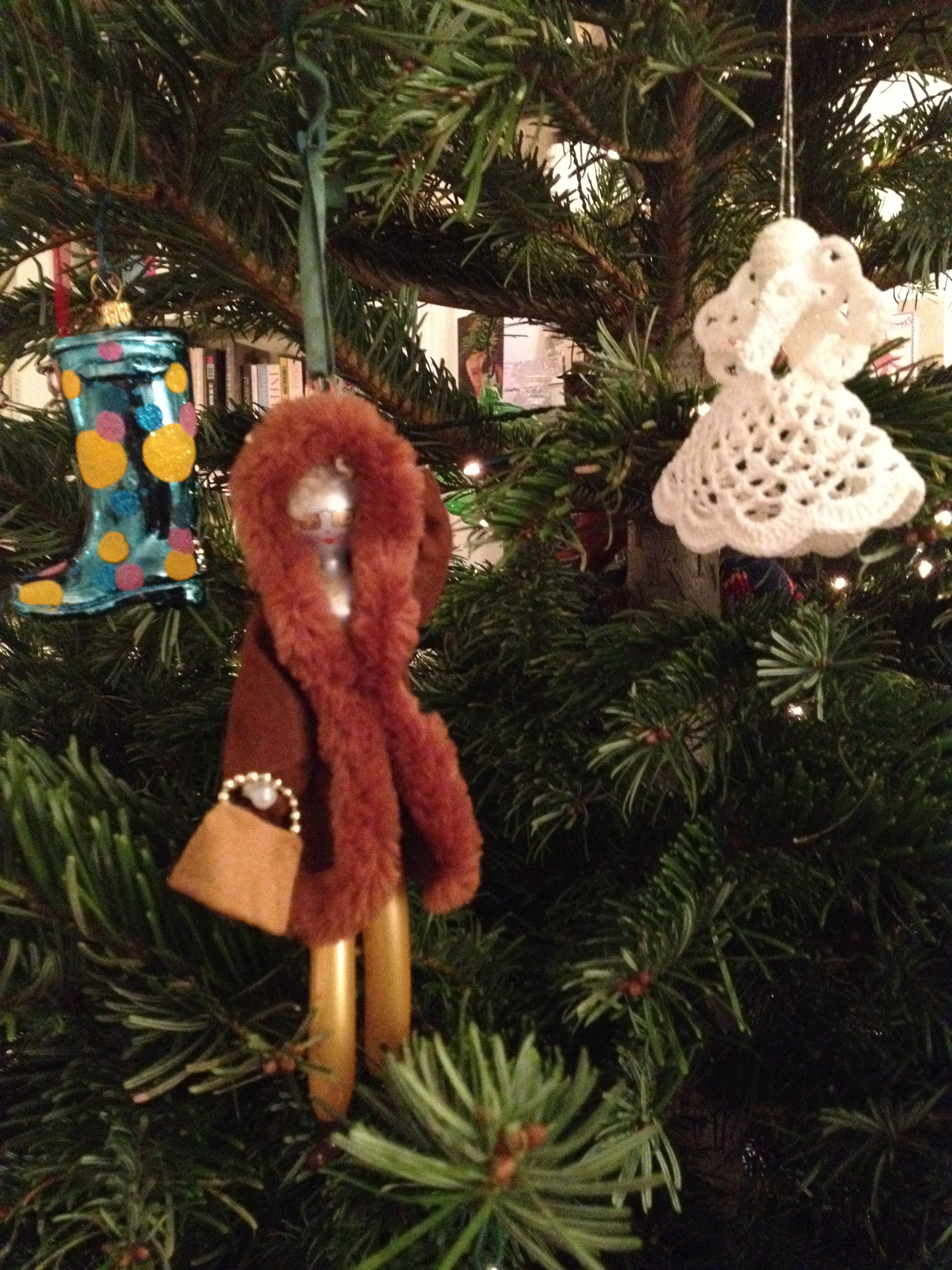
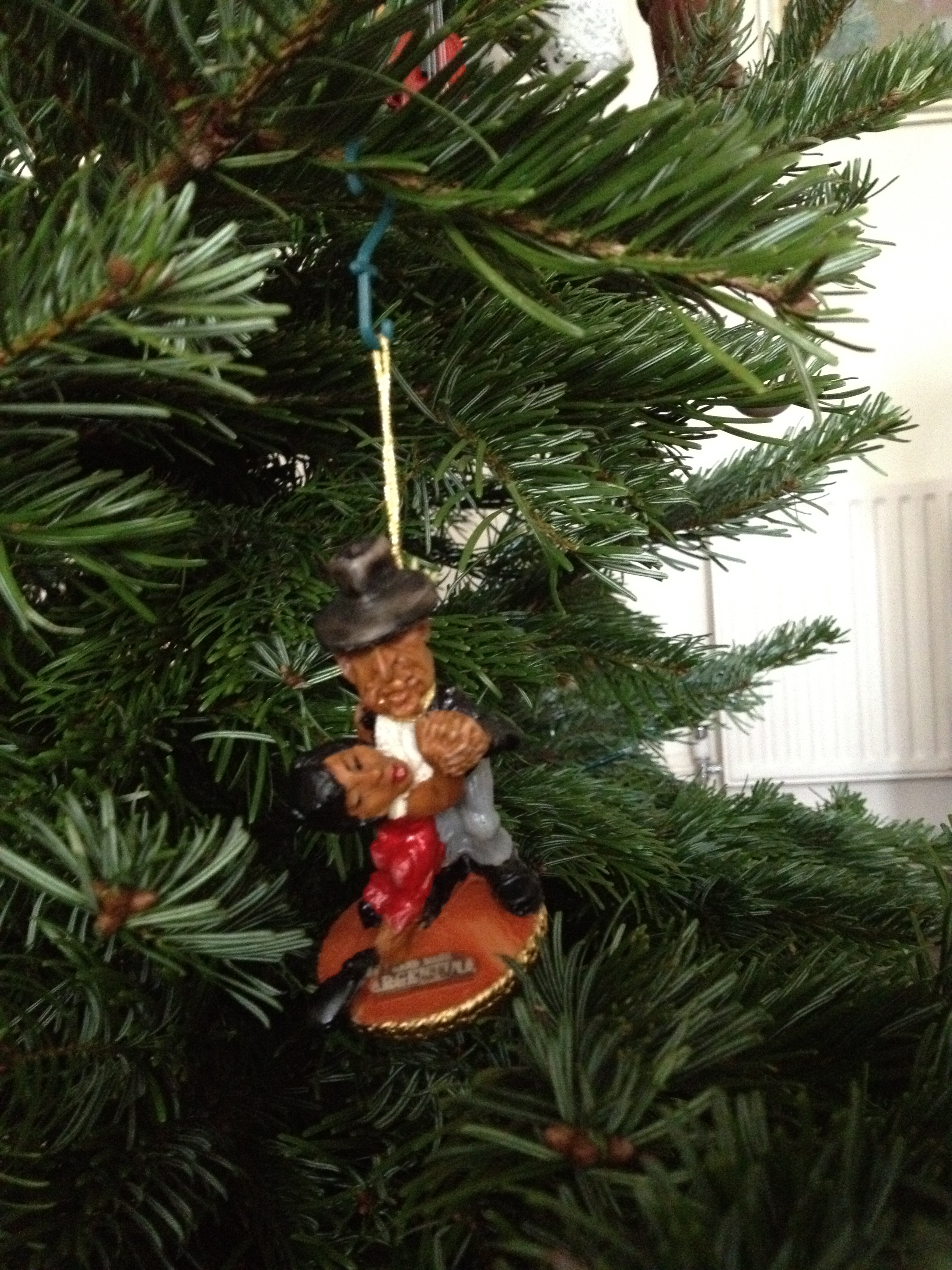
This glamorous shopping lady is from Colorado. She has always struck me as overly stylish for the Rockies–perhaps she is taking in the après ski scene in Aspen. We found the hand-made lace angel next to her in Tallinn, Eastonia. Tallinn’s old town is beautiful and  perfectly sized for a weekend visit if you can just manage to avoid the stag party crowds. The tango dancers are from Buenos Aires, where we watched equally craggy dancers dipping and spinning around the streets of La Boca.

Indian TigerPinnochio from Orvieto

I wonder if the Bengal tiger is wearing lipstick, or is that the remains of dinner around his mouth? He roars fiercly at the snowmen and santa decorations. We found the sweet-faced Pinnochio in Orvieto, a hilltown in Umbria, Italy. When I lived in Italy as a child I worried through Christmas that the old witch Befana who visits on the Ephiphany would bring me the coal that naughty children get instead of gifts.
Christmas tree decoration from GuatemalaViking Christmas Tree decoration from Iceland

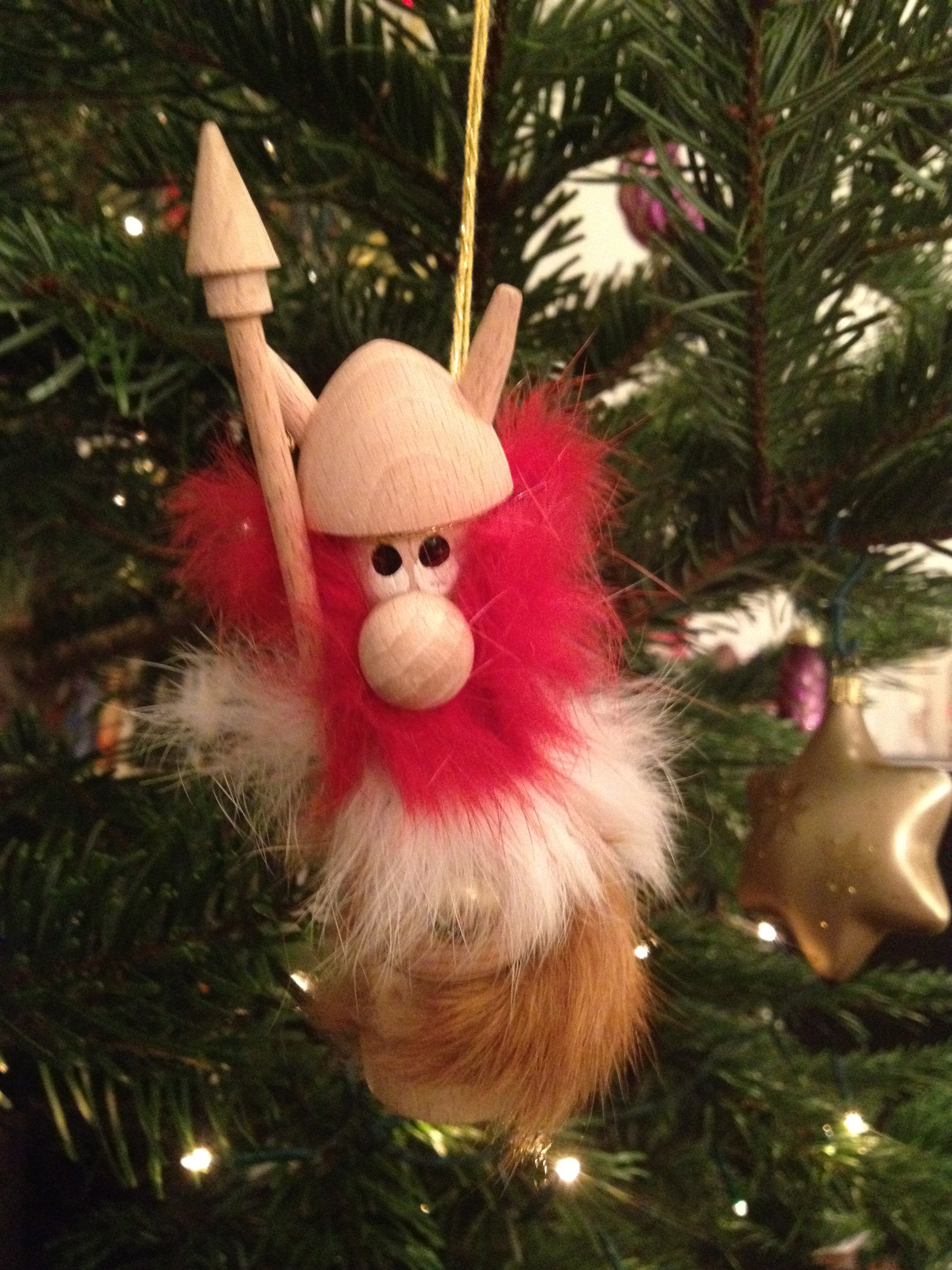
The little ladies are from Guatemala, where we marveled at the Mayan ruins in Tikal.  In Iceland we stayed at the isolated Hotel Budir on the Snaefellsnes peninsula. No vikings in sight there, but it was easy to imagine elves emerging from the mysteriously shaped lava rocks all around.

Crown Christmas tree decorationCowgirl Christmas tree decoration

This crown above and the chandelier below are English, from the Victoria & Albert Museum shop which sells unusual and unique Christmas decorations. The cowgirl is from Texas and I love her sparkling belt buckle. I’m not sure she does much cow herding in this outfit: maybe Daddy owns an oil well.

Supreme Court Christmas tree decorationChristmas Tree decorations from MOMA and V&A

My brother clerked for a time at the Supreme Court, and he arranged for us to take a tour and hear the justices hand down a decision. It was amazing to be there and watch history in motion. The blue Matisse blue bulb is from MOMA, New York and the green bulb is from Hawaii’s National Tropical Botanical Garden.

We think of the tree a work in progress, with many gaps to be filled. There is one gaping hole that I’d like to fill quickly. We spend so much of our time in France and yet have nothing to put on the Christmas tree. So please help me – where is the best place in Paris or Normandy to find Christmas decorations? And what are the most typical French Christmas tree decorations?

Britpop Revisited, and a French Connection

Tags

, , , , , , ,

Last week I wrote about taking an autumn walk in Normandy, and shortly afterwards I came across this column on walking. Writing in the Telegraph, former Blur bassist Alex James ponders the pleasures of walking–seemingly a whimsical luxury in our zippy 21st century lives. He puts it rather well:

There is no better way of seeing the world, or yourself, than walking. Nothing really ever happened then and nothing really happens now. Once we saw a stoat. Sometimes there is a dead thing. Walking is a feeling more than what happens.

I seem to have been walking a serendipitous path myself this week. No sooner had I read that article, than I found myself at a launch party in East London curated by none other than Alex James.

The evening was filled with excellent music and cheese, James having re-invented himself as a gentleman farmer and cheese-maker. One of his cheeses is marvellously named after New Order’s Blue Monday, and his book about this unusual career transition, All Cheeses Great and Small, comes out next year.

There is a French connection here and we’ll get to it in a moment.

With Alex James popping up all over the place, I pondered how little I know about Britpop. I was away from the UK at university and working in New York during the early Britpop years. Social Distortion, Liz Phair, Pavement and Nirvana were the alt rockers du jour. Had I missed one of the most important cultural moments of my youth?

A colleague, who has always struck me as more PPE than pop, surprised me with his enthusiastic recommendation of James’s account of the Britpop years, Bit of a Blur.

So I picked up Bit of a Blur, and discovered that James is quite a fan of France. He studied French at Goldsmiths (where he was a student alongside his mate, artist Damien Hirst). Years later, in an effort to sober up and find some focus, he learned to fly, and developed a fondness for  Le Touquet, which I’ve written about here. He regularly flew himself from Elstree to Le Touquet, which took about 40 minutes in his Beechcraft Bonanza. Here he explains what he likes about Le Touquet.

Coasting in at France, Le Touquet, Paris Plage, is the second town on the right. In days gone by it was the exclusive playground of the rich and famous. More recently they huddle together at the southern end of France on its grisly private beaches and within its gated communities. It’s all the same people you see in New York and London down there. Northern France, and particularly Le Touquet, are a well-kept secret. The expansive beaches are deserted and the whole place has a natural glamour…..There are chocolate shops, a casino, and silly things to rent and do. There are restaurants galore and hotels from the grand to the grounded.  After a while, I began to like the cheap hotels. They have the most character. Luxury looks the same in Le Touquet as it does in Leeds. You lose all sense of luxury if you never step outside of it. We all need a bit of rough with our smooth.

I couldn’t agree more with his assessment of the south, and of the relative charms of Northern France.

Now here’s what I’ve been wondering. What are the French pop music movements I have missed? I remember listening a lot to Air’s Moon Safari in the late ’90s. Has France had its own version of Britpop?

An Autumn Walk

Tags

, , , ,

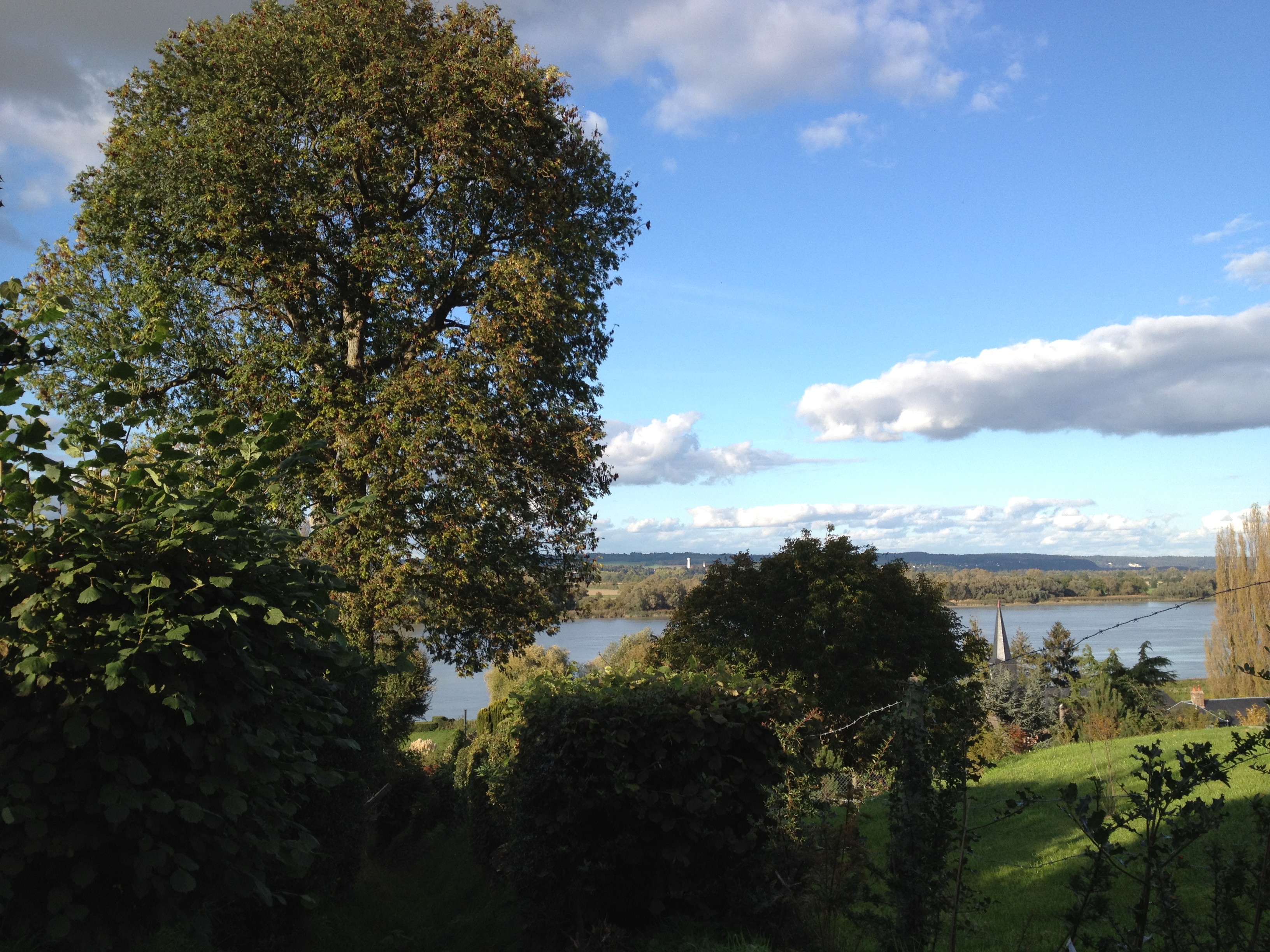
Our village sits on a gentle hill stretching up from the river. The newest houses (there are few of them, and these are the only ones which aren’t thatched) sit on higher ground, next to the forest. The hills are part of the Boucles de la Seine national park and  are densely forested. There are walking paths leading up from the village into the forest. We put the children in tall, strong Hunters before we explore the hills. There are many nettles, as well as wild mushrooms which the locals collect. There are views of the village and across the Seine.

Eure, Normandy

We last walked up the hill in October. It was a bright, crisp day – the best of autumn in Normandy. The path was covered in chestnuts which had dropped from the trees. This tree was resplendent with bright red berries.

Normandy, October

Not so long ago, the village was agricultural. As recently as the early 1980s, cows were kept at our cottage. Our “garage” is a cinder block cowshed, complete with stalls and mangers. The owners took the cows along the road to graze in fields. Today, the villagers are teachers and small business owners, or weekending Parisians. There are few homes with animals – a few chickens, and here, along one of the paths going up into the hills, these tiny shaggy ponies who peered at us from under their long hair.

Pony, Normandy

Five reasons to buy in France

Tags

, ,

Everyone gave us reasons not to buy a house in France. The impenetrable legal system. Totalitarian mayors. Unthinkable plumbing and sewage systems. The Euro! (This last, in retrospect, was probably the best reason). Everyone we knew seemed to have a friend who had had terrible trouble with a property transaction in France. Practical strangers volunteered their (mostly negative) opinions. We had bought and sold homes in London, never in France. London had not been easy. We expected the worst.

In the event, the transaction couldn’t have gone more smoothly. (I have written elsewhere about the bits that were difficult – finding the right house in the first place, and dealing with the French bank.) There are many places where you can read about the legal process of buying a house in France, including FrenchEntrée, Angloinfo and French Connections. Here are some of the books we found helpful:

These are the five top things we most enjoyed about the transaction.

  1. No gazumping! Rather wonderfully, the written purchase offer, the offre d’achat, prevents the seller from showing the house or considering any other offers after yours has been accepted. Having been gazumped (outbid after our offer was accepted) a few times in London, this started things out on a positive footing, for once.
  2. No surveyor! Surveyors feature prominently in London property exchanges, though it remains unclear to me what value they add. The sale price never seems to change, no matter what horrors the surveyor finds in the house you are buying. And there is always something that is not discovered by the surveyor – the boiler, inevitably, breaks down beyond repair the week after you move in. In France, our seller had kept excellent records of all works done on the cottage. He was a retired builder from Paris’s 16th arrondissement, and he had looked after the cottage carefully. Moreover, the French legal system requires the seller to secure independent reports on heating, electrics, asbestos and much more. Those reports were more thorough than anything we had paid a surveyor for in London.
  3. No lawyers! In UK property transactions, every step you take, every move you make is a legal one. The lawyers wrangle over which surveys can be done and which appliances are included in the sale and what will be done on which date. In France, property exchanges are overseen by the notaire, a public official who conducts searches, prepares documents, and collects the taxes. The same notaire acts for both parties. The process is heavily regulated and requires extensive disclosures from the seller, meaning we didn’t need a lawyer to secure the right documentation or set an appropriate timeline.
  4. Meet the notaire! In the UK, completion is purely a legal act, done by fax and email. It is quite possible that you might never meet the seller in the flesh. (They are running away before you discover all those faults the surveyor didn’t spot). In France, the Acte de Vente is an event. The buyer and the seller meet at the notaire’s office. Our notaire was based in a low-slung, modern building near the centre of a market town. The entrance had the feel of a GP’s office, but inside the corridors and offices were lined with traditional glass-fronted mahogany book cases that were stuffed from floor to ceiling with fat, ancient legal texts. The notaire was youngish, very tall, and utterly professional. During the previous weeks he had proven particularly effective at convincing French bank clerks to do their jobs in a timely manner. Intriguingly, there was no sign of a computer in his office. The huge desk which stretched diagonally across the room, leaving the rest of us an odd triangular space in which to arrange ourselves, was entirely covered with untidy stacks of case files. The meeting lasted about an hour. The notaire went through the paperwork section by section, checking that all was in order. Finally we all signed each page of the contract, and by the end my hand ached. And then we all shook hands with each other several times, and the notaire hurried us out and went off to greet his next appointment.
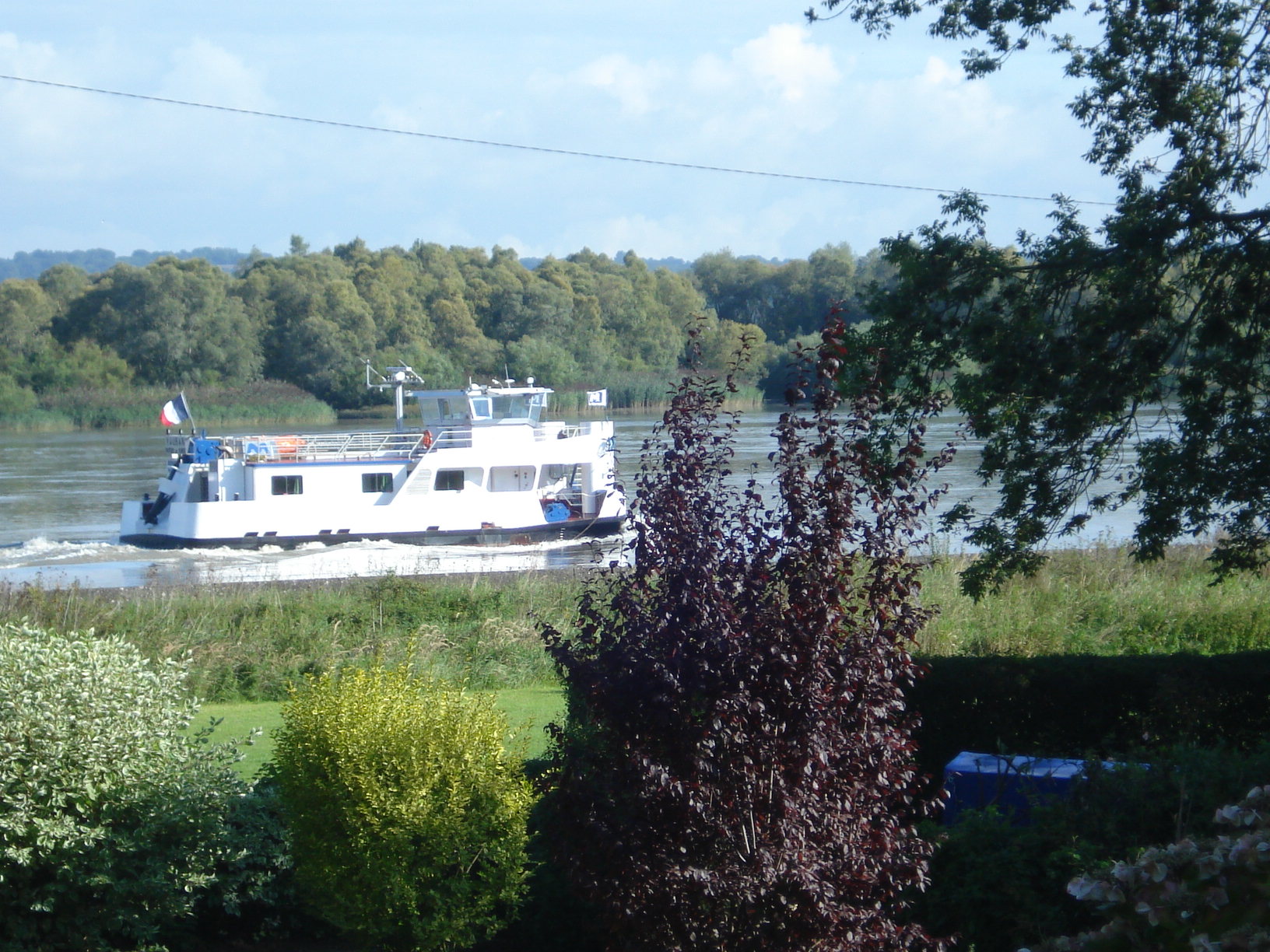
  5. Welcome home! Like sellers in London, estate agents tend to disappear from the scene once the exchange is done. In France, our estate agent – mid fifties, easy-going and athletic, always up for a drink and chat and never even a bit pushy – had made other arrangements. We would all, he announced, go back to the cottage after the completion. And so we did – the estate agent, the seller, as well as the seller’s daughter and granddaughter, a couple from down the street, and the children from next door. We drank champagne which the estate agent had arranged with the seller to chill at the cottage in advance. Boat on Seine, NormandyThere were candies and cakes for our children. Our seller, glass in hand, took us around the house again – showing us every light fixture, where the pipes were situated, how the electrics worked, hidden cupboards he had designed, and we could see how much he loved the cottage and how sad he was to leave. We knew he would be returning to the area for medical check-ups, and we invited him to visit when he did, and knew that he would. And then everyone left, and we walked down to the end of our garden and finished the champagne, watching the boats go past on the Seine.

Off-Season Honfleur

Tags

, , , , , ,

A few miles west along the Seine from our chaumiere is Honfleur, one of Normandy’s most picturesque fishing villages. Honfleur has long been important to Normandy, as a safe harbour during the Hundred Years’ War, then as a centre of maritime trade. French explorer and diplomat Samuel de Champlain, the founder of Quebec City, left for Canada from Honfleur in 1608.

HonfleurHonfleur

Today Honfleur attracts many tourists in the summer months. We have visited only in spring and fall, when it buzzes gently with weekending couples, and there’s enough watery sun shining for the restauranteurs around the rectangular harbour to keep a few tables outside.

Honfleur

This restaurant, right on the harbour, looks perfect for colder days: they provide a blanket on each chair to pull around your shoulders. We had a wonderful meal at the tiny Bistro des Artistes, which is on an upper floor of one of those tall buildings by the harbour. The menu is short but all freshly made. You access the restaurant from the street behind, and get a table by the window for a fabulous and unobstructed view out over the harbour.

Honfleur carousel

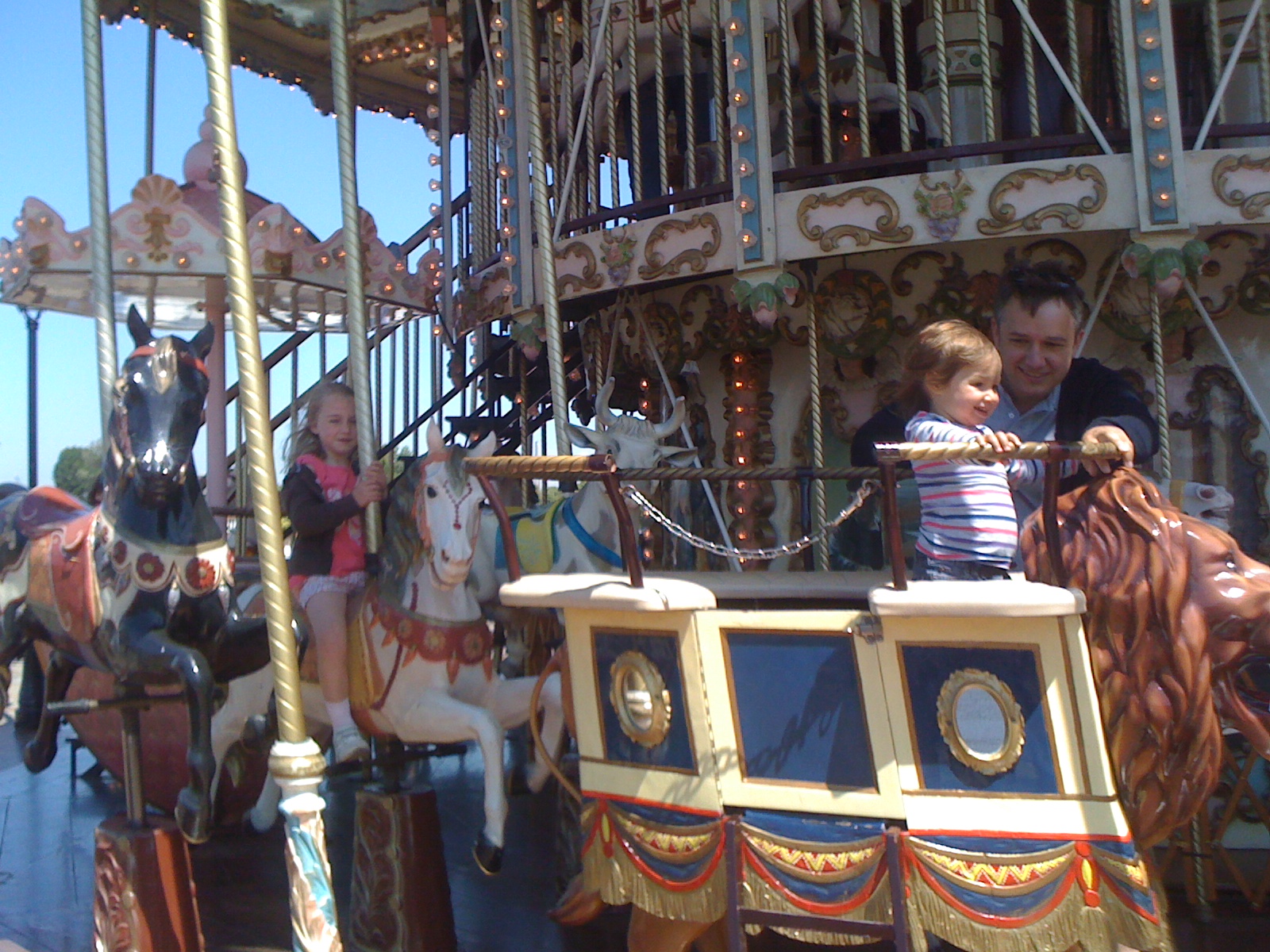
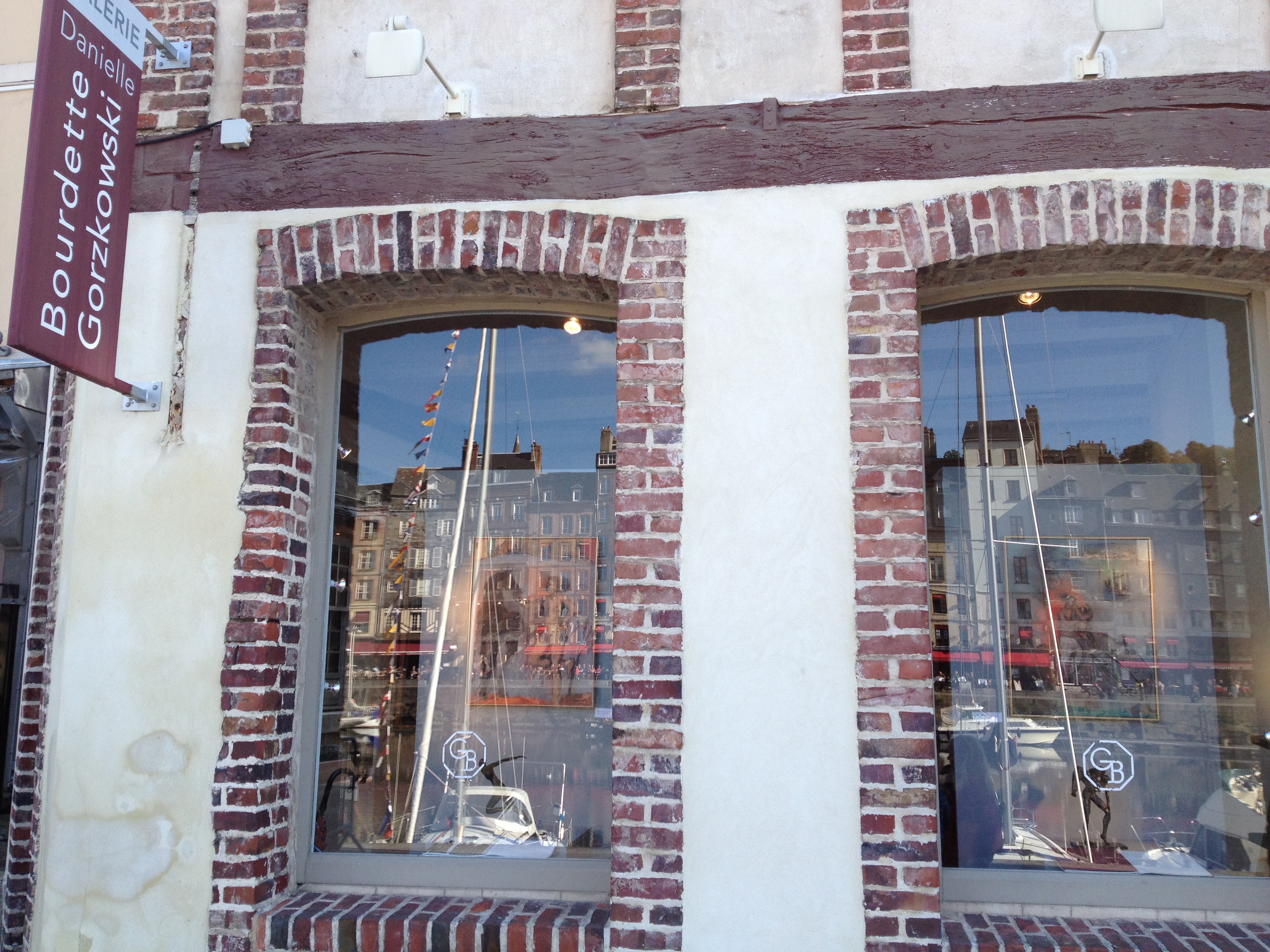
Honfleur is a lovely place to wander through. In the spring and summer there is an old-fashioned carousel by the harbour. (We are becoming aficionados of carousels in Normandy: there is another in Le Touquet which I have written about here.) There are many interesting shops to explore – gourmet food; incredible chocolate shops with elaborate seasonal creations in their windows; and a host of art galleries.

Honfleur galleryHonfleur gallery

We haven’t needed to stay overnight in Honfleur, but at this B&B, the proprietors were very kind when we needed to find a toilet for a toddler, quickly. It is set off the street around a charming courtyard, filled with flowers.

Honfleur shopLa Cour Sainte Catherine

There are many museums and historical sites in Honfleur. We haven’t visited most of them yet: we have been having too much fun eating and walking around. There are markers in the harbour recording the departure of Samuel de Champlain’s fleet. Quite striking and worth a look is the Eglise Sainte Catherine which, unusually for a large ecclesiastical building, is made entirely of wood. It was built by shipwrights in the 15th century, and the interior does have a nautical feel.

Samuel de ChamplainLavoir

We were fascinated by this public lavoir or wash house, fed by natural streams, up on the hill behind the harbour. It was closed on the day we visited, but is apparently still in use for much of the year.

Update: Here is a useful guide to Honfleur from The Telegraph: Honfleur, France: a cultural guide, 15 November 2011

Good Neighbours

Tags

, , , , , , ,

What makes a good neighbour? In London, where we share the walls of our terraced house on both sides, and hear more intimate details of each other’s lives than anyone is ready to admit, a good neighbour allows you space. No obvious peering over fences; no comment about what may have been seen, the curtains you haven’t managed to hang after a year of living in the house, the unpruned hedge in your front garden, your children’s early morning violin practicing. A good neighbour offers to help with maintenance of shared walls and informs you of upcoming and noisy building works, but doesn’t pop round for a chat and a cup of  tea unless invited properly.

And then Normandy. Our whole village, spread out on the hillside, has a smaller population than one half of our street in London. On the village feast day they all gather for a meal in a tent by the river, dining on ripe cheeses and homemade fruit tarts at long trestle tables. When you meet neighbours along the road you greet and chat: 5 minutes at least, but more likely 10 or 15 minutes. You will be told if your hedge is felt to need pruning. People are popping in and out all the time. It’s never, never an inconvenience.

Recently our neighbours took delivery of some new furniture while we were away. Not only did they help get the furniture into the cottage: they also assembled it and arranged the living room, a wonderful surprise when we arrived, tired and late after long days at work on an October evening.

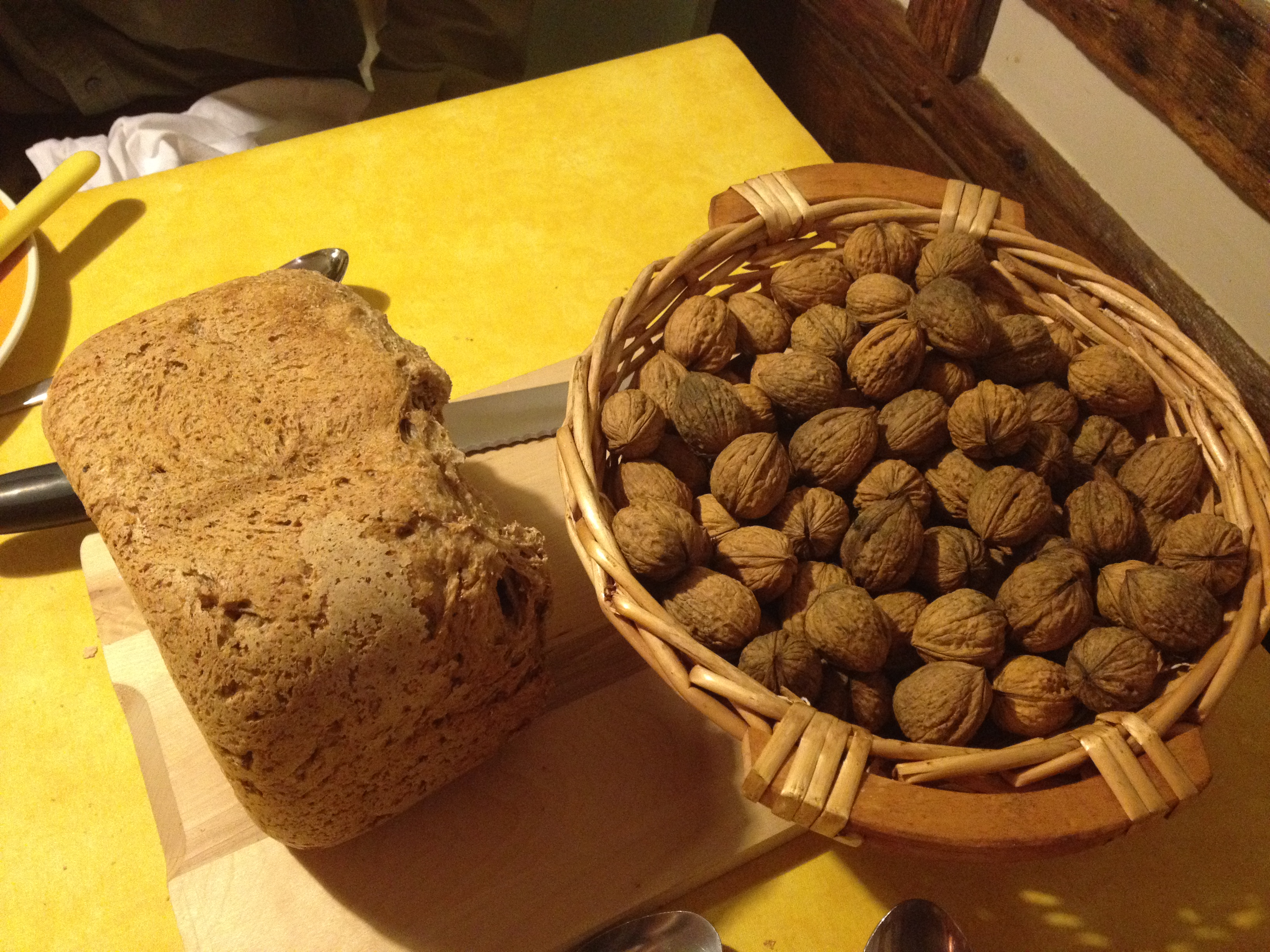
Walnut  Bread

And the next morning, a knock on our door and gifts. A basket of walnuts collected from their garden and, wrapped in a white linen napkin,  hot and sweet from the oven, a steaming loaf of just baked walnut bread.

I could get used to this kind of neighbourliness.

Peacocks and Pelicans: Le Parc de Clères

Tags

, , , , ,

I had read about the chateau and gardens at Clères in passing. It is mentioned for its interesting collection birds in guidebooks, and recommended as a good day out for families staying near Rouen. The Michelin Guide Normandygives it several stars, but doesn’t explain why. I was intrigued, and when we found ourselves wondering what to do on a cold, bright autumn morning in Normandy, we packed everyone into the car and headed towards Clères.
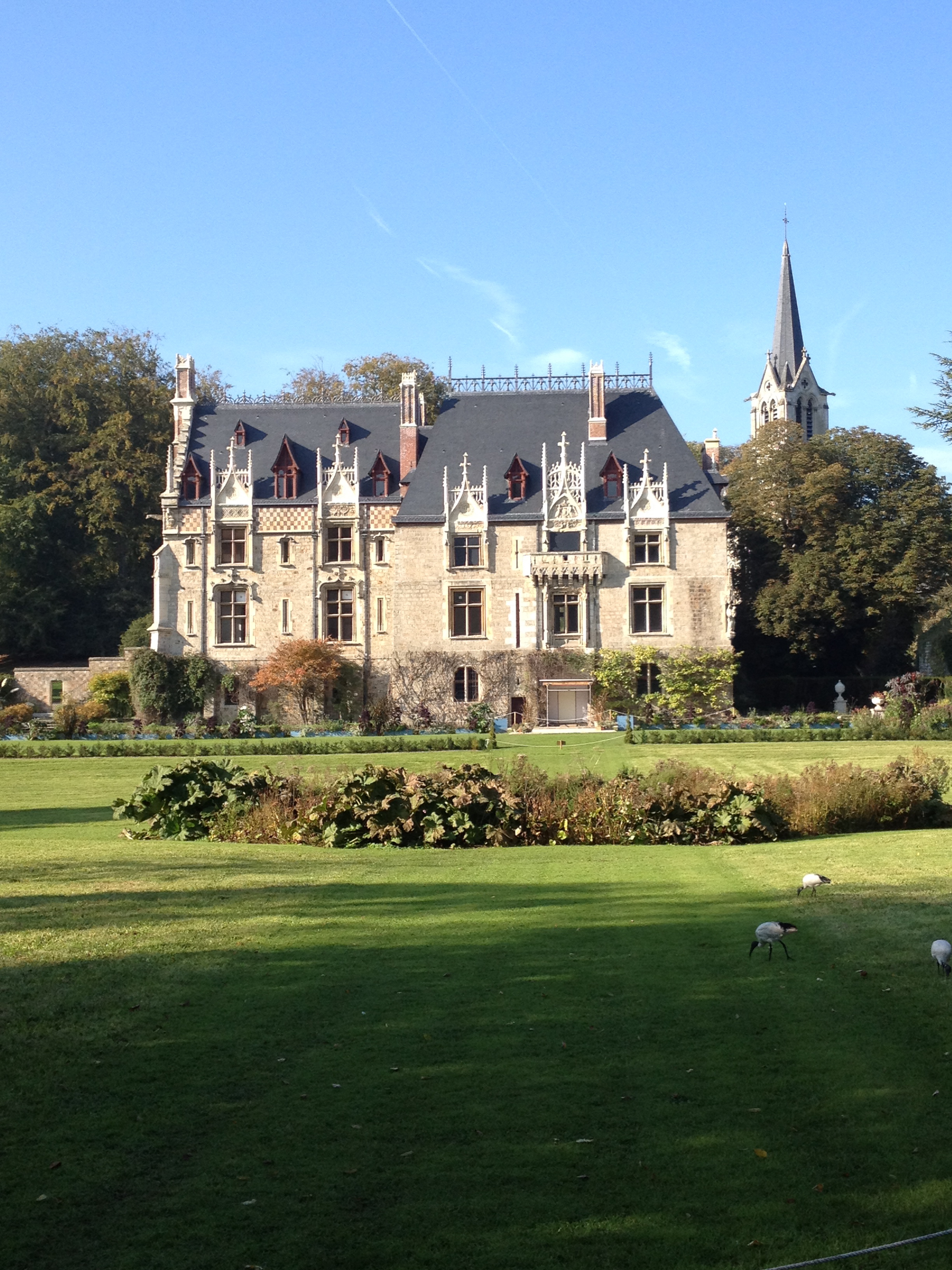
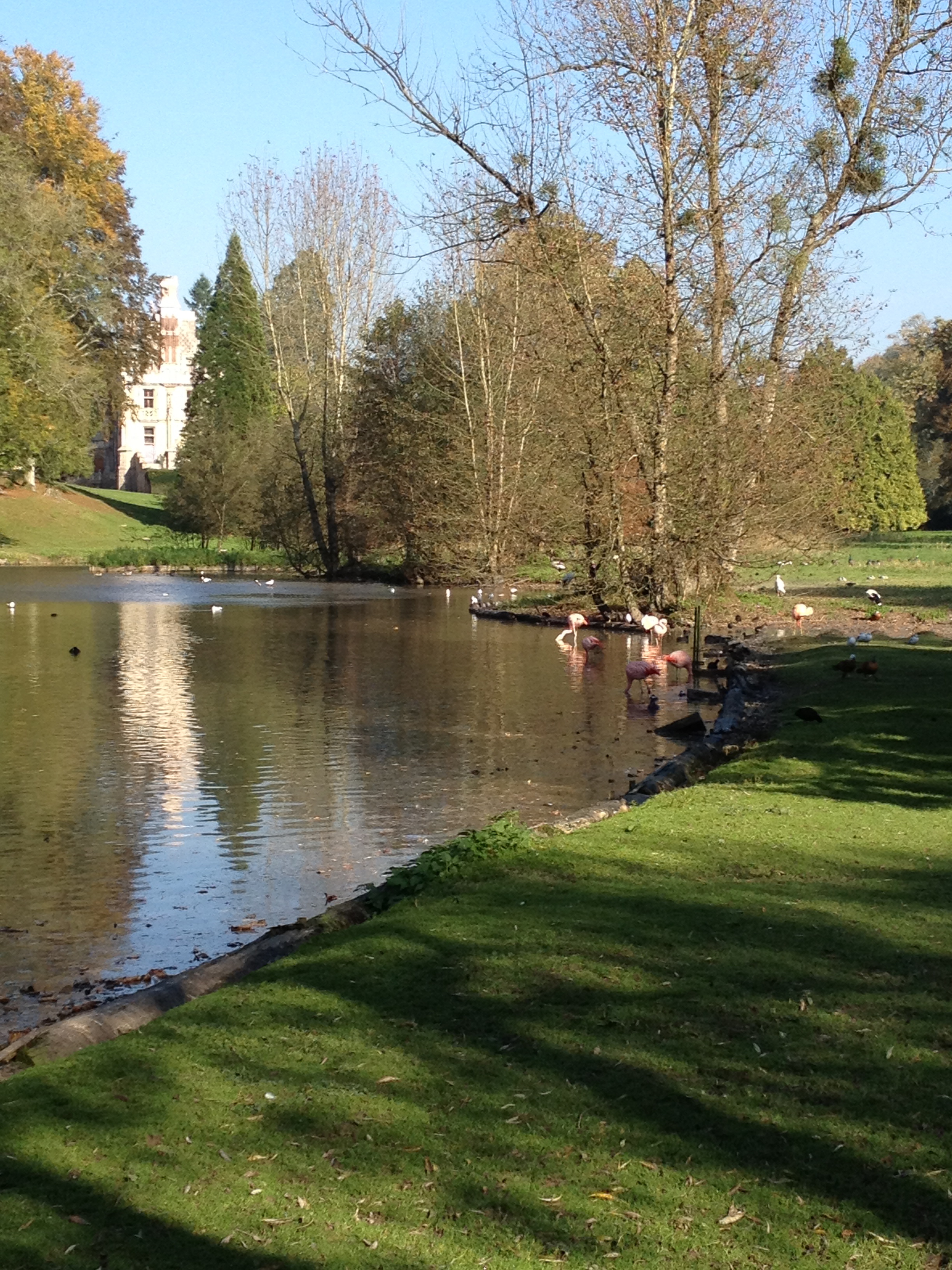
Nothing prepared us for quite how lovely Le Parc de Clères would be. During the 1860s the park was landscaped by the Comte de Béarn dans le style des parcs à l’anglaise. In 1919 Clères was purchased by zoologist Jean Delacour, who hired English Arts & Crafts garden designer Henry Avray Tipping. Delacour was a great traveller and collector, and in time Clères became a home for his collection.

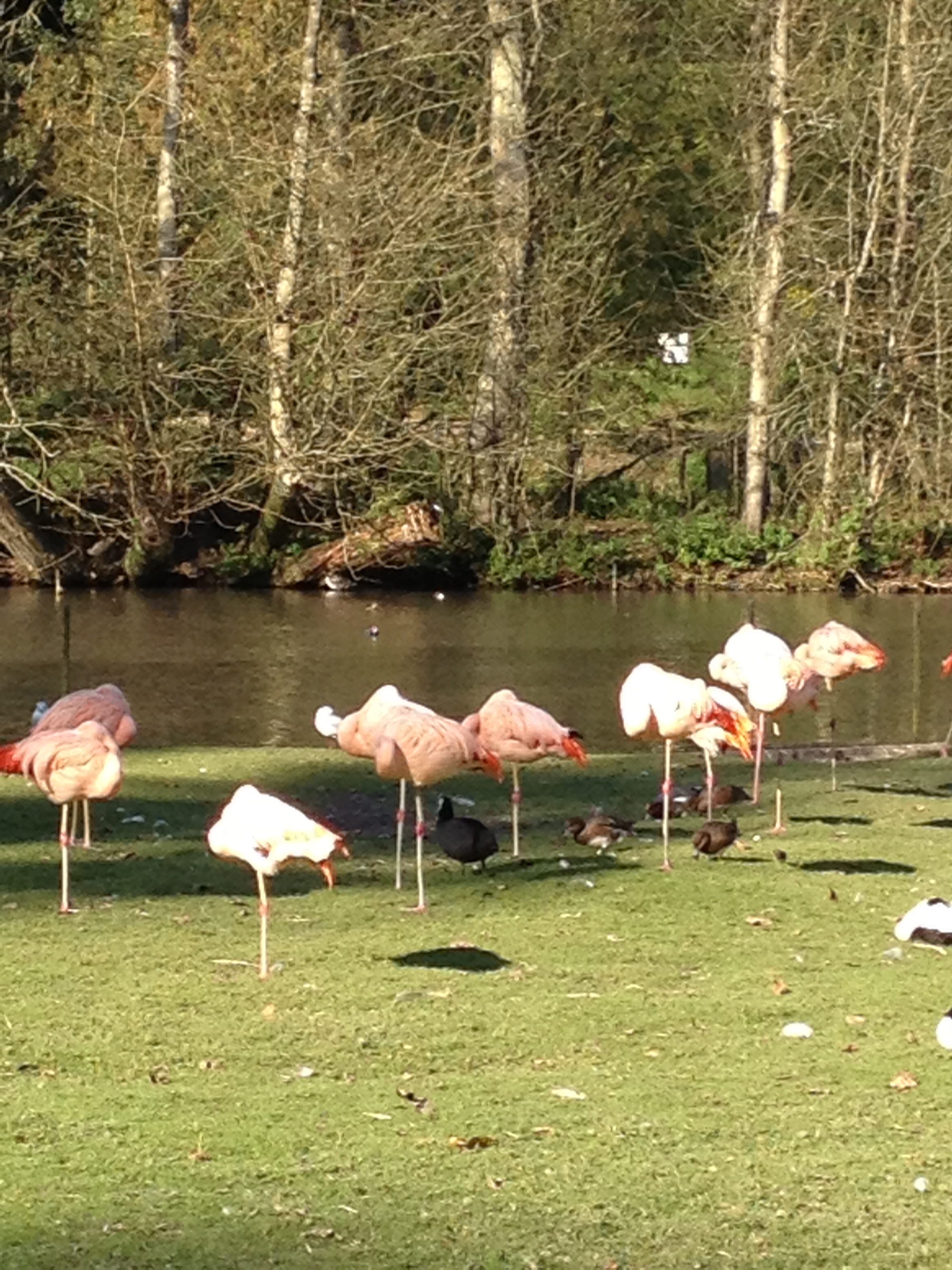
And what a collection! Clères is famous for its birds but there are also mammals: peacocks, pelicans, cranes, ibis, gibbon, wallabies, antelopes and many more. Most live in the parkland in semi-freedom: there are few visible cages or barriers. It took us about two hours to walk around the gardens, with many stops to climb trees, watch flamingos balancing on their spindly legs and pelicans dipping their droopy beaks.

Parc de Cleres

We loved the juxtaposition of the historic chateau with these southern hemisphere mammals, lazing in the watery autumn sunshine.

The chateau, which was not accessible for visiting on the day we were there, is interesting too. There are buildings from many different periods, including medieval fortifications, a 16th century manor, and later additions.

CleresCleres

The town of Clères is charming and a short walk from the Park’s gate. There are several tea rooms and bars, perfect for a refreshment before the drive home. All in all an excellent, and inexpensive day out for our young family. Our reduced price tickets were 4 EUR each – a bargain compared to urban zoos in the UK which can cost over GBP 15 per person.

Market Day in Pont-Audemer

Tags

, , , , , , ,

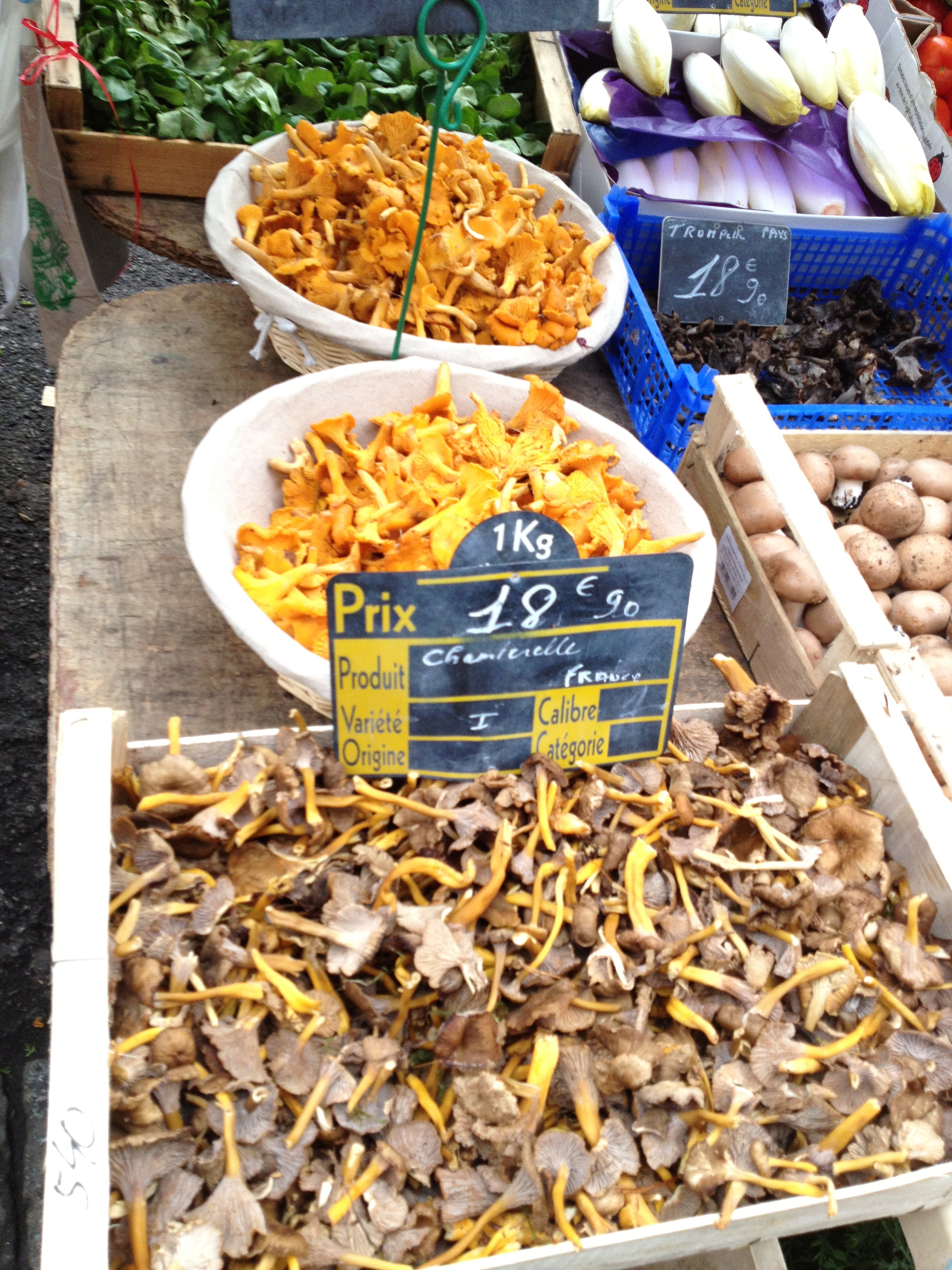
Is there any better shopping experience than a Norman market in October? The apples and pears are ripe; the wild mushrooms have been collected; the ducks are plump; la chasse is in full swing, and the seafood from the Atlantic coast is bountiful.

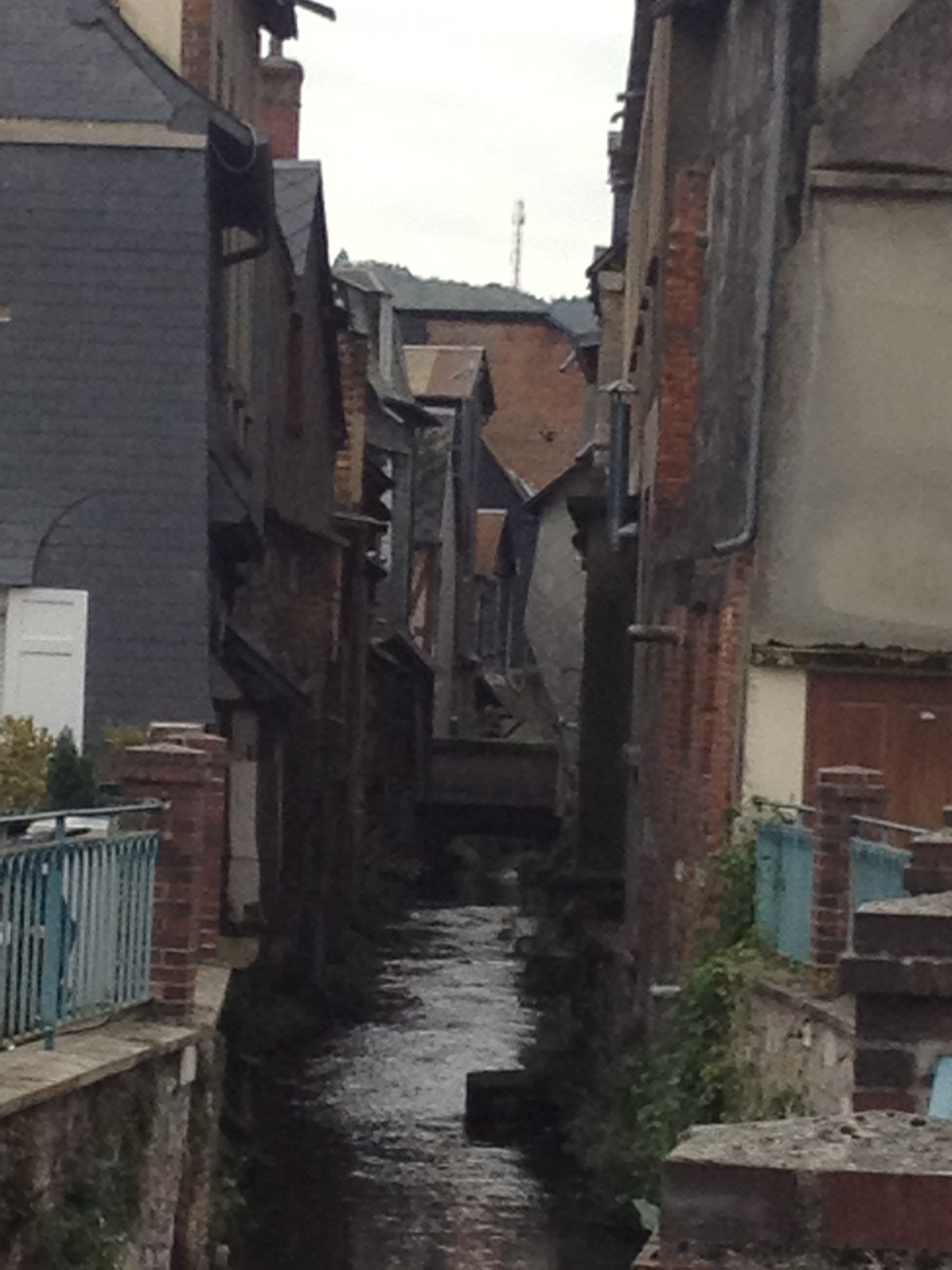
Our local market is in Pont-Audemer, a country commercial centre that, while charming, doesn’t have the tourist appeal of its neighbours Honfleur and Deauville. Some have called Pont-Audemer the Venice of Normandy, for its canal system that once served its famous tanning trade (the Hermès family hailed from here). I think the comparison’s a stretch. No palazzos in sight: but plenty of half-timbered Norman houses, narrow cobbled streets, a gothic church noted for its stained glass, and a bustling, bountiful market on Mondays and Fridays.

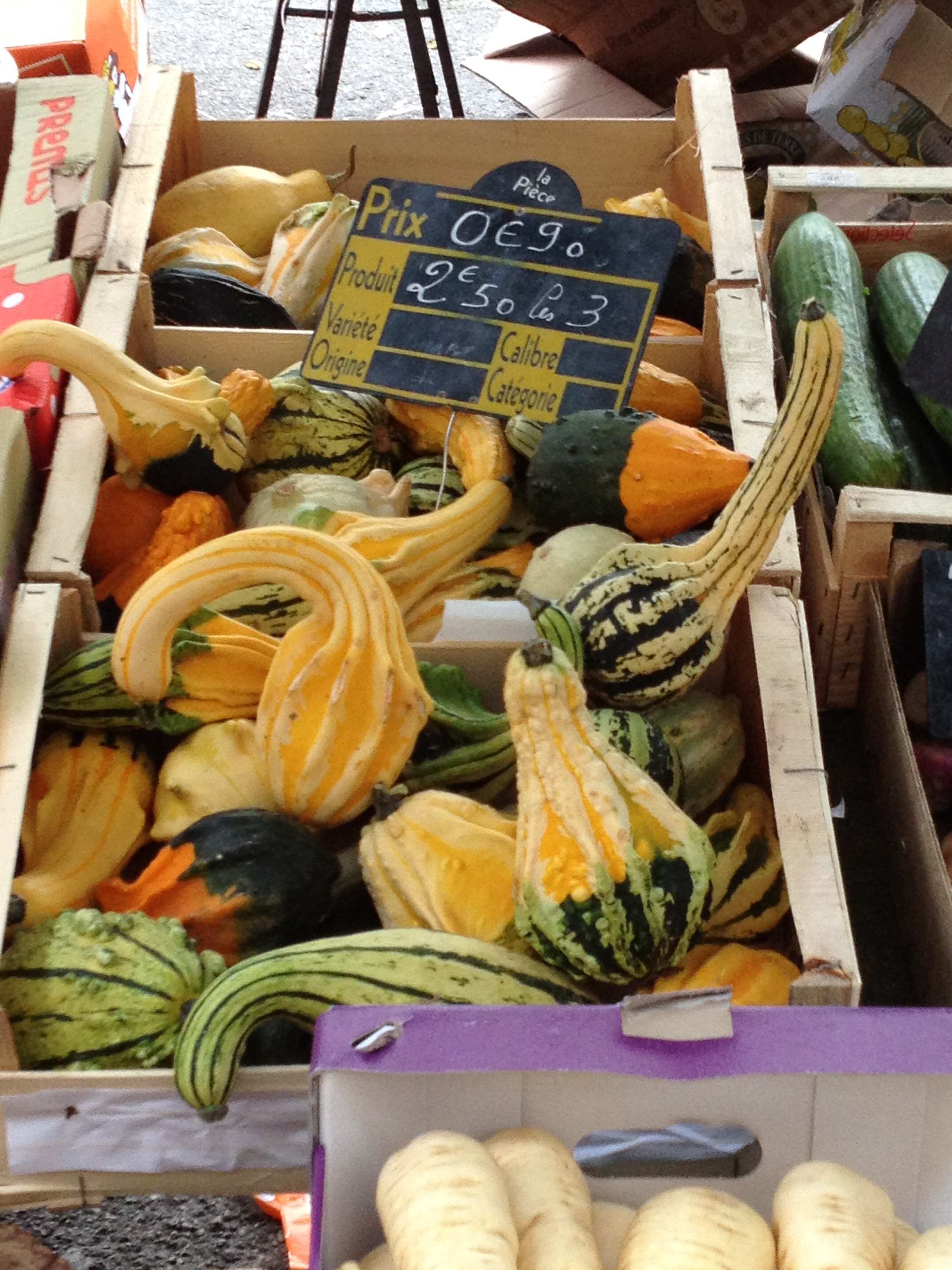
We love these unusually shaped squashes that you can find in Norman markets. They decorate our table from October until the Christmas decorations come out in December.

I wish I had taken a picture of the neatly stuffed ducks lined up and glistening in their rows. There were all shapes and sizes of box balls, smartly manicured in their pots. A hundred varieties of goats cheese – some brand new and dewily mild, others aged and pungent.

And, should you have a rush chair that needs to be fixed, there is man here who will do that for you. Wonderful.

A Celebration of the Stinging Nettle

Tags

, , , ,

In La Haye-de-Routot, in Upper Normandy, is a collection of heritage museums exploring aspects of Norman and French culture: traditional bread making (which I have written about here), the history of clogs, the linen house, and La Chaumière aux orties, a celebration of all things nettle. That’s right: l’ortie piquantethe common and much hated stinging nettle.

I

I am a city girl, and nettles, like cow dung, are annoyances, to be got past quickly, ideally gotten rid of. I only remember one sort of nettle celebration in my childhood.  At the boys’ boarding school my brother attended in the South Downs in the late 1970s, there was a field of nettles, thigh-high. The small boys would run through the nettles, their bare, white legs sticking out under grey flannel shorts. It was a badge of honour, to show no pain.

In fact, the nettle has long been celebrated for its many good qualities: as a medicinal herb, a nutritious food, and as fibrous material used in canvas and rope. The nettle is rich in vitamins, iron and protein. It is known for its re-vitalizing qualities and is used both as a tea plant and as a vegetable.

On some Sundays at La Chaumière aux orties there are cooking demonstrations. We were lucky enough to visit on a damp August afternoon. Shivering in our thin summer clothes, we were delighted to find a huge open hearth, a pot bubbling away, and a delicious smelling spread of food on a table: beignets, crumbles, cups of warm soup, a pie.

A chef was giving a demonstration of open hearth cooking and handing out recipes. She invited us to taste. Of course we accepted. It was only as the food was going into our mouths – including the mouths of our young daughters – that I noticed the basket of nettles on the hearth, and the pictures of nettles on the wall. I asked my husband what an ortie was. Too late.

And just as well, because the recipes were delicious. The soup, the beignets, the crumble and the pie: all wonderful, and not a hint of sting. Even our daughters went back for more.

I took copies of the recipes with the best intentions. But I’m having a hard time reconciling the hated nettle with that delicious food. Maybe soon I’ll get over it, put on my gloves, and go nettle collecting. There’s a forest of nettles along the side of the path at the end of our garden, just waiting for me.