• Home
  • Les Iris
  • Normandy in the Press
  • About
  • Rent the Cottage

chaumierelesiris

~ A fairy-tale cottage by the Seine in Normandy

chaumierelesiris

Tag Archives: Food

Le Havre in Rain and Sun

07 Monday May 2012

Posted by chaumierelesiris in Culture, Food, France, Normandy, Things to do, Travel

≈ Leave a comment

Tags

architecture, Art, Auguste Perret, Easter bells, Eglise Saint-Joseph du Havre, Food, Le Havre, Market, Musée Malraux, Oscar Neimeyer volcano, Renoir, sardines

Le Havre probably isn’t top of your list of things to do in Normandy. It certainly wasn’t top of mine–even though it’s on the Unesco World Heritage list.  For me, Le Havre has always been a ferry port on the way to somewhere nicer, famous for having been bombed to bits by both sides during World War II.

But my ever adventurous husband kept encouraging me to go. He wanted to know where all the boats that pass by the end of our garden were coming from; and he was interested in seeing the largest container port, and second busiest overall port, in France. So we left behind the bucolic blossomy Easter week countryside and drove off in search of urban grit.

Le Havre port

We arrived in a shower of rain, found parking, and ran into the nearest shelter, a large concrete doorway. I stumbled in, looked up, and then had one of those blinking-into-the-gloom moments that you get in the great medieval cathedrals like Notre Dame, Salisbury or Reims. Except here I was in a dramatic modernist space, the Eglise Saint-Joseph du Havre, made entirely from reinforced concrete. Built in the 1950s, the cathedral was designed by Auguste Perret, the architect who led the reconstruction of Le Havre after the war. It’s quite hard to describe the effect of stepping into this cathedral, and pictures don’t do it justice. The concrete is hard and cold and ugly, and yet the overall effect is uplifting and awe-inspiring. If you do one thing in Le Havre, go there.

The rain stopped, the sun came out (every day in Normandy contains about 7 days of weather in other places) and we headed towards the port, stopping along the way at the covered market for sandwiches and where we admired the traditional Easter bells and other chocolate on display.

Easter chocolate, Le Havre

Dotted around the port are some interesting sculptures, and this unusual Oscar Neimeyer designed volcano, which houses a cultural centre.
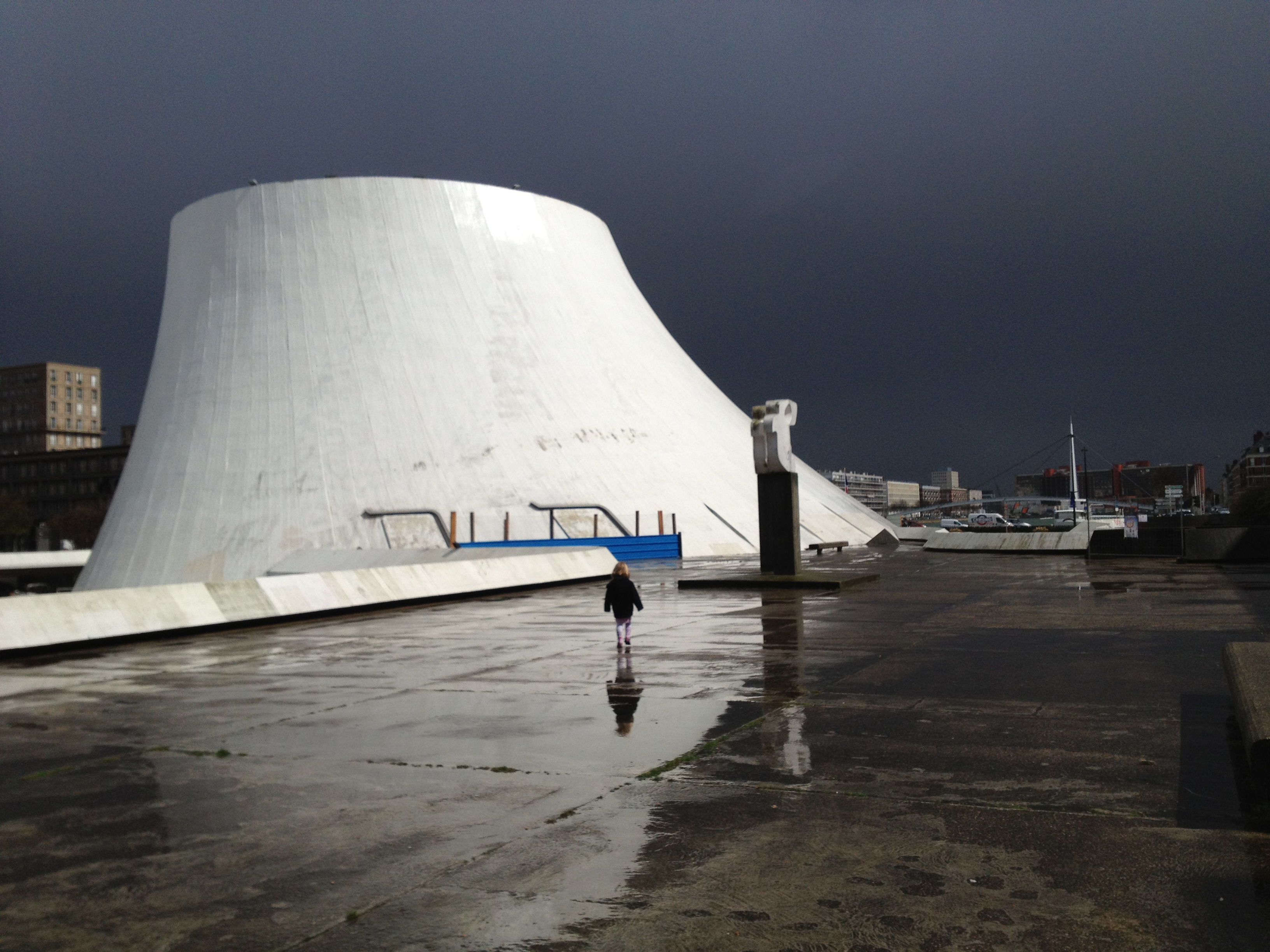
Oscar Niemeyer Volcano in the rain, Le Havre

Then on to the Musée Malraux, known as MuMa, and its excellent collection of impressionist art in another modernist space that’s more attractive inside than out.

Musee des Beaux-Arts Andre Malraux Le Havre

There are works by Boudin, Monet, Dufy, and many of the impressionists; I particularly liked the several portraits by Renoir, as well as the way the museum windows let the changing Normandy light right inside.

Along the seafront from the museum, boats were being taken out of dry dock by men with a small crane. We walked out along the long pier. Retired couples out for a stroll greeted us warmly, and a class of small student sailboats bobbed about at the end of the pier. Looking back was a rather lovely view of the port, smart new apartments, and the Perret cathedral tower.
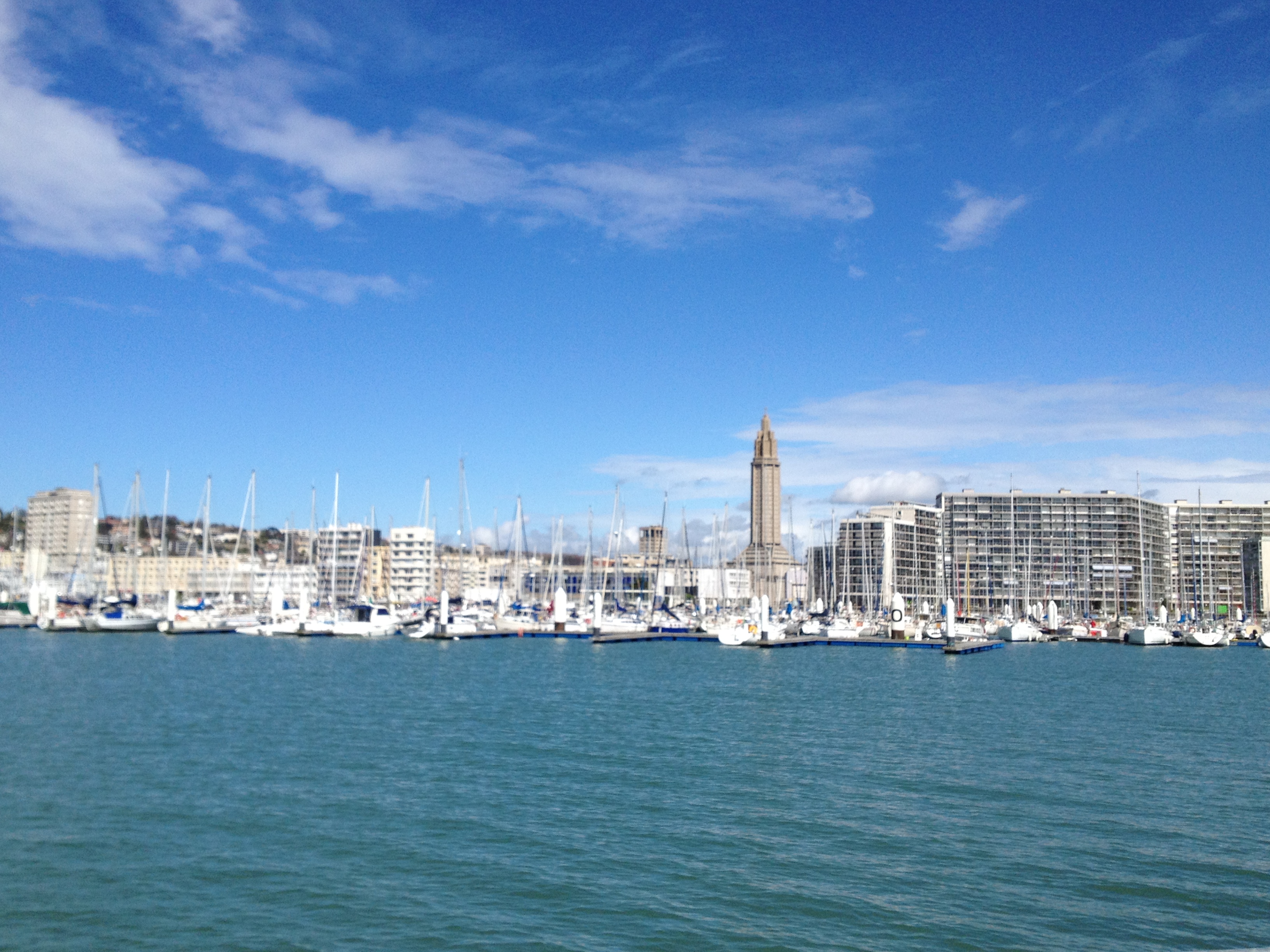
Le Havre harbour and Auguste Perret tower

Do look out for the seafront shop, La Belle-Iloise, which has walls and walls of these brightly coloured tins of sardines. What wonderful gifts.

La Belle-Iloise, Le Havre

Le Havre seems to me something like a beautiful easter egg hidden in an old bag, full of delightful surprises that it’s worth taking the time to savour.

Share this:

  • Click to share on X (Opens in new window) X
  • Click to share on Facebook (Opens in new window) Facebook
  • Click to share on Pinterest (Opens in new window) Pinterest
  • Click to email a link to a friend (Opens in new window) Email
Like Loading...

Dinner by Michelin: Auberge Du Vieux Logis

21 Saturday Apr 2012

Posted by chaumierelesiris in Food, Normandy

≈ 4 Comments

Tags

Conteville, Eric Boilay, Food, Michelin, Normandy, Pont-l'Évêque, restaurant, review

One afternoon last year we bought the Michelin Red Guide. We had finally settled in a corner of Normandy and were starting to explore the neighbourhood. As this is Normandy, to know the food is, in no small sense, to know the place.

Still, we wondered about our reasons for getting this particular guide. We’re in the wander-and-discover school of restaurant-finding, with little patience for deciphering the strange codes of the Michelin men. We’re not alone on this. Once the standard by which western restaurants were judged, the Michelin guide appears to have lost some of its resonance. In our casual culture, where food preparation is entertainment and originality counts, all those painstaking courses, tiresome and pricey wine lists, the gaunt-faced anonymous testers, feel a bit pointless. It’s Zagat, without pretentions to anything beyond the here and now, written by you and me and owned by Google, that seems the flavour of our age.

Fair enough, if you’re in Kyoto or Texas or anywhere that has a home-grown food culture. But if you’re in France, why not reconsider? After all, it’s the birthplace of the food culture that Michelin ratings were invented to measure. What good is the Michelin guide if you can’t use it in France?

And so we let the Michelin men tell us where to go. There are four starred restaurants within a 40-minute drive. Best known is Gilles Tournadre’s two-star Gill in Rouen. Also with two stars is Alexandre Bourdas’s fish restaurant Sa. Qua. Na. in Honfleur. Closer to home are business-smart Jean-Luc Tartarin in Le Havre, and Eric Boilay’s Auberge Du Vieux Logis in Conteville, each with one star.

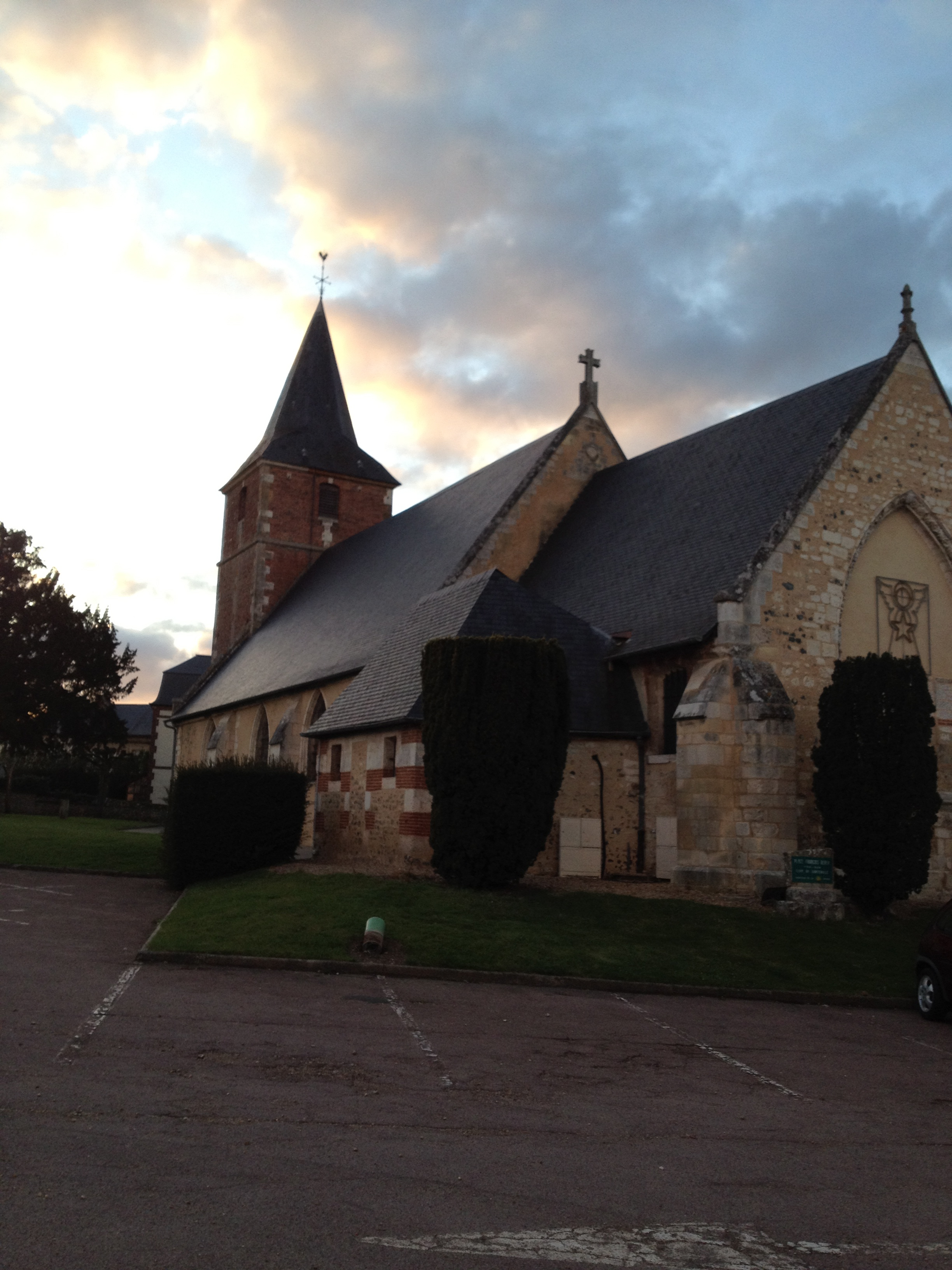
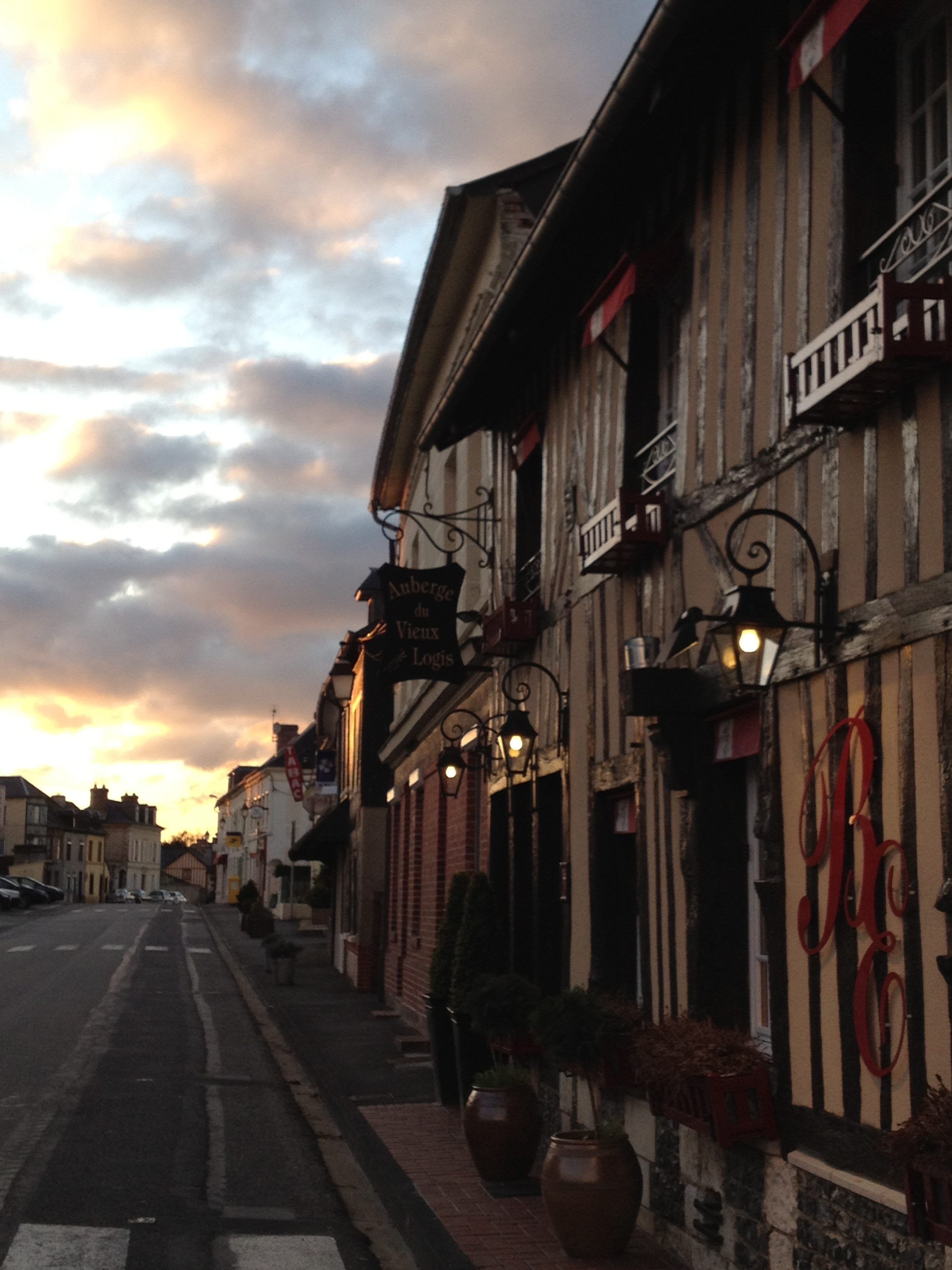
Cows, Marais VernierChurch, Conteville, NormandyL'Auberge du Vieux Logis, Conteville, Normandy

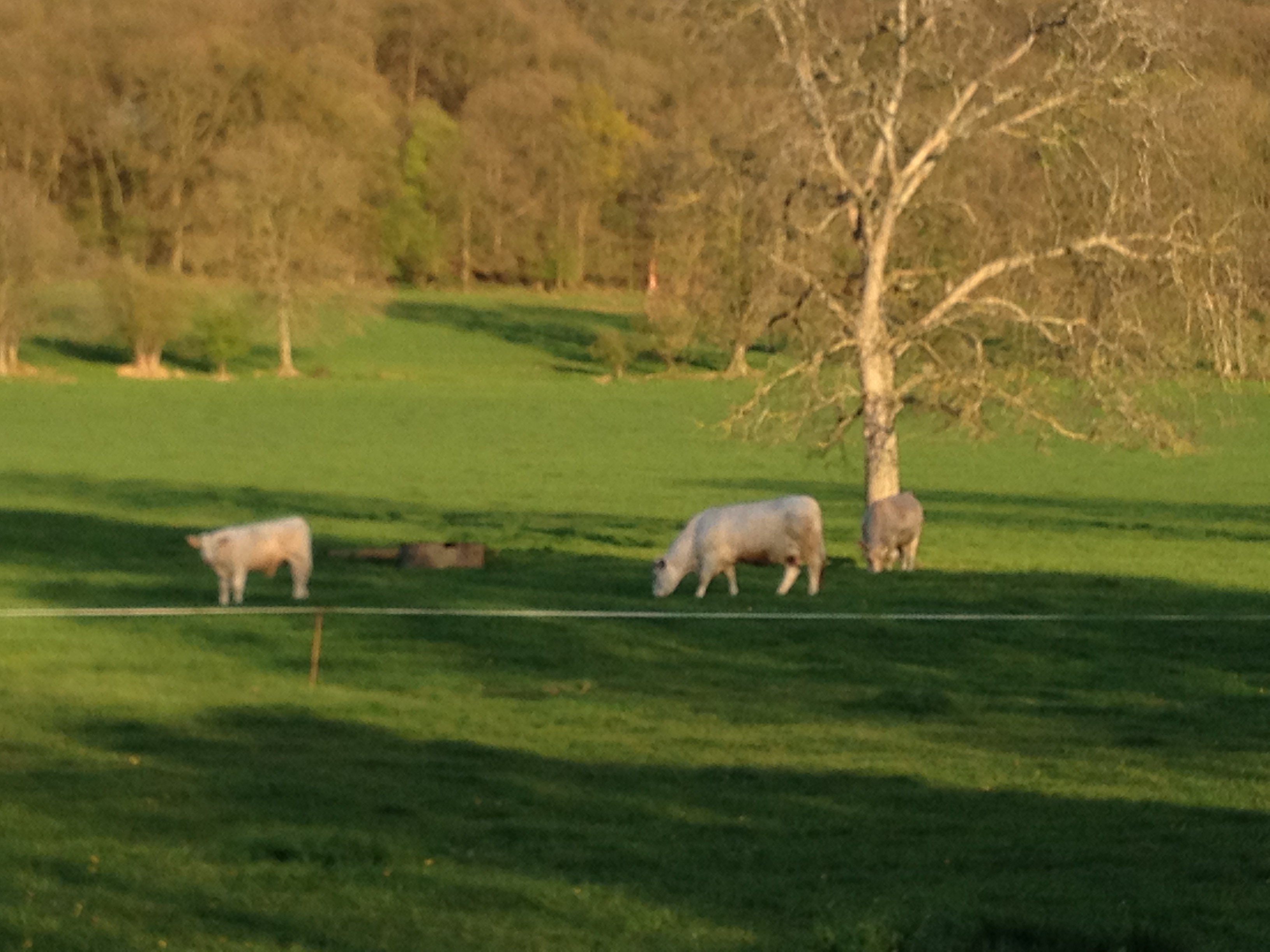
We started with Conteville because it’s the closest, a 20 minute drive from the cottage. A last-minute booking was easy to make on a Wednesday in mid April. The drive through Marais Vernier was bucolic, the trees lacy with apple blossom and calves the size of large dogs trotting around the fields. Conteville is an attractive village close to Honfleur with a church and a few shops. The restaurant is the biggest show in town.

Auberge du Vieux Logis, Conteville

It’s an utterly traditional restaurant, half-timbered outside and all wooden beams, red curtains and upholstered chairs inside. The preparations were traditionally Norman too, apart from one sashimi amuse-bouche. Our waiter was proud to inform us that all the food we would eat was locally sourced. Only one cheese on the generous tray wasn’t local, and this fact was vigorously pointed out.

There were three set menus which seemed reasonably priced, and we both chose the middle priced option, four courses for just under 60 Euros per head. We started with Coquilles St Jacques scallops and and elaborate and generous plate of foie gras, followed by veal and lamb.  Between the two came a potent, brandy-laced Punch Normand, and after, a surprising Pont-l’Évêque cheese with a pepper caramel sauce. Normally Pont-l’Évêque has me thinking of laundry hampers,  but the caramel offset and transformed the taste and for the first time I appreciated this most local of cheeses. Desert was a moist and deeply delightful tarte tatin crumble.

Auberge Du Vieux Logis, Conteville

There were few diners that evening, and the empty tables and formal-rustic setting could have made for overly attentive service, but it didn’t; the service was perfect and just as attentive as it needed to be. The wine list felt expensive, and brought the overall price higher than we would have liked.

I’m happy to have l’Auberge du Vieux Logis as my Michelin-starred local. It’s a restaurant that’s excellent at what it does, cooking Norman ingredients as they’ve been cooked for centuries, with flair and care and a touch of surprise here and there. (You can see chef Eric Boilay at work here.) The food was rich, and there was too much of it, and that’s a fact I’m going to have to live with if we continue down this Michelin route. I’d like to go to Conteville again: I’m thinking a late lunch after a hearty cycle up from Point-Audemer first.

Share this:

  • Click to share on X (Opens in new window) X
  • Click to share on Facebook (Opens in new window) Facebook
  • Click to share on Pinterest (Opens in new window) Pinterest
  • Click to email a link to a friend (Opens in new window) Email
Like Loading...

A Winter Market in France

09 Monday Jan 2012

Posted by chaumierelesiris in Food, France, Normandy, Things to do

≈ 13 Comments

Tags

coquilles Saint-Jacques, Food, France, holly, Market, mistletoe, Normandy, oysters, wild mushrooms

What comes to a local market in the dead of winter? Very little, you would think – the fields are empty, the trees are bare, there’s nothing but rain and a dull grey sky. You’d be surprised. Here are some of the delights we found at our Norman market at the end of December.

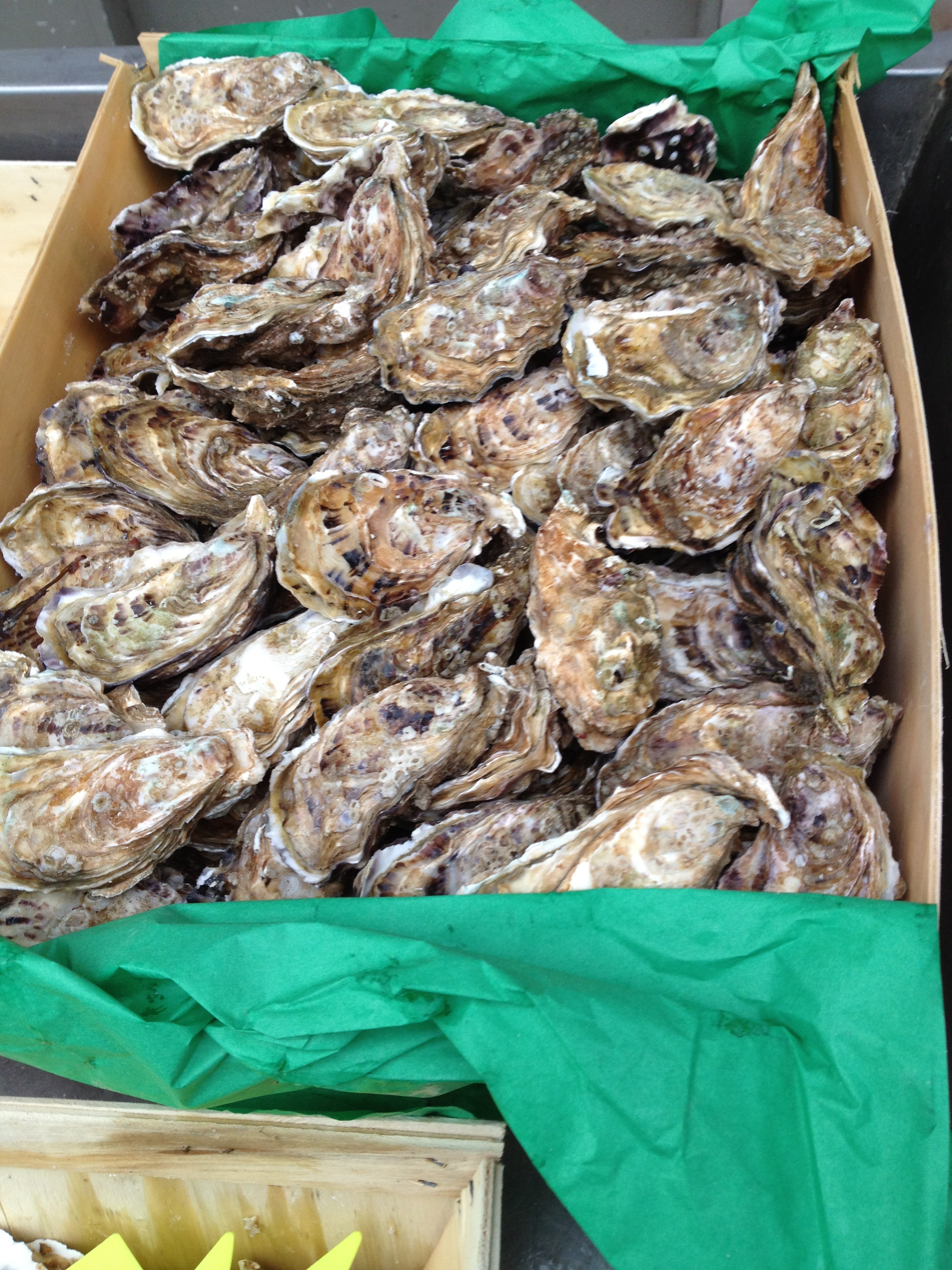
Boxes and boxes of the freshest oysters, only a squirt of lemon needed.

Mistletoe, France

Holly and mistletoe grow everywhere in Normandy. Look up any old tree in the winter and what looks like a messy kind of birds nest is probably mistletoe. And there is a whole forest of holly, la Forêt d’Eu, in the Seine-Maritime. But if you don’t have time to collect your own, you can buy some at market.

Guinea fowl, France

I think these are guinea fowl but please tell me if I’m wrong. There were plenty of geese and roosters too. No one looked squeamish about buying fowl with the head and feet still on. Even in the supermarket, the packaged free range chickens have more feathers and blood left on than their sterile UK counterparts.

coquille st jacques

The pretty coquilles Saint-Jacques are a Normandy specialty which have been awarded the prestigious “label rouge” in recognition of their quality. (Does everything in France have a label?) Here is a video about the fishermen who catch them, and a recipe which, like all the best Norman recipes, is packed with wild (if you can get them) mushrooms and crème fraîche.

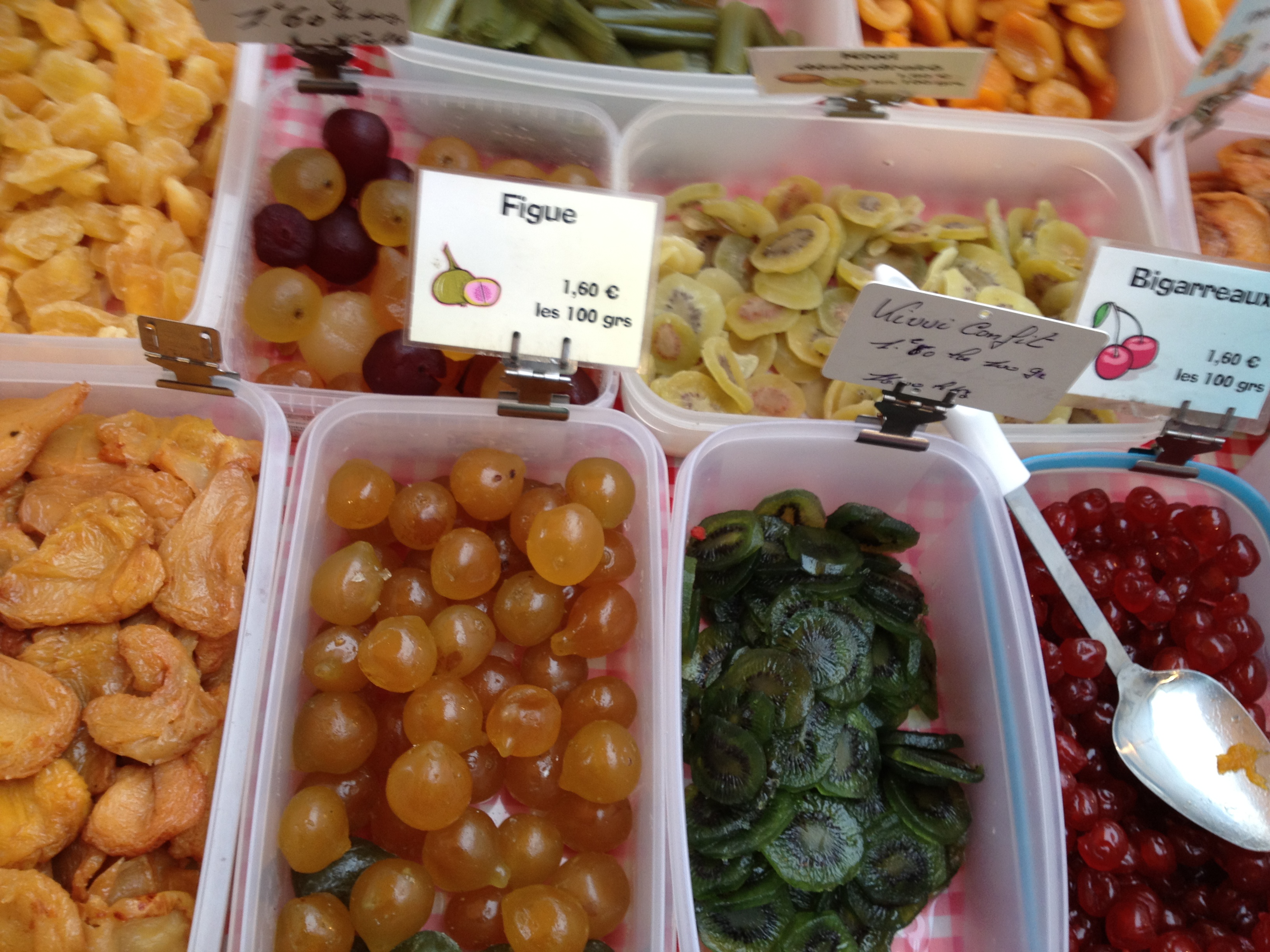
Candied fruit, FranceCandied fruit

The candied fruit sparkled like cheap jewelry under the fluorescent lights of the market stalls. It seemed that every imaginable fruit – and even vegetable – had been candied. Pears, mango, carrots, tomatoes, kiwi, pineapple, peaches, cherries, lemons, clementines, figs and more. No gallon tins of chocolates needed here to keep spirits up in the dead of winter.

Flowers, French market

And then a hint of the season to follow. All these bright bulbs poking out of the soil, promising even better come springtime.

Share this:

  • Click to share on X (Opens in new window) X
  • Click to share on Facebook (Opens in new window) Facebook
  • Click to share on Pinterest (Opens in new window) Pinterest
  • Click to email a link to a friend (Opens in new window) Email
Like Loading...

Traditional decorations and the Christmas season in Honfleur

04 Wednesday Jan 2012

Posted by chaumierelesiris in Food, Normandy, Travel

≈ Leave a comment

Tags

Christmas, Christmas tree, decorations, Food, home decor, Honfleur, oysters, shop

The last post described my search for French Christmas tree decorations.  In the weeks after writing, I started to feel increasingly pessimistic about my chances of success. No one could tell me where to look. While we were away from Normandy, neighbours kindly decorated our cottage – a touching surprise that the children adored.  The decorations, however, were not quite of the made-in-France variety I was searching for.

Then, driving after dark from Calais to Upper Normandy during the holidays, the flashing Santas and light-dripping evergreens in village after village were as gaudy as anything I had ever seen in suburban America. Did real French Christmas decorations exist?

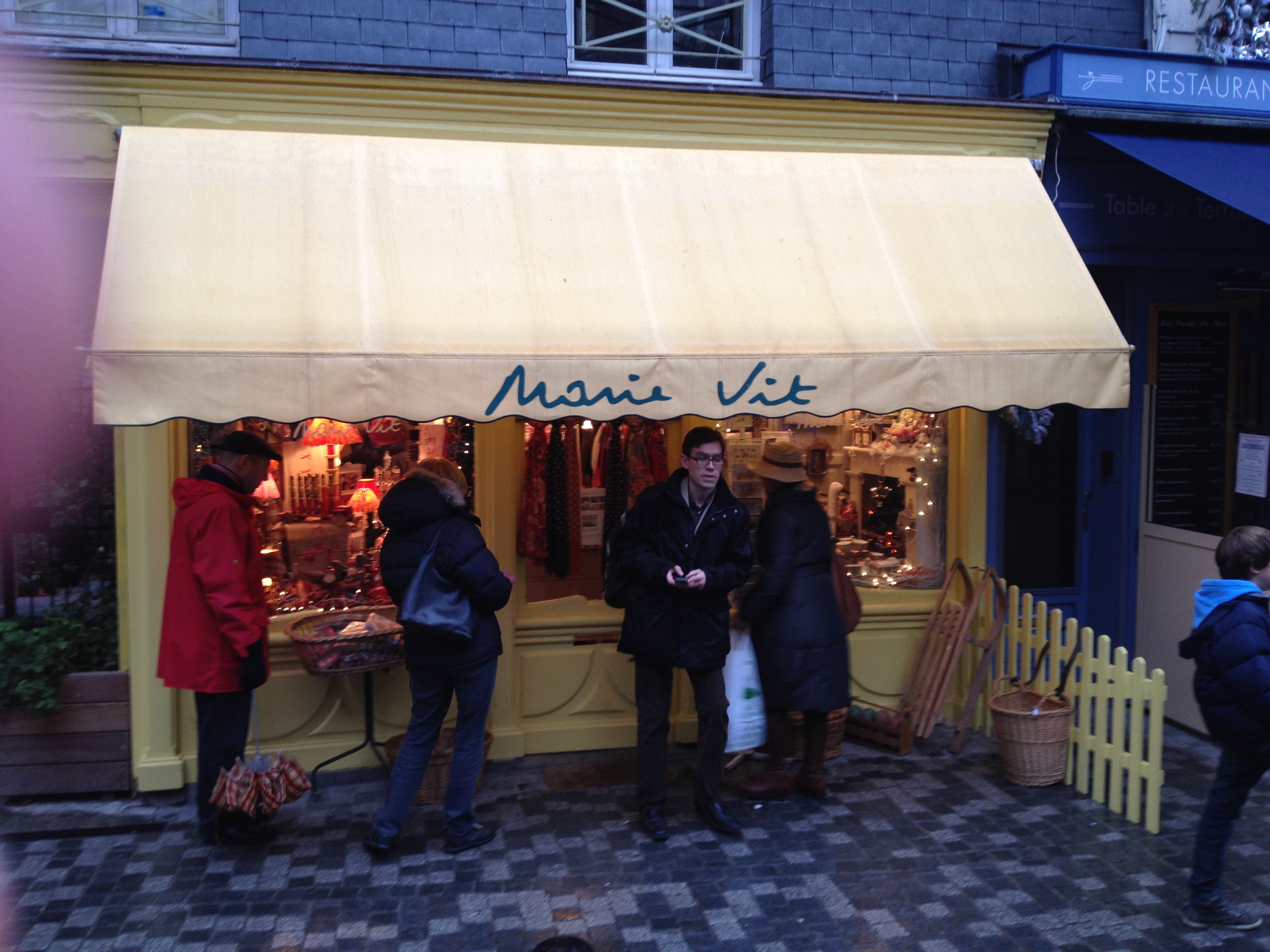
So I was intrigued when @mrslittleboot suggested Marie Vit in Honfleur, on Rue Haute where it meets L’Homme de bois.

What a gem. Full of charming home decor ideas – including these delightful French Christmas tree decorations. I particularly like the toile hearts.

There are also baskets and baskets of what I thought were paper fans. In fact they are hand-marbled paper lampshades, each one unique. They come in various sizes.  What an attractive stocking stuffer.

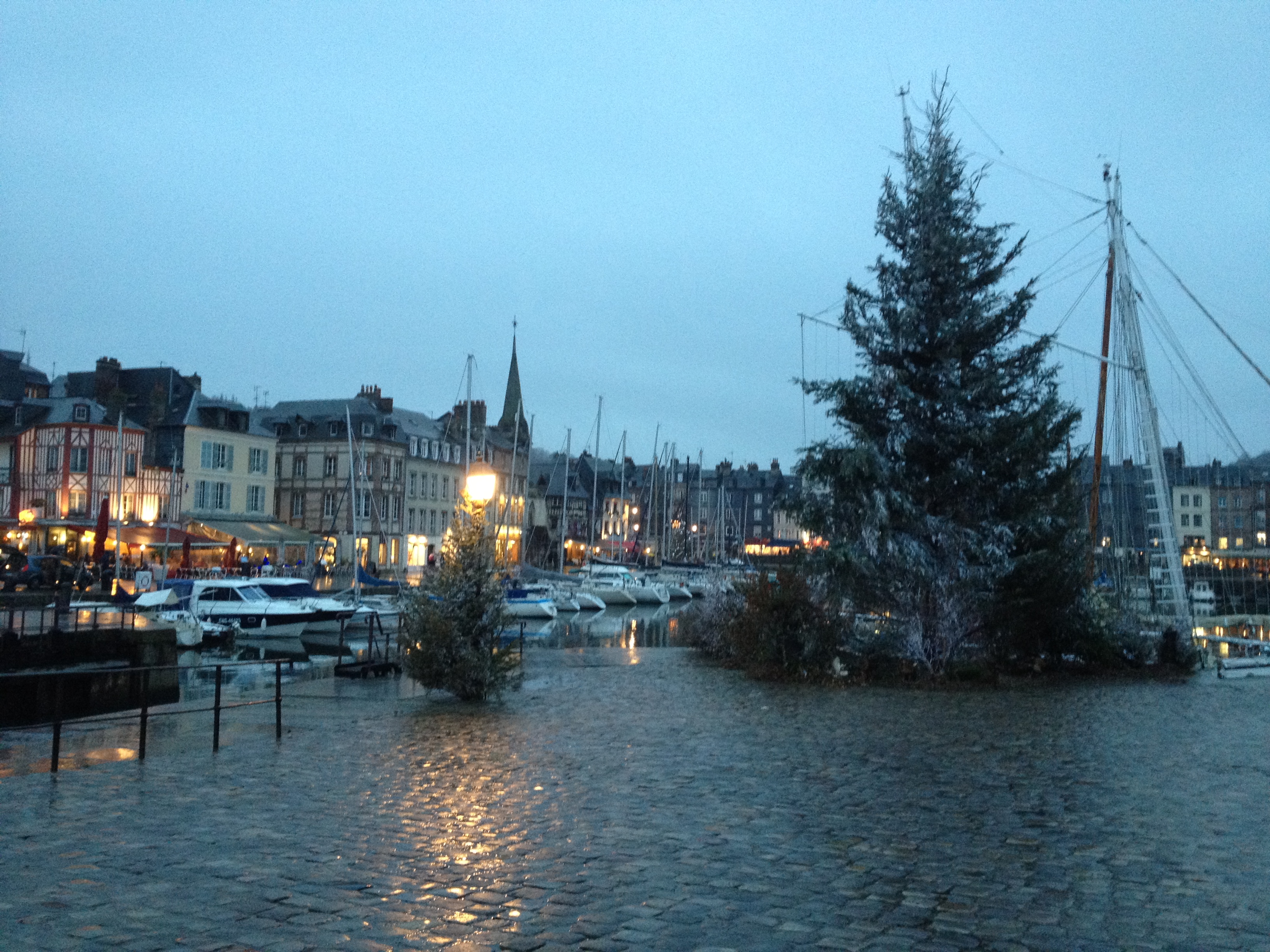
And Honfleur looked elegantly festive with its large fir trees and Christmas lights reflected in the old harbour. All Norman wood and red berried holly, nothing like the gaudy lights across the countryside.

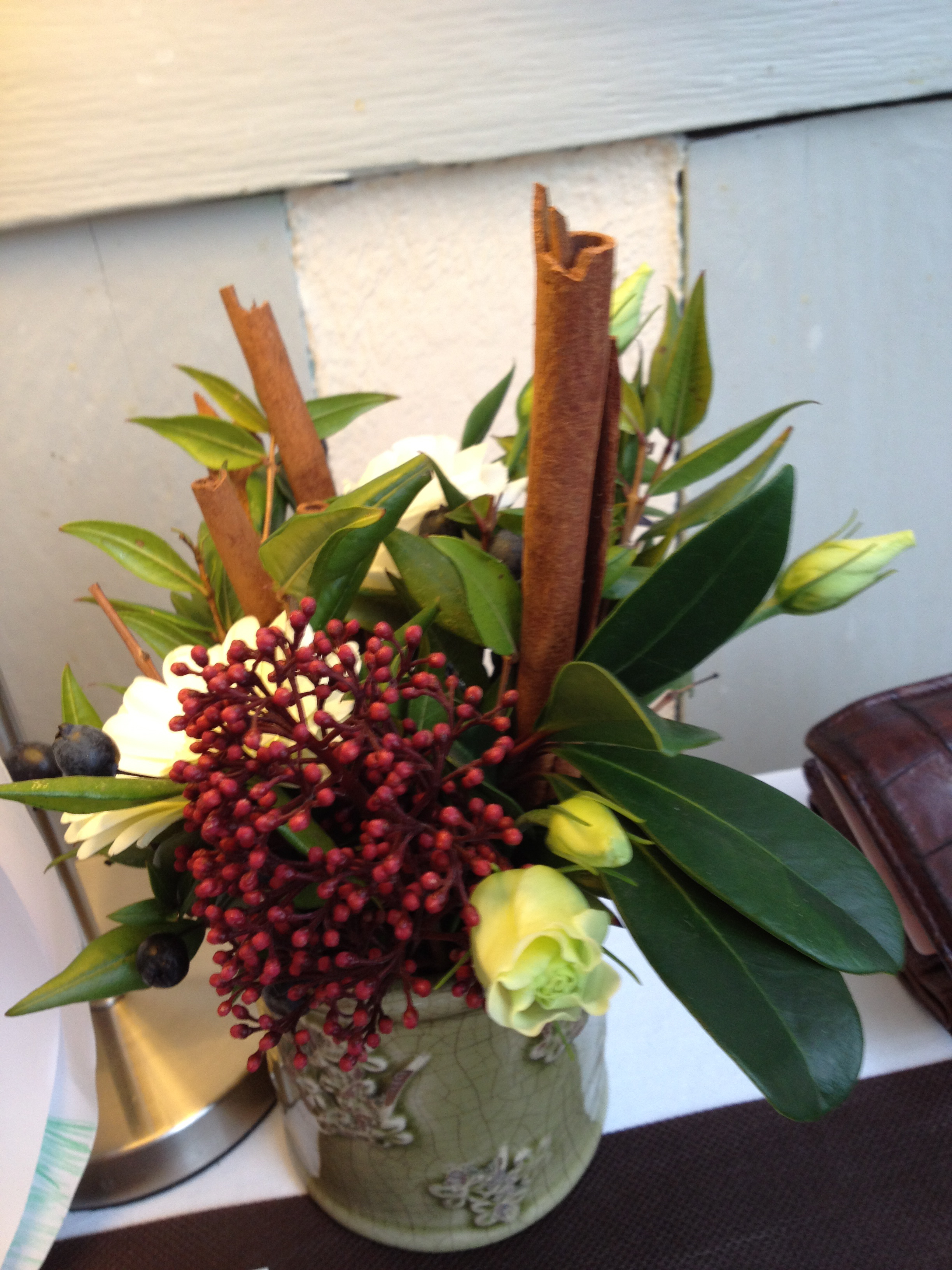
As is traditional during the festive season, we lunched on the freshest oysters with a touch of lemon at a restaurant next to the Honfleur docks. And look at these seasonal table decorations, complete with sticks of cinnamon. Just lovely.

Flower arrangement, Honfleur

Share this:

  • Click to share on X (Opens in new window) X
  • Click to share on Facebook (Opens in new window) Facebook
  • Click to share on Pinterest (Opens in new window) Pinterest
  • Click to email a link to a friend (Opens in new window) Email
Like Loading...

Good Neighbours

12 Saturday Nov 2011

Posted by chaumierelesiris in Food, Les Iris, Normandy

≈ 2 Comments

Tags

bread, Food, London, neighbours, Normandy, village, Walnut bread, walnuts

What makes a good neighbour? In London, where we share the walls of our terraced house on both sides, and hear more intimate details of each other’s lives than anyone is ready to admit, a good neighbour allows you space. No obvious peering over fences; no comment about what may have been seen, the curtains you haven’t managed to hang after a year of living in the house, the unpruned hedge in your front garden, your children’s early morning violin practicing. A good neighbour offers to help with maintenance of shared walls and informs you of upcoming and noisy building works, but doesn’t pop round for a chat and a cup of  tea unless invited properly.

And then Normandy. Our whole village, spread out on the hillside, has a smaller population than one half of our street in London. On the village feast day they all gather for a meal in a tent by the river, dining on ripe cheeses and homemade fruit tarts at long trestle tables. When you meet neighbours along the road you greet and chat: 5 minutes at least, but more likely 10 or 15 minutes. You will be told if your hedge is felt to need pruning. People are popping in and out all the time. It’s never, never an inconvenience.

Recently our neighbours took delivery of some new furniture while we were away. Not only did they help get the furniture into the cottage: they also assembled it and arranged the living room, a wonderful surprise when we arrived, tired and late after long days at work on an October evening.

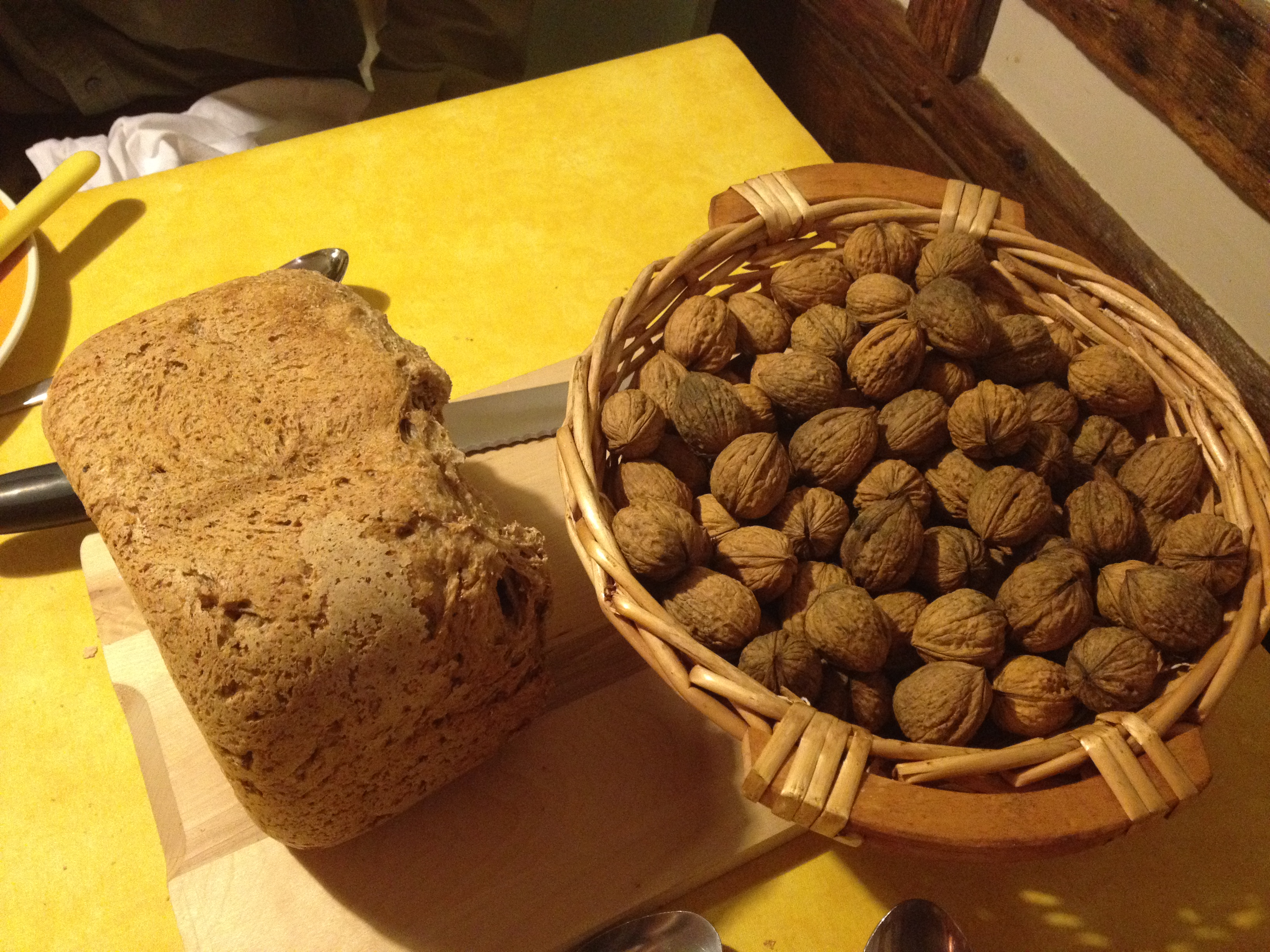
Walnut  Bread

And the next morning, a knock on our door and gifts. A basket of walnuts collected from their garden and, wrapped in a white linen napkin,  hot and sweet from the oven, a steaming loaf of just baked walnut bread.

I could get used to this kind of neighbourliness.

Share this:

  • Click to share on X (Opens in new window) X
  • Click to share on Facebook (Opens in new window) Facebook
  • Click to share on Pinterest (Opens in new window) Pinterest
  • Click to email a link to a friend (Opens in new window) Email
Like Loading...

Market Day in Pont-Audemer

30 Sunday Oct 2011

Posted by chaumierelesiris in Food, France, Normandy, Travel

≈ 4 Comments

Tags

autumn, Food, France, Hermes, Market, Pont-Audemer, Travel, wild mushrooms

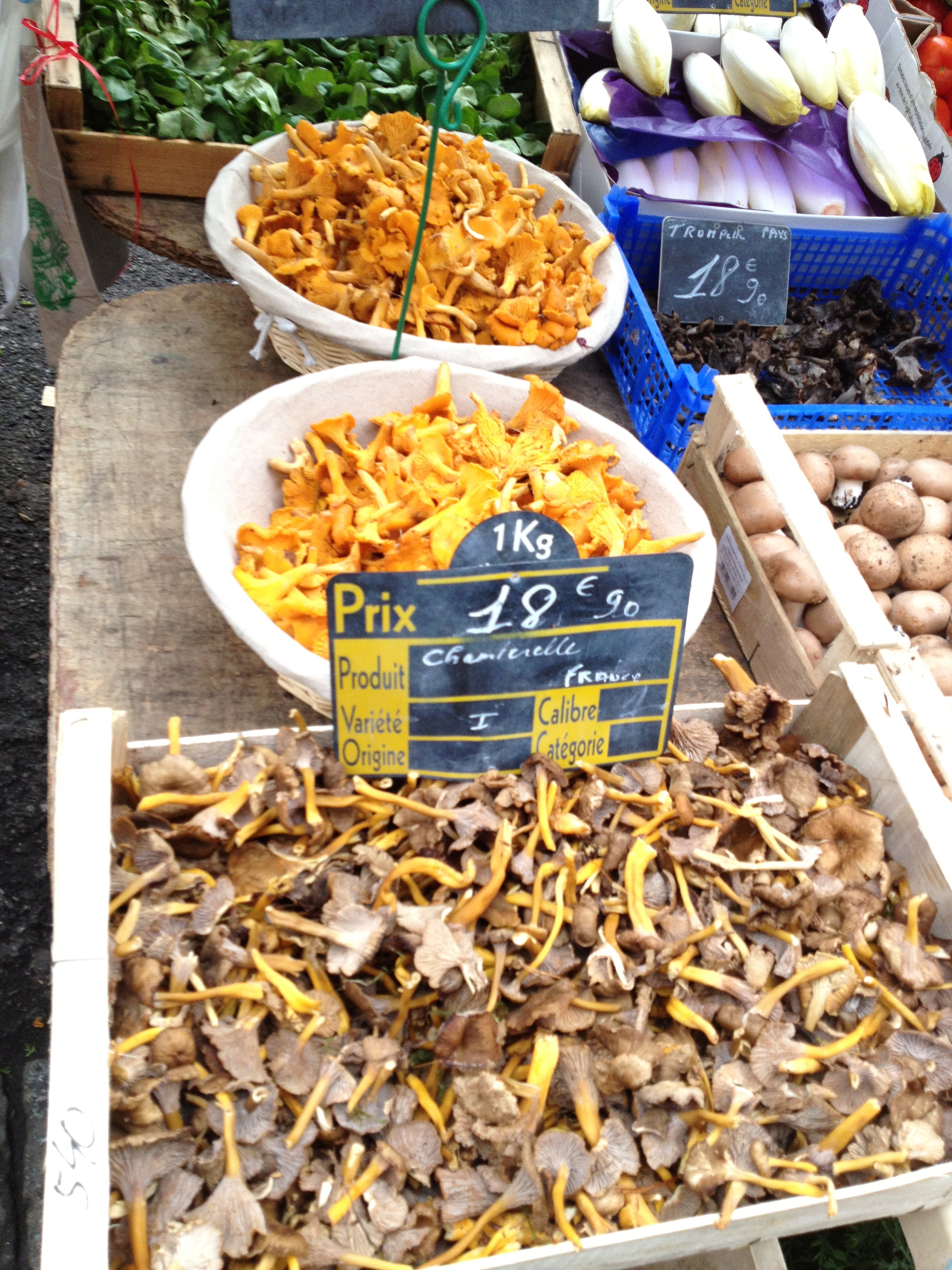
Is there any better shopping experience than a Norman market in October? The apples and pears are ripe; the wild mushrooms have been collected; the ducks are plump; la chasse is in full swing, and the seafood from the Atlantic coast is bountiful.

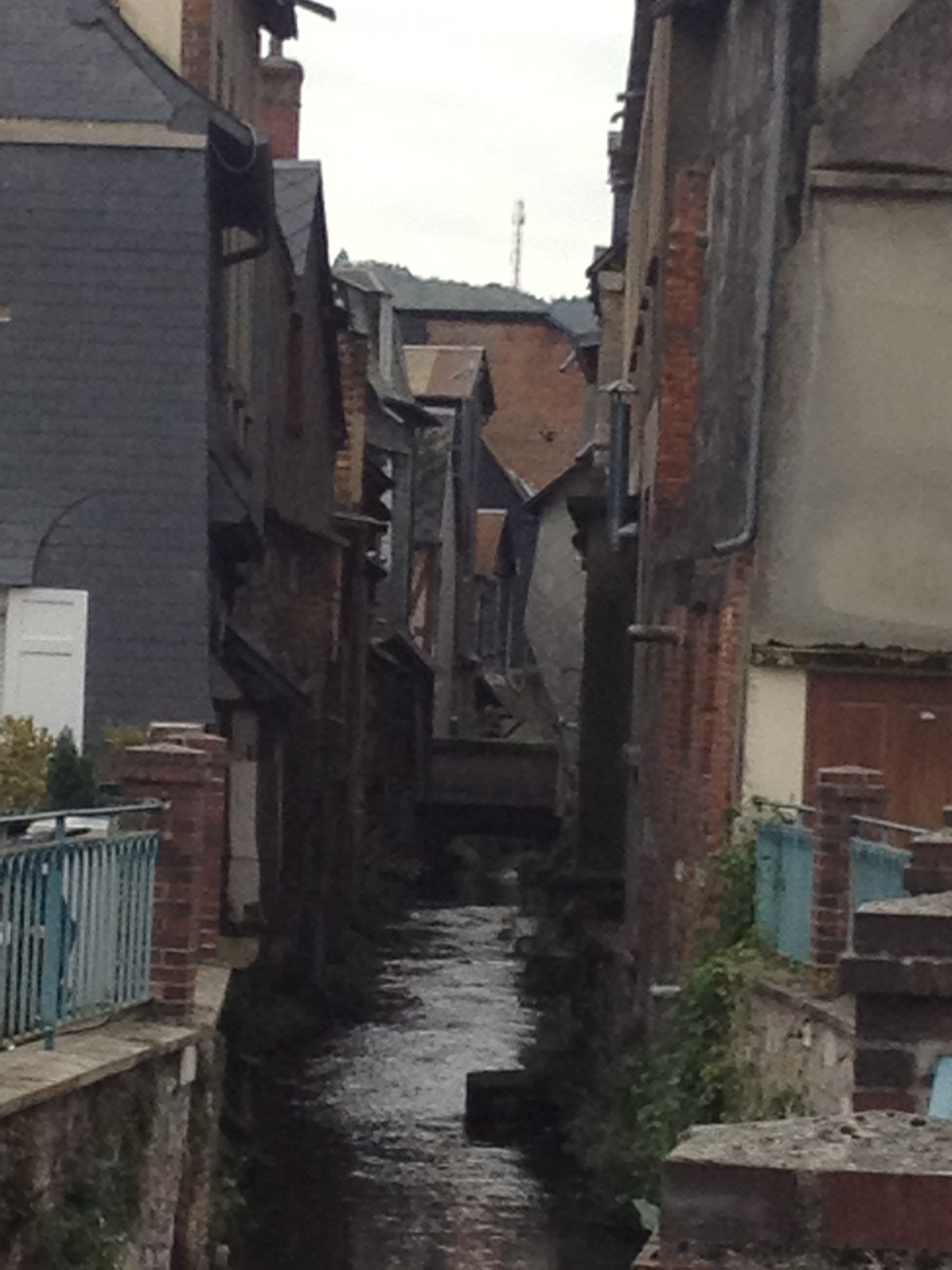
Our local market is in Pont-Audemer, a country commercial centre that, while charming, doesn’t have the tourist appeal of its neighbours Honfleur and Deauville. Some have called Pont-Audemer the Venice of Normandy, for its canal system that once served its famous tanning trade (the Hermès family hailed from here). I think the comparison’s a stretch. No palazzos in sight: but plenty of half-timbered Norman houses, narrow cobbled streets, a gothic church noted for its stained glass, and a bustling, bountiful market on Mondays and Fridays.

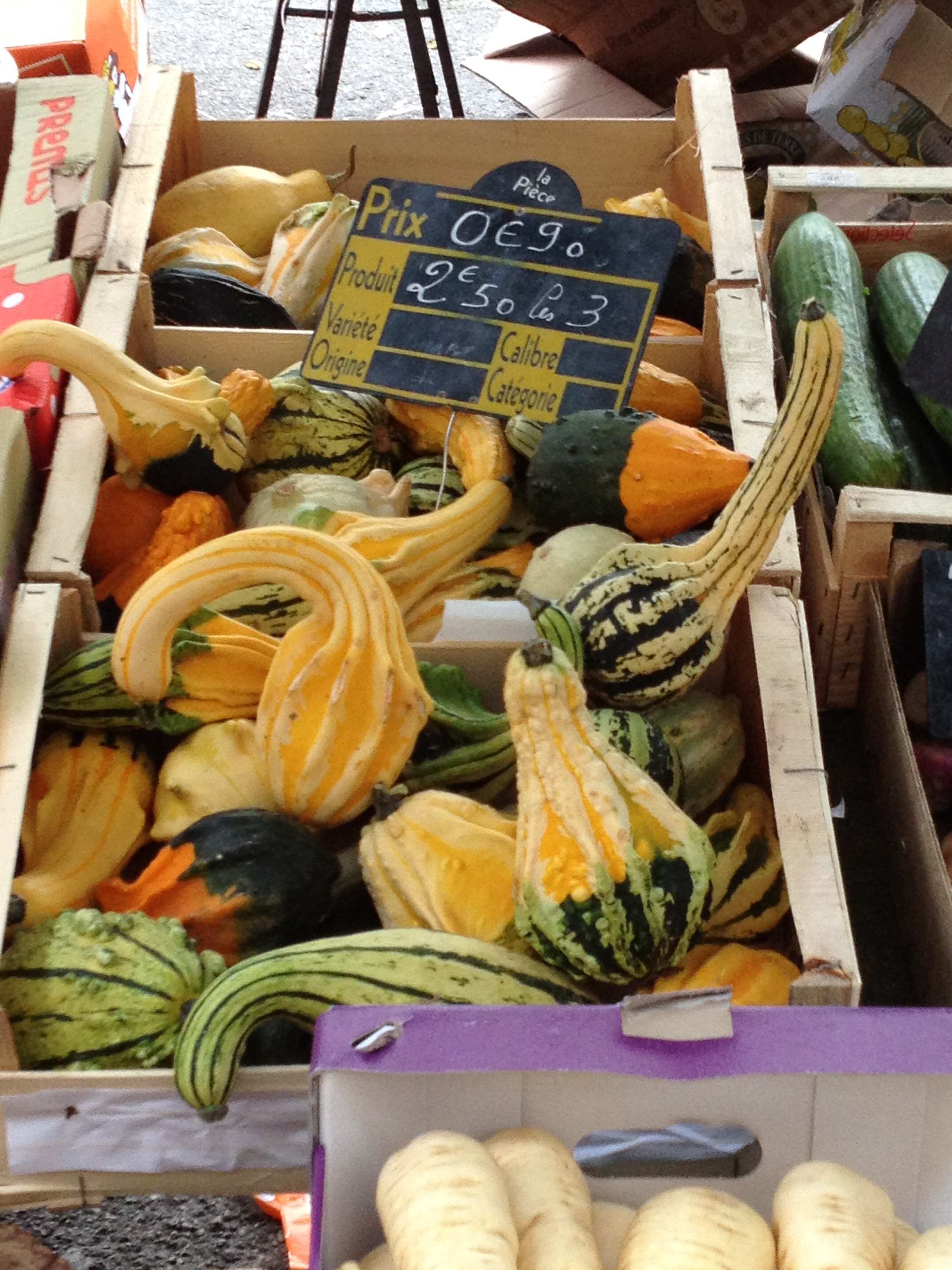
We love these unusually shaped squashes that you can find in Norman markets. They decorate our table from October until the Christmas decorations come out in December.

I wish I had taken a picture of the neatly stuffed ducks lined up and glistening in their rows. There were all shapes and sizes of box balls, smartly manicured in their pots. A hundred varieties of goats cheese – some brand new and dewily mild, others aged and pungent.
And, should you have a rush chair that needs to be fixed, there is man here who will do that for you. Wonderful.

Share this:

  • Click to share on X (Opens in new window) X
  • Click to share on Facebook (Opens in new window) Facebook
  • Click to share on Pinterest (Opens in new window) Pinterest
  • Click to email a link to a friend (Opens in new window) Email
Like Loading...

A Celebration of the Stinging Nettle

15 Saturday Oct 2011

Posted by chaumierelesiris in Food, France, Normandy, Things to do

≈ 3 Comments

Tags

Food, France, Normandy, Recipes, Stinging Nettles

In La Haye-de-Routot, in Upper Normandy, is a collection of heritage museums exploring aspects of Norman and French culture: traditional bread making (which I have written about here), the history of clogs, the linen house, and La Chaumière aux orties, a celebration of all things nettle. That’s right: l’ortie piquante, the common and much hated stinging nettle.

I

I am a city girl, and nettles, like cow dung, are annoyances, to be got past quickly, ideally gotten rid of. I only remember one sort of nettle celebration in my childhood.  At the boys’ boarding school my brother attended in the South Downs in the late 1970s, there was a field of nettles, thigh-high. The small boys would run through the nettles, their bare, white legs sticking out under grey flannel shorts. It was a badge of honour, to show no pain.

In fact, the nettle has long been celebrated for its many good qualities: as a medicinal herb, a nutritious food, and as fibrous material used in canvas and rope. The nettle is rich in vitamins, iron and protein. It is known for its re-vitalizing qualities and is used both as a tea plant and as a vegetable.

On some Sundays at La Chaumière aux orties there are cooking demonstrations. We were lucky enough to visit on a damp August afternoon. Shivering in our thin summer clothes, we were delighted to find a huge open hearth, a pot bubbling away, and a delicious smelling spread of food on a table: beignets, crumbles, cups of warm soup, a pie.

A chef was giving a demonstration of open hearth cooking and handing out recipes. She invited us to taste. Of course we accepted. It was only as the food was going into our mouths – including the mouths of our young daughters – that I noticed the basket of nettles on the hearth, and the pictures of nettles on the wall. I asked my husband what an ortie was. Too late.

And just as well, because the recipes were delicious. The soup, the beignets, the crumble and the pie: all wonderful, and not a hint of sting. Even our daughters went back for more.

I took copies of the recipes with the best intentions. But I’m having a hard time reconciling the hated nettle with that delicious food. Maybe soon I’ll get over it, put on my gloves, and go nettle collecting. There’s a forest of nettles along the side of the path at the end of our garden, just waiting for me.

Share this:

  • Click to share on X (Opens in new window) X
  • Click to share on Facebook (Opens in new window) Facebook
  • Click to share on Pinterest (Opens in new window) Pinterest
  • Click to email a link to a friend (Opens in new window) Email
Like Loading...

Our Daily Bread

08 Saturday Oct 2011

Posted by chaumierelesiris in Culture, Food, France, Normandy, Things to do

≈ 2 Comments

Tags

boulanger, bread, brioche, Food, France, la four a pain, Normandy, St Fiacre, Travel

Bread is given three definitions in the Merriam-Webster Dictionary:

  1. a usually baked and leavened food made of a mixture whose basic constituent is flour or meal
  2. livelihood <earns his bread as a laborer>
  3. food, sustenance <our daily bread>

It is in search of bread under its first definition, a baked food made from flour, that we go as soon as we set foot on French soil. A truism, still true: bread never tastes quite like it does in France. For baguettes and croissants, an early morning run up the hill to our local artisanal bakery, Le Fournil de la Roselière in Sainte Opportune La Mare,  does the trick. Although it stands alone in a quiet village, I’ve never seen it empty. Cars and trucks are constantly pulling in and owners whisking out with their daily bread in hand.

In a nearby village, La-Haye-de-Routot, is Normandy’s Bread Oven Museum. Every Sunday afternoon during the year, and every day in the summer, there are bread-making demonstrations.

The bread oven cottage is small and dark, and the bread oven is enormous, filling half of the cottage. It’s the kind of oven Grimm’s witch might have tried to push Hansel and Gretel into. Our children are sceptical, and they keep their distance. The boulanger is large and muscular and has a booming kind of voice. He starts us from the beginning, showing how he heats the oven and removes the coal and ash. It’s hard and hot work, requiring patience.

While he works Monsieur le Boulanger keeps up a comic patter with the audience, telling jokes about the clueless Parisians who take his bread-making courses. He only bakes in the traditional way, he tells us. Baking and keeping alive the art of traditional bread making is quite literally his livelihood.

He shows us how he shapes and decorates the bread, using a special tool for the detail. A pinch here, a prod there, a few seconds of extra work and people will pay three times more for a loaf, he chuckles.

While the bread is baking we go for a walk and return to the smell the baking bread. Now the children are keen, gathering close to the boulanger. Each has a go at helping to remove the bread. The paddle is carefully inserted under a few loaves and then the bread is pulled out with a fast, powerful tug.

Afterwards the fresh bread is sold. We leave with the warm loaves nestled in their white bags, ready for the evening meal.

With most meals in France we eat bread, freshly made and often hot: daily sustenance. One Saturday evening there is a mass in the village chapel, to honour the feast day of the village’s patron saint, St Fiacre. He probably started off as Fiachra, an Irishman, who travelled to France and built a hospice for travelers. Legend has it that St Fiacre furrowed a great garden with his staff. He is the patron saint of gardeners and taxi drivers. This seems fitting for our village with its beautiful cottage gardens, and I like the anomalous conflagration of rural and urban. It’s the story of our lives.

We arrive at the chapel just as mass is starting and are invited to sit in the only free seats, uncomfortable and ancient wooden pews at the front. Next to us is an unexplained heap of warm brioches. Brioche is made in a similar way to bread, but is enriched with egg and butter. It was often used as blessed bread in French churches, and was sold at market in the butter centres of northern France.

The mass is long and the chapel is full. We are hungry and the brioches smell so good. Finally as mass is ending, the priest and the mayor come forwards. The priest blesses the special St Fiacre brioches, sprinkling them with holy water: bread of life. The mayor invites the congregation for a glass of sparkling wine in the mairie, and the brioches are distributed. In the morning for breakfast, is the glistening golden brioche all the more delicious for having been blessed?

Share this:

  • Click to share on X (Opens in new window) X
  • Click to share on Facebook (Opens in new window) Facebook
  • Click to share on Pinterest (Opens in new window) Pinterest
  • Click to email a link to a friend (Opens in new window) Email
Like Loading...
Newer posts →

Abbey Aizier Anglo-Norman architecture Armada Art autumn Birds Books bread brocante buying a house Buying a house in France calvados Carousel chaumiere Christmas Christmas tree churches Cleres cycling decorations Easter Etretat Europe Flaubert Flowers Food France Gardens Gemma Bovery Gertrude Jekyll guests Halloween History home decor Honfleur House in France Jumieges Le Bec-Hellouin Le Havre Les Iris Le Touquet London Madame Bovary Market Michelin Monet museum Normandy Olympics oysters paintings photography pictures Pont-Audemer Pont-l'Évêque Property Recipes Renoir restaurant reviews Romanesque Rouen ruins Seine shopping shops sport St Fiacre thatched cottage Tour de France Travel Walking wild mushrooms

Twitter Updates

Tweets by lesirisnormandy

Instagram

No Instagram images were found.

Enter your email address to follow this blog and receive notifications of new posts by email.

Categories

  • Culture
  • Food
  • France
  • Les Iris
  • Normandy
  • Property in France
  • Things to do
  • Travel
  • Uncategorized

Archives

  • September 2020
  • May 2019
  • April 2019
  • August 2018
  • May 2018
  • December 2017
  • July 2017
  • March 2017
  • February 2016
  • August 2015
  • May 2015
  • September 2014
  • July 2014
  • May 2014
  • October 2013
  • August 2013
  • June 2013
  • April 2013
  • March 2013
  • February 2013
  • January 2013
  • December 2012
  • November 2012
  • October 2012
  • September 2012
  • August 2012
  • July 2012
  • June 2012
  • May 2012
  • April 2012
  • March 2012
  • February 2012
  • January 2012
  • December 2011
  • November 2011
  • October 2011
  • September 2011
  • RSS - Posts
  • RSS - Comments

Create a free website or blog at WordPress.com.

Privacy & Cookies: This site uses cookies. By continuing to use this website, you agree to their use.
To find out more, including how to control cookies, see here: Cookie Policy
  • Subscribe Subscribed
    • chaumierelesiris
    • Join 78 other subscribers
    • Already have a WordPress.com account? Log in now.
    • chaumierelesiris
    • Subscribe Subscribed
    • Sign up
    • Log in
    • Report this content
    • View site in Reader
    • Manage subscriptions
    • Collapse this bar
 

Loading Comments...
 

    %d