Pont-l’Évêque Market Day

Tags

, , , , , , ,

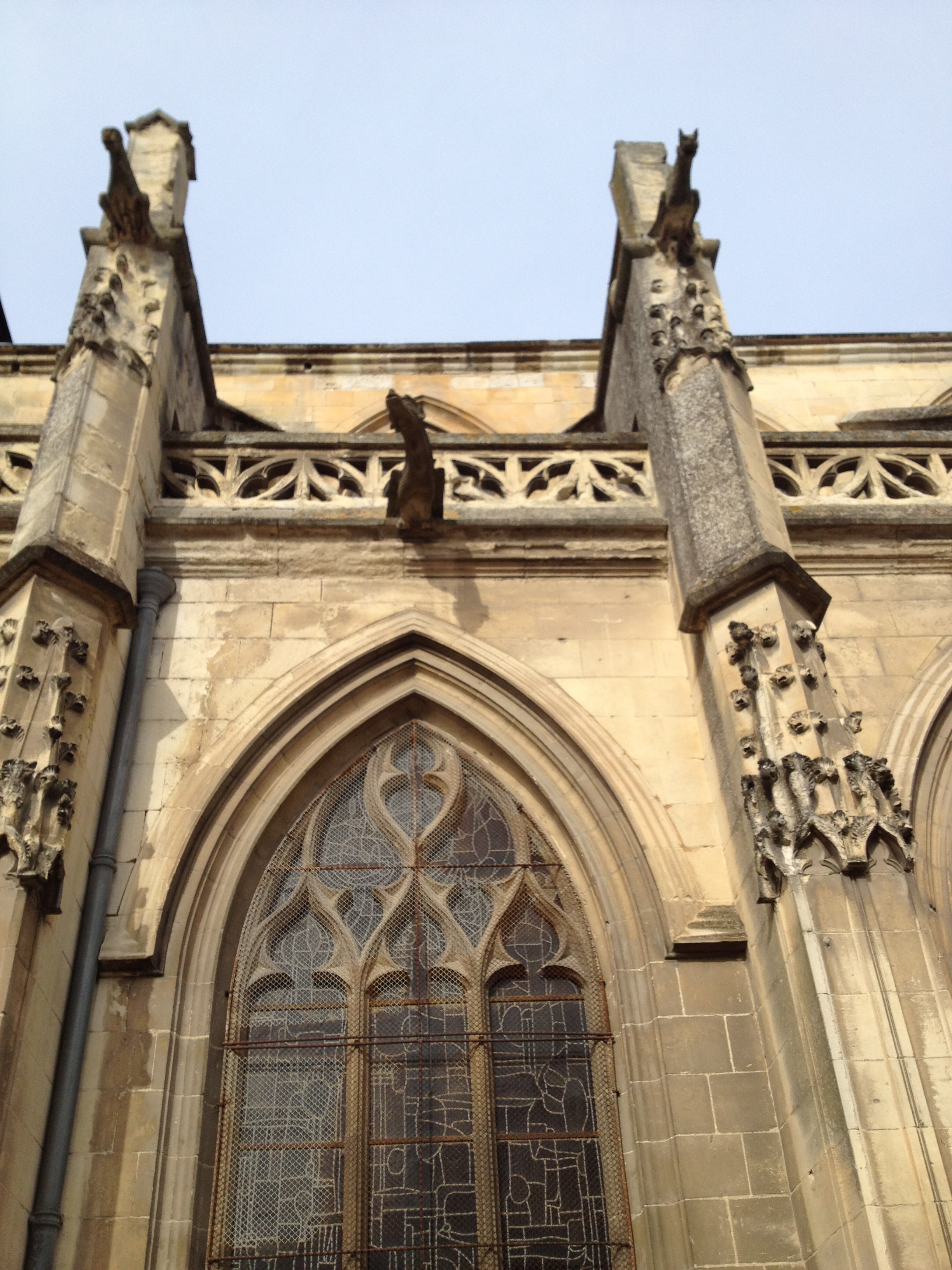
One of the joys of spending time in Normandy is visiting the area’s bountiful food markets. Our local market, held on a Friday, never disappoints: but in those weeks when we’re traveling or otherwise occupied on a Friday, a close second best is exploring the other markets of Upper Normandy and Calvados. This month we made our way to Pont-l’Évêque, where the weekly market is held on a Monday. It’s home to the eponymous cheese, and to a lovely church which survived wartime bombing.Church, Pont L'Eveque

The point of local markets is they change every time. You go for the seasonal produce and for the individual sellers. It’s the opposite of supermarkets, where it’s downright inconvenient when the aisles are changed around adding a precious few minutes to your already too-long shopping time.

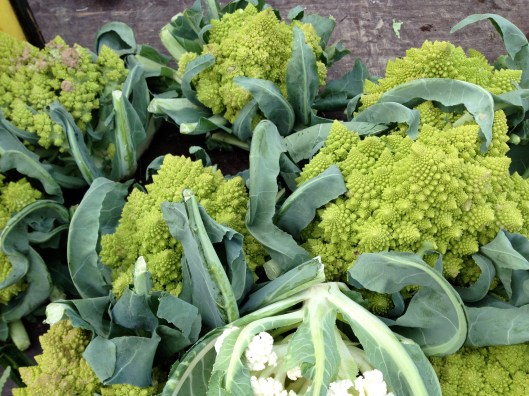
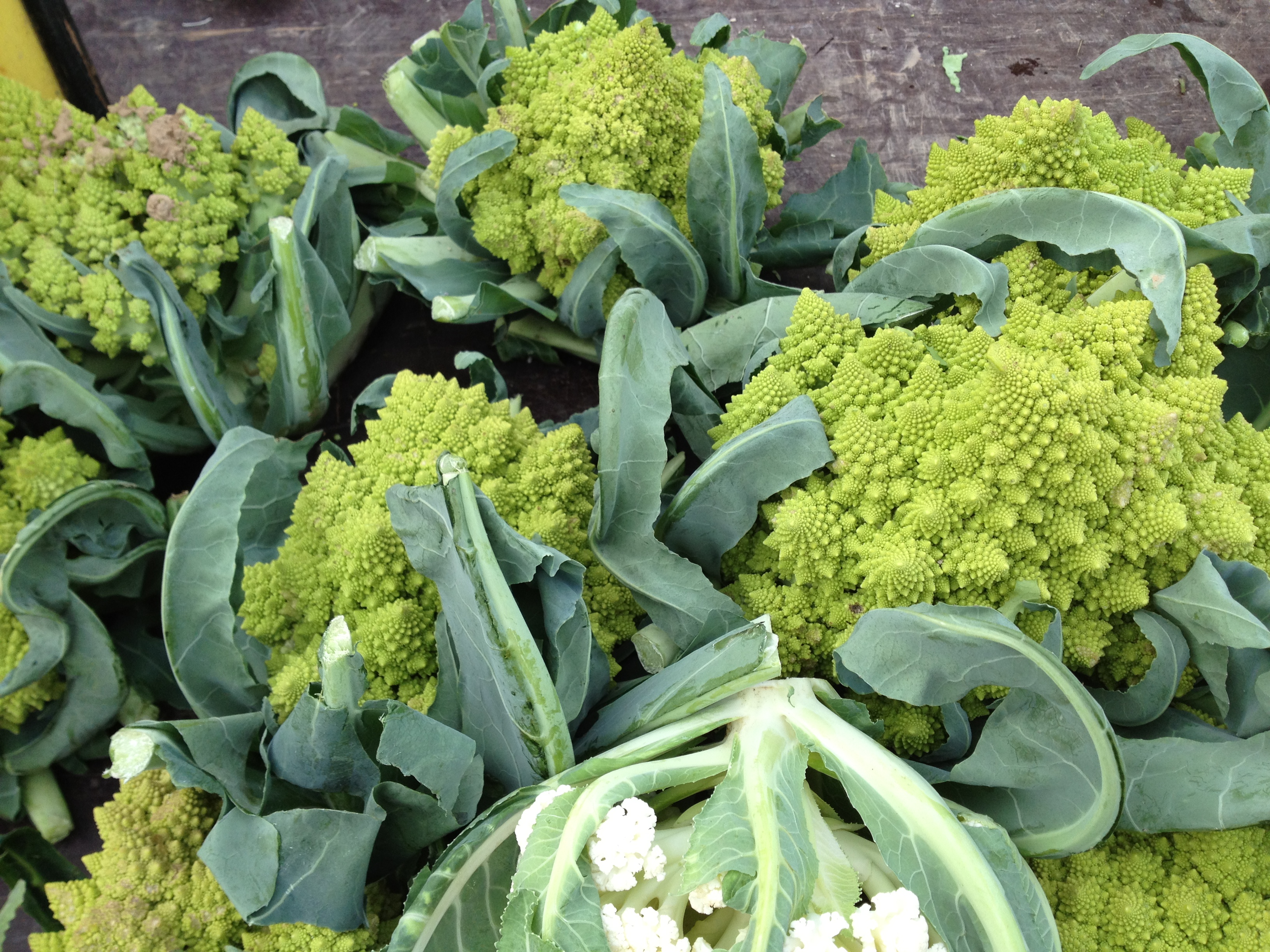
In the first week of November, there were chestnuts, quinces, and the alien-fabulous chou romanesco. I’ve never cooked any of these, although the guests at our cottage the week before had collected chestnuts in the forest and roasted them over the open hearth. I’ll have to try that, and here’s how.Chestnuts, NormandyQuinces, Normandy marketChou romanesco, Normandy

I love these pre-prepared bundles of meat: so lovely and neat and easy, the original, organic, guilt-free ready meal.Pont L'Eveque Market

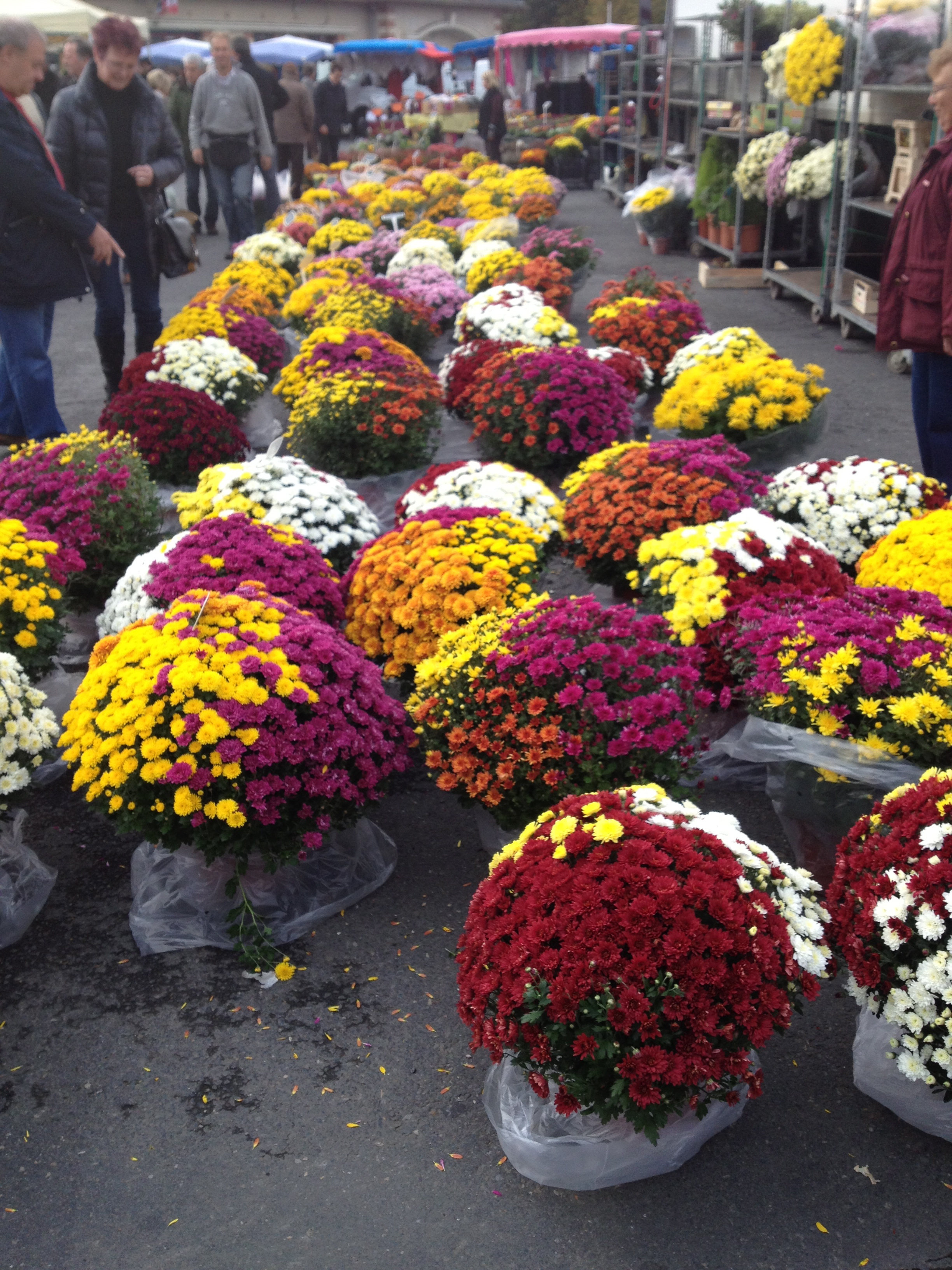
And the chrysanthemums were flying: you could see them lining the village streets, and all around around the cemeteries where families were marking November 1st, a day of remembrance. We left some by the cottage gateposts: I wonder how far into the winter they’ll last.chrysanthemums, Normandy

A Luncheon on Le Toussaint

Tags

, , , , , , , , ,

The significance of November 1st may be all but forgotten, little more than a hangover after the revelry of Halloween, in many places. But in France–where Halloween is observed as a holiday only for children—it’s Le Toussaint, All Saints Day on November 1st, that is widely marked. As one blogger explains, it’s a holiday when everyone goes home to be with their family and remember their loved ones who have died.

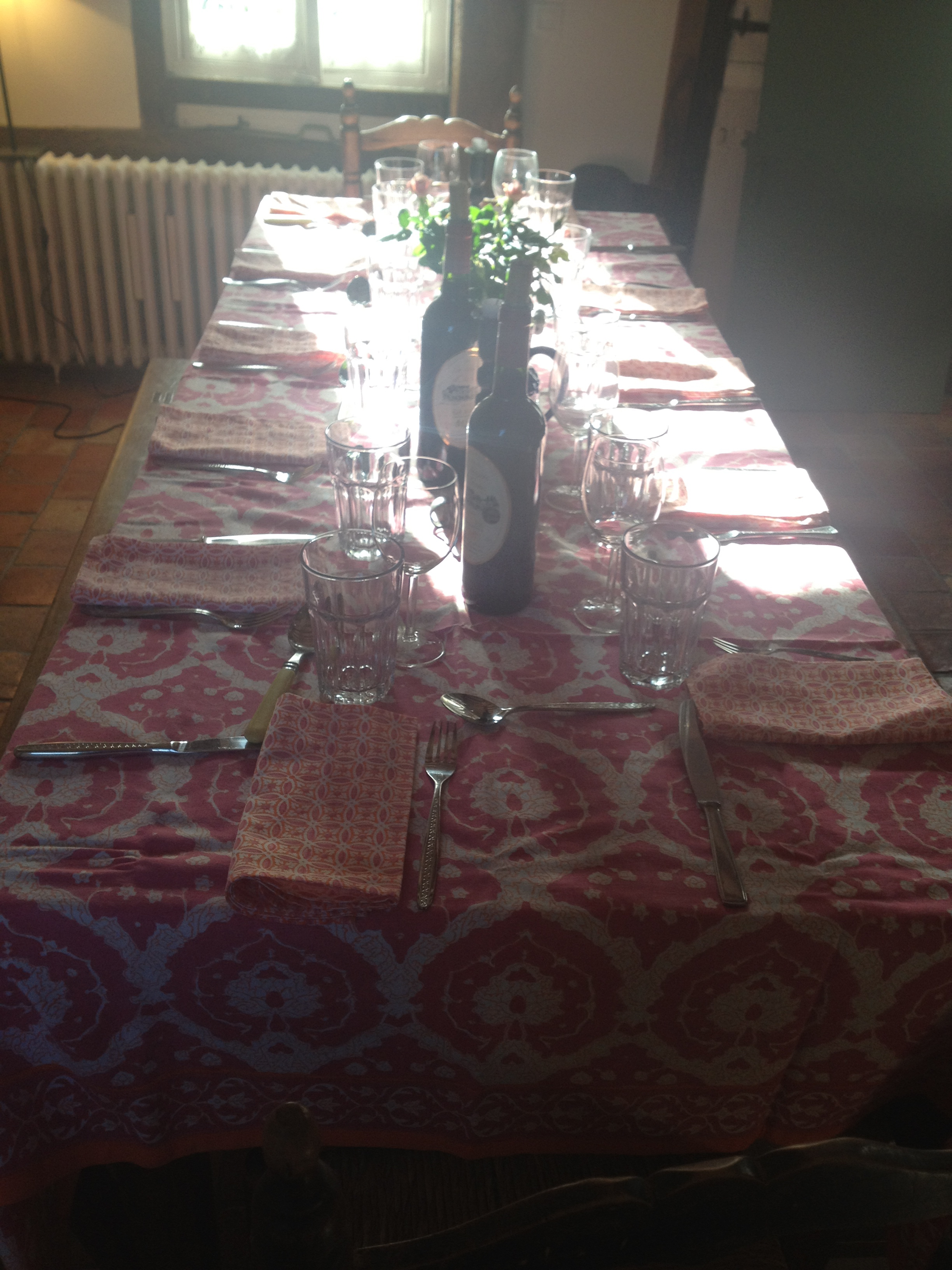
So it felt just right to mark 1st November this year with a family meal. We were joined by friends we’d not seen much in recent years, since they moved away from our London neighbourhood back to Paris with their four children. To mark the occasion I made Susan Loomis’s hearty lamb stew from her memoir-cookbook about moving to Normandy, On Rue Tatin: The Simple Pleasures of Life in a Small French Town, followed by David Lebovitz’s ever reliable Chocolate Mousse I from The Sweet Life in Paris: Delicious Adventures in the World’s Most Glorious–And Perplexing–City.

Table, Normandy

Something dreadful happened in the village this year. I’m not ready to write about it yet, may never be. It gave some peace and much-needed pleasure to prepare and then eat together at the cheerful looking table; to take a postpandrial walk in the woods together; to share with friends the downs and ups of busy lives in our different cities. It was indeed a day to remember, as well as to celebrate the lives we have.

Autumn Colours on Two Continents

Tags

, , , ,

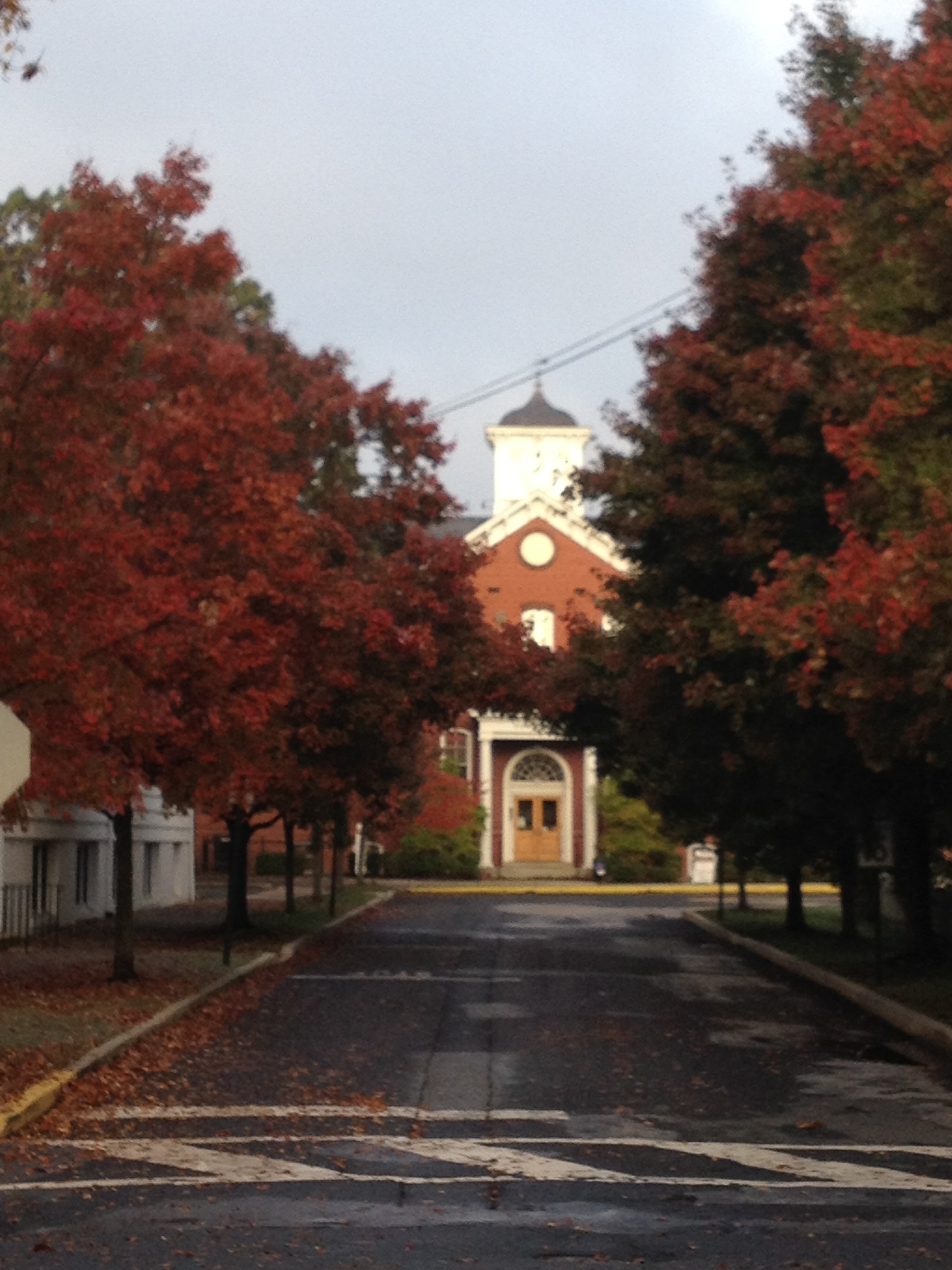
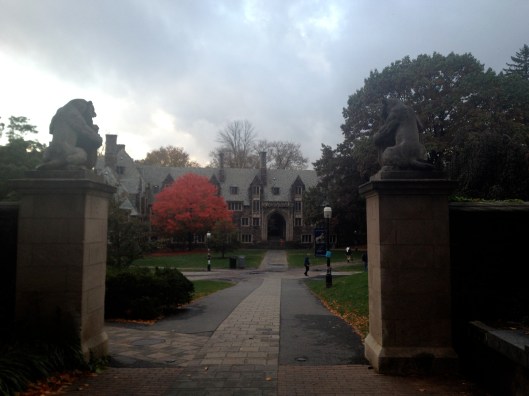
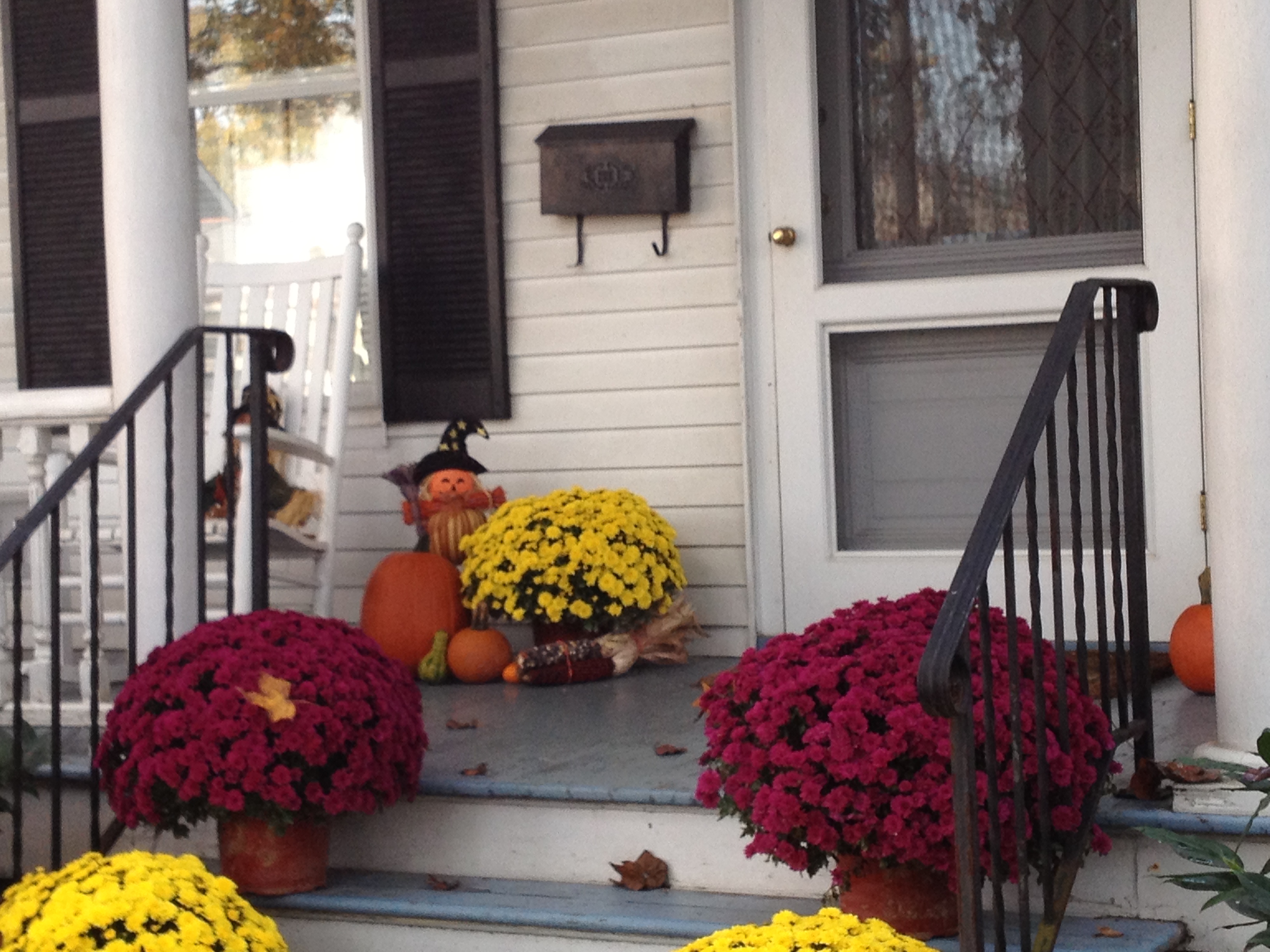
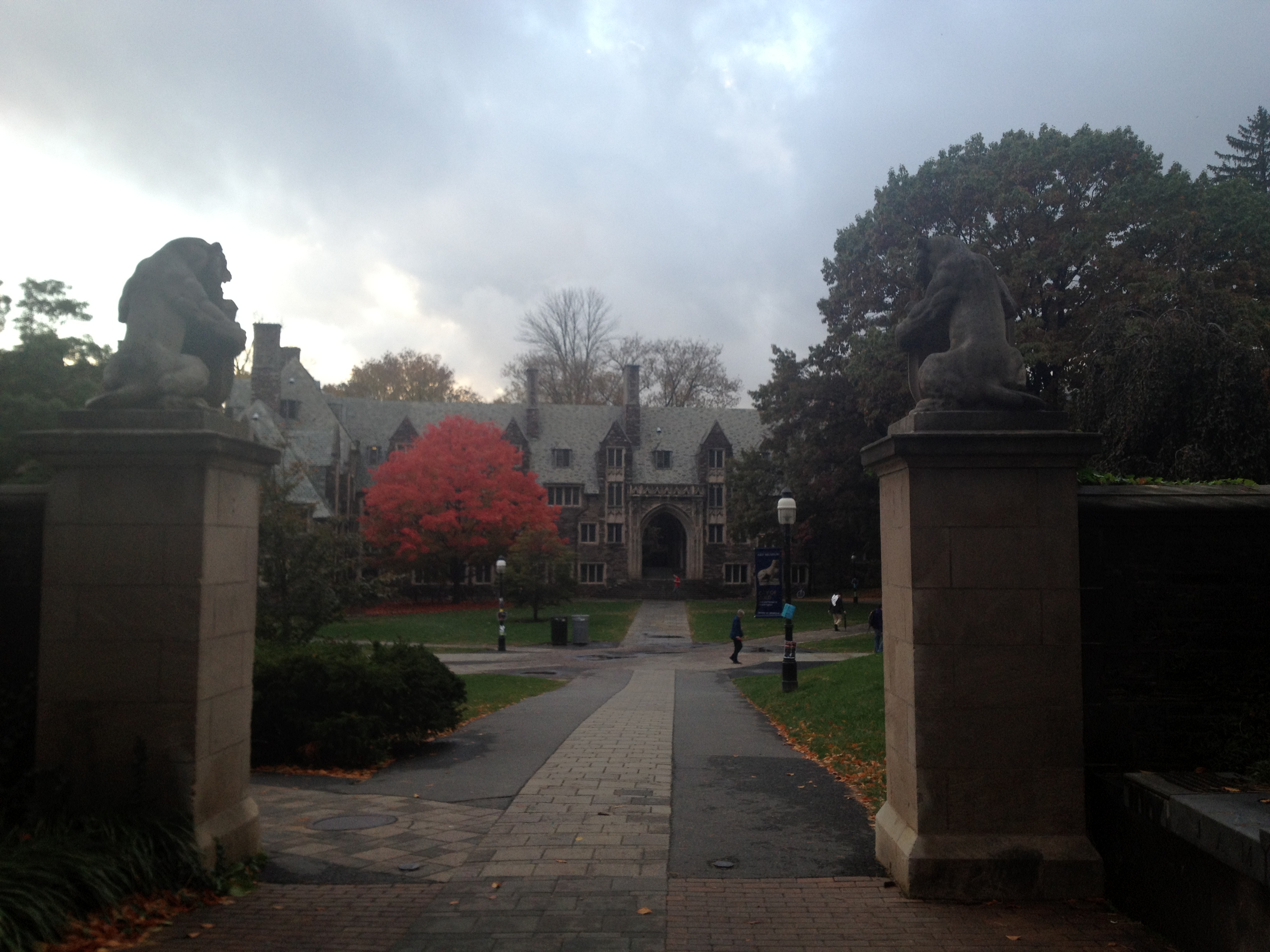
I was lucky enough recently to spend a few days in New Jersey, before the hurricane hit.  The trees were magnificent in their autumn colours. I had forgotten how heartbreakingly beautiful an East Coast autumn can be, all flame red trees and bright blue skies.The town I stayed in (home to a lifetime friend and writer who blogs wonderfully at New Jersey Seoul) was dressed for the season, all orange pumpkins against white clapboard, as New England as you can get.

Large pumpkin

Autumn, New Jersey

Autumn day, PrincetonRed Tree, PrincetonHalloween, New Jersey

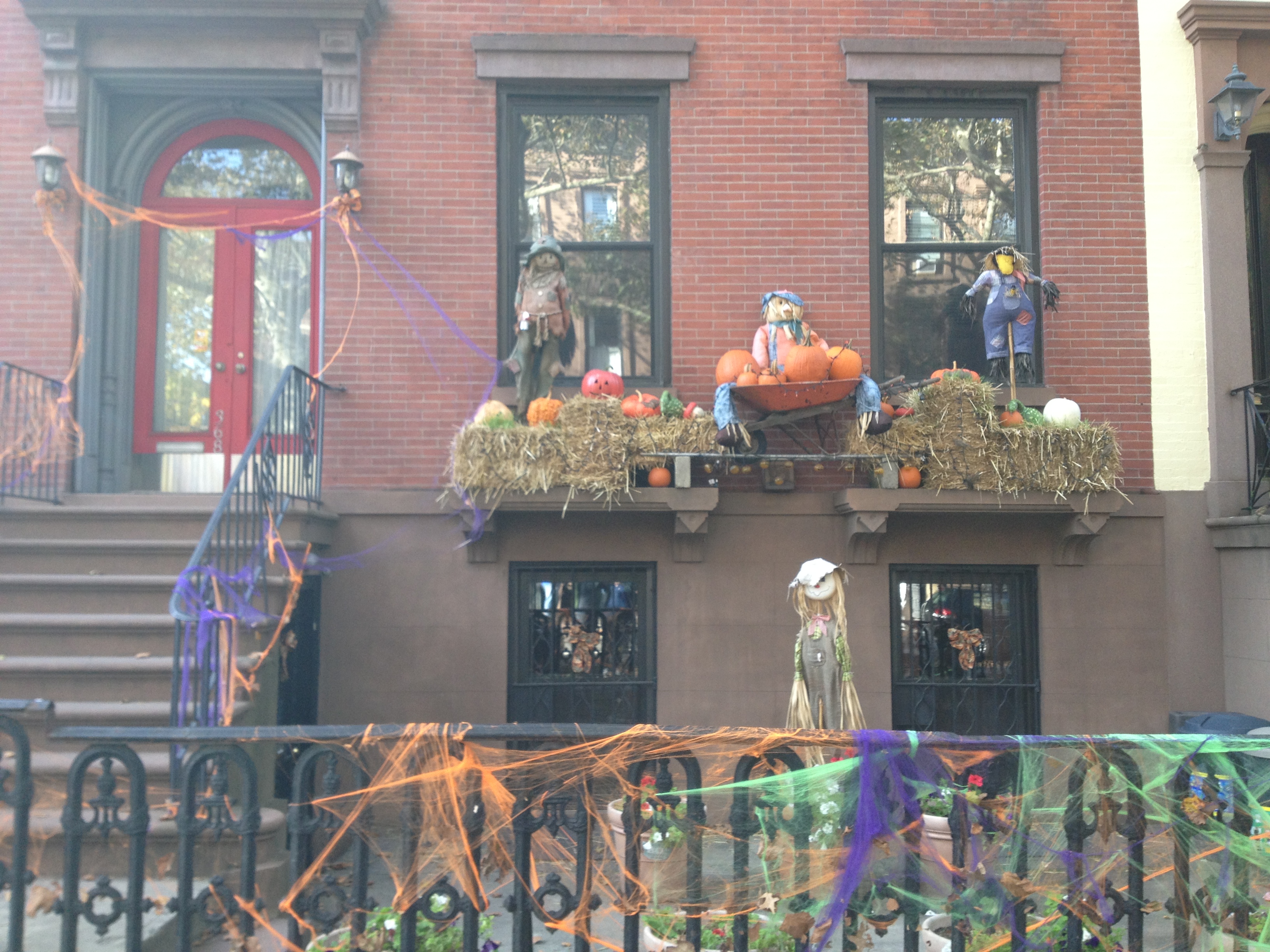
I then spent two days in the trendiest part of Brooklyn which was, in its own way, dressed for Halloween.

Halloween House, BrooklynHalloween Shop, Brooklyn

This delighted me, because I would spend the following week, including Halloween, in Normandy. What kind of Halloween could you expect in a rural village that’s about as far away as you can get from a Starbucks in the developed world?

Halloween in FranceHalloween in the village, Normandy

In fact: a very normal Halloween. The houses were dressed for Halloween. There were even pumpkins. I should have known. Which country, after all, did Cinderella come from.

There were few differences. First, it’s for the little children. There’s none of the adult-dressing-up stuff, and none of the wild tricking you get with teenagers in the US. (Although just after I left New Jersey it wasn’t the teenagers, it was Hurricane Sandy that played the worst possible trick, was the Grinch that stole Halloween for a million candy-laden, powerless towns across the midlantic states).

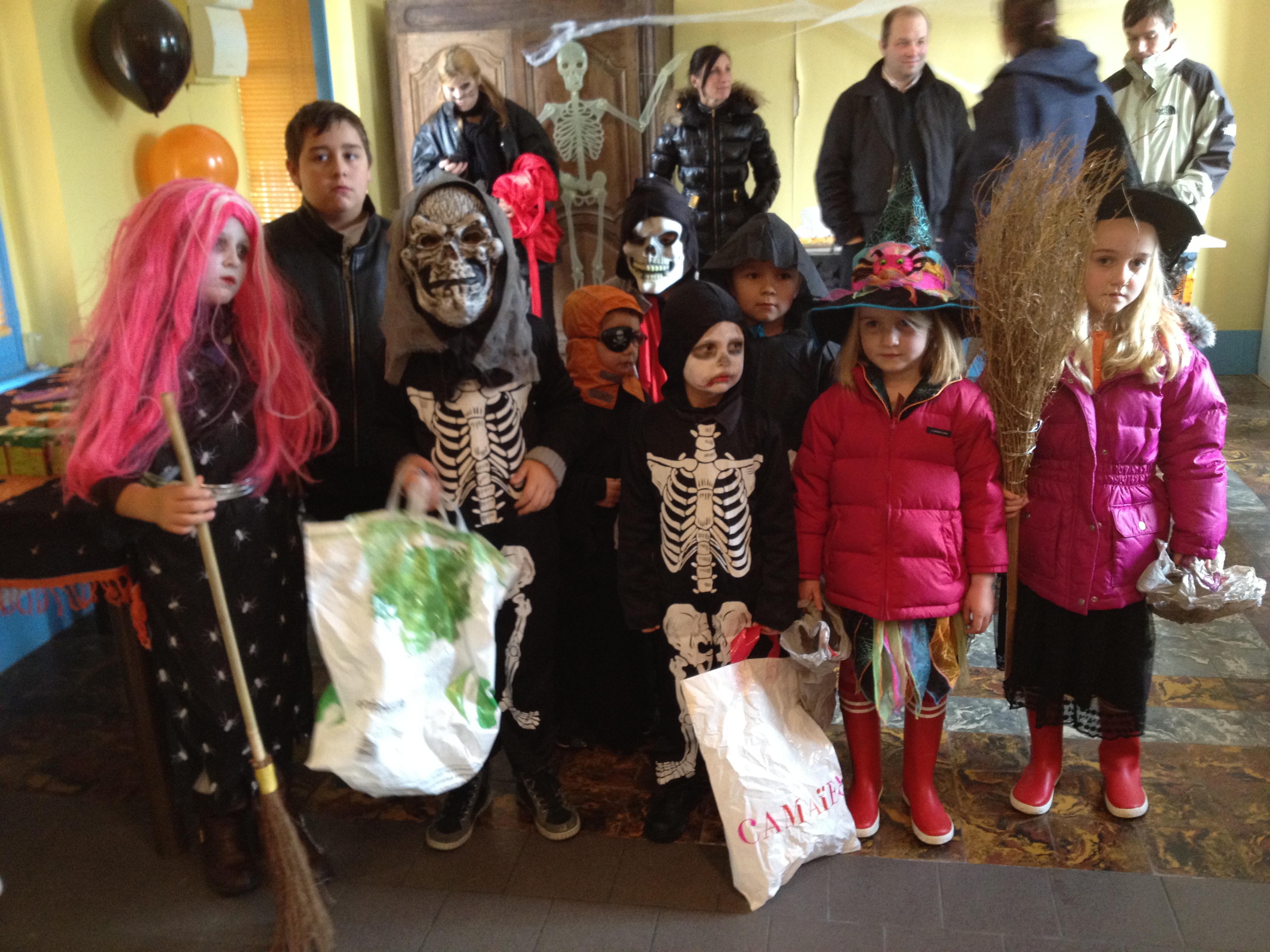
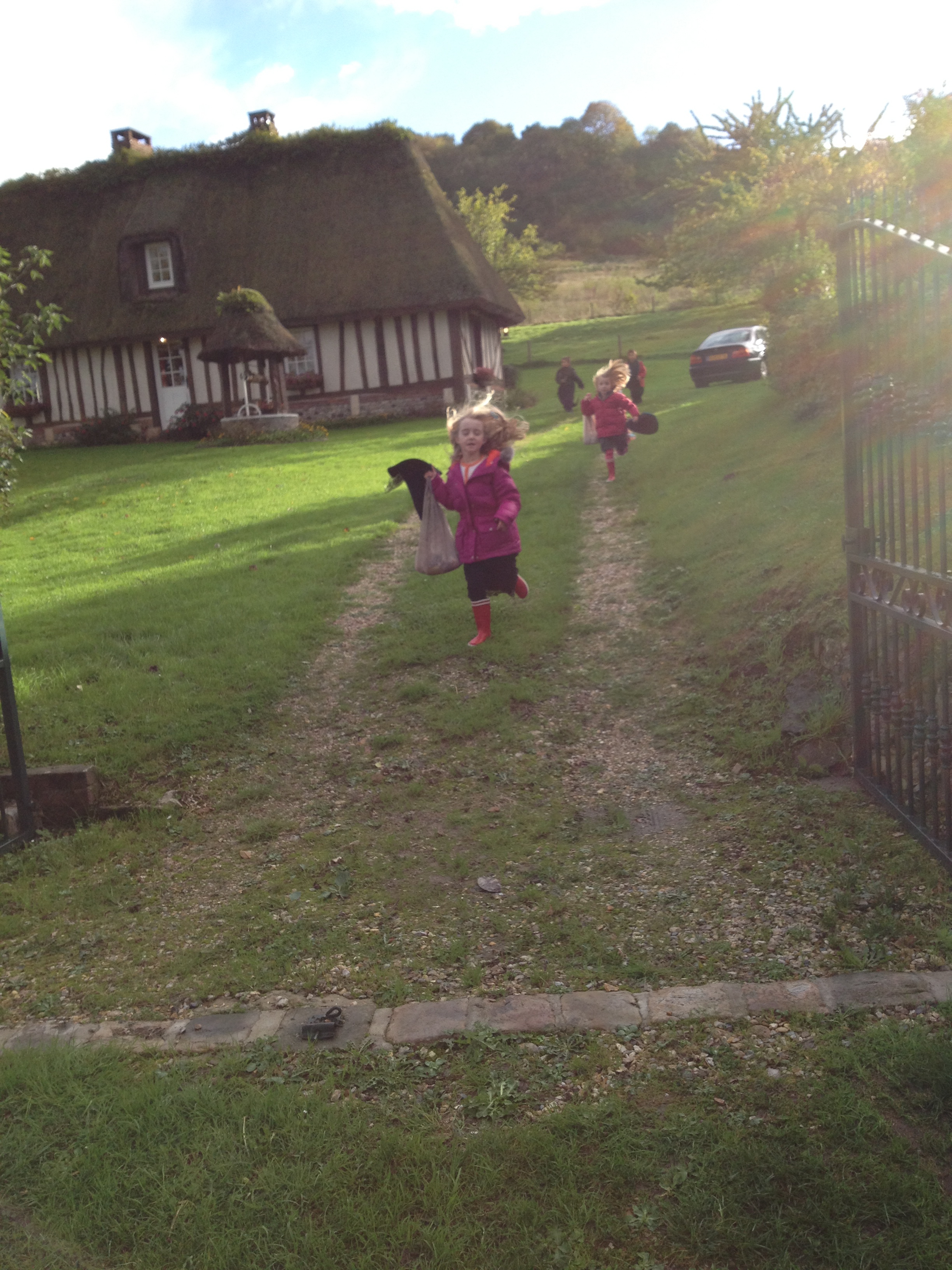
Halloween, NormandyTrick or Treating, Normandy, France

Second, it’s a village-managed event, coordinated and strictly regulated. It happens on a day that’s convenient for the village (it may not even be 31 October!). The children are invited to gather at the Mairie (town hall). They will then progress around the village to collect their candy, politely thanking the householders and closely monitored by a legion of parents who afterwards gather for a reconstituting glass of wine in the village hall.

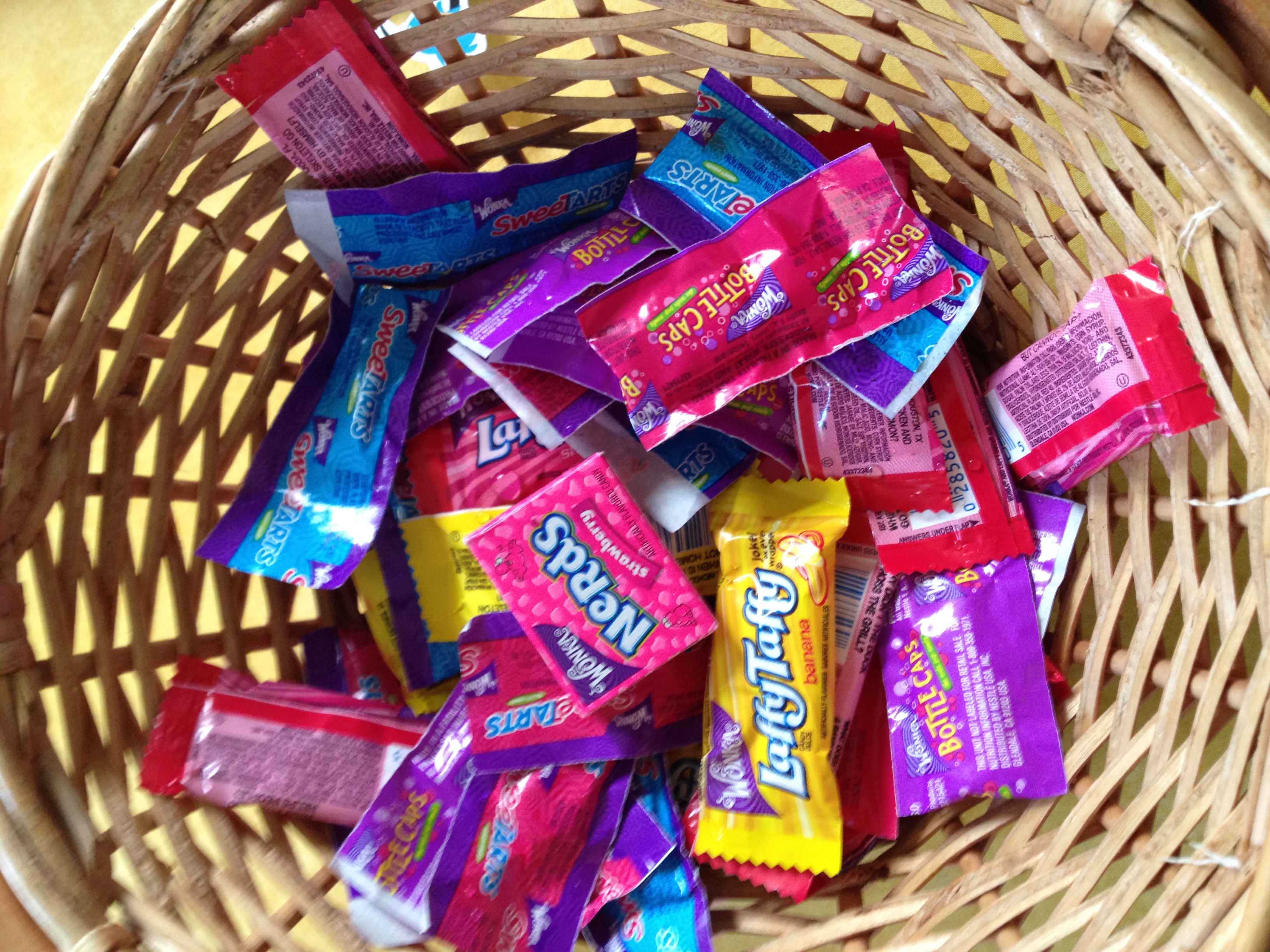
I was sneaky, I confess. I had brought back from the US a bag of American candy: Taffy and Nerds and Sweet Tarts. What’s this? cried the children, seemingly disgusted. But the basket was nearly emptied, and my children told me that it was the American candy (below right), not the beautiful French candy (below left) that went first as the children gorged themselves afterwards.

Some things remain the same, wherever they happen.

French Halloween CandyAmerican Halloween Candy

Wild Mushrooms

Tags

, , , ,

The mushrooms are late in Normandy this year. So late that our village cancelled its usual foraging expedition in October and couldn’t find a date to reschedule on account of the Beaujolais Nouveau tasting event in November – which can’t possibly be delayed.

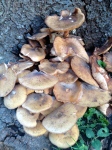
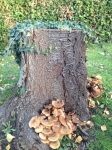
And so, in the last week of October, we encountered more mushrooms than usual along the forest paths around the cottage. I took these pictures in the hope that someone can tell me if any are edible. I reckon they aren’t: I reckon all the good ones have been plucked.

I did cook with mushrooms, beautiful chanterelles from the market which were practically free and so flavourful. Milk-fed veal with giroles (replacing the giroles with chanterelles), pan-fried escalopes with cider and oodles of dollopy Norman cream, from Jane Webster’s luscious memoir-cookbook, At My French Table: Food, Family and Joie De Vivre in a Corner of Normandy. So easy and last minute, and all from market ingredients.

I’d like to try it with mushrooms I’ve picked myself. In France you can take your found mushrooms to the pharmacy, and the pharmacist tells you if they’re alright to eat. At first I didn’t believe this. But everyone – people I hardly knew, who couldn’t possibly be pulling my leg – insisted it was true.

Just as I was building up the confidence to do it, I had lunch with my pharmacist friend and her family on Toussaint. She explained to me that on the pharmacist course of study you can choose one of several tracks – hospital, industrial and so on. On the track she chose, she didn’t have to take the mushroom course. Later, she had a job in a pharmacy near Paris. People would bring in their mushrooms. She hated when that happened, because she couldn’t help them. She didn’t guess – but what if she had?

I don’t think I’ll be picking mushrooms this year. Not yet.

Cider Days

Tags

, , , , , , , ,

Autumn is all about apples in Normandy and, by association, cider. Normandy is the only region in France that doesn’t produce wine, but it makes up for it with an amazing array of cider and its more potent cousin, calvados.

We’ve tried much cider and calvados in Normandy. Everyone with a couple of apple trees seems to have a go at brewing. When we were house hunting in the region, no visit was complete without the owner offering a sample of their very own tipple, and we’ve seen more than a few dinner parties off with a bang by introducing their DIY calvados.

Orchard with sheep, Normandy

The nearest cider maker to Les Iris, signposted on the main road to Sainte-Opportune-La-Mare, is excellent. Like champagne, his cider comes in doux, brut and semi-brut.

Cider, Normandy

He also maintains a vigorous vegetable garden, and sometimes sells extra produce alongside the cider. He takes the children into the garden, lets them choose their vegetables, and pulls the selected plants out of the ground, shaking off the rich dark earth. It’s the freshest lettuce and rhubarb in the world.

Vegetable garden, Normandy

In our garden there’s only one very old and gnarled apple tree standing guard by the gate. One of these days it will go: until then, it insists on producing an abundance of large green-red apples that turn brown within seconds of being cut open. Still, we’re delighted to have a token apple tree, and one of these days we might plant another, of the cooking apple variety.

Apple tree, Normandy

Country Houses

Tags

, , , , , ,


In Part 3 of Anna Karenina, Tolstoy has Dolly decamp to her country house to save money. It’s an expedient move: the fishmonger, the woodmaker and the shoemonger are chasing for unpaid debts. Her daughter has been very ill. Her husband has been sleeping with the nanny of their six children. She goes away with her children, believing that the country will offer “salvation from all city troubles, that life there, though not elegant…[is] cheap and comfortable.” (I am quoting here from the award-winning translationby crack husband-and-wife team Richard Pevear and Larissa Volokhonsky.)

Country houses were no joke in those days. Here is Tolstoy’s own country house, the 32-room Yasnaya Polyana. This is a writer who knew the toll of seasons of hard weather on a country estate, and the real burden that supporting two residences can put on its owners.

The country does not live up to Dolly’s expectations. Her husband has been looking after the house.  “Stepan Arkadyich, who, like all guilty husbands, was very solicitous of his wife’s comfort, looked the house over himself and gave orders about everything he thought necessary. To his mind, there was a need to re-upholster all the furniture with cretonne, to hang curtains, to clean up the garden, make a little bridge by the pond and plant flowers; but he forgot many other necessary things, the lack of which later tomented Darya Alexandrovna.”

What she finds is leaks, no cook, not enough cows for milk and butter, only roosters, and no one to wash the floors as everyone is working in the potato fields.  The wardrobes open and close at the wrong times. There are no ironing boards.

Just when everything is looking bleak, a housekeeper appears and masterfully shapes up the house. “The roof was repaired, a cook was found, chickens were bought, the cows began to produce milk, the garden was fenced with pickets, the carpenter made a washboard, the wardrobes were furnished with hooks and no longer opened at will, an ironing board, wrapped in military flannel, lay between a chair arm and a chest of drawers, and the maids’ quarters began to smell of hot irons.”

(Here is a surprising picture of Tolstoy at 20: so unlike the bearded radical of later years. Looks like someone who would know about high society misbehaviour.)

With fast food, pressed clothes, and working cupboards, Dolly starts to feel at home in the country. The genius of Tolstoy is in these details. It’s not Anna Karenina who compels you through the book: although she gets top billing, she’s a cool and fairly flat character, what James Meek calls a mysterious absence at the heart of Anna Karenina. No, it’s the human truth in the detail, how the husband behaves when he’s guilty, and how the wife regains some order in her world by making the cupboards open and close at the right  times, that  drives the novel right through the centuries onto our shelves and screens today.

But back to our subject of country houses. For me, Dolly makes a mistake in thinking that the country should replicate the city. You see it happening all the time in magazines and property sections: glossy pictures of the second or even third home that’s immaculate, designer-perfect. Just the thought of all that work, to keep not just one but two or three homes looking decent, makes me feel exhausted. And I’m sure the husbands aren’t doing the upholstery.

A city house is on display. Windows are bay-shaped, made to be looked into. Curtains need to hang well, the carpets should be clean. Your clothes can’t be disheveled as you make your way blinking into the morning. The country is different: it’s the place where you go to not be on display. That’s the point of it. No corner shop, no delivery service, no wifi. Nothing for the children to do but scrabble around in the mud and make up adventure games. And for the adults it’s long walks in wellies, a bit of Tolstoy, and gallons of excellent cheap wine. Two changes of clothes is more than enough, you hardly get around to hanging them in the wardrobes which may or may not close. As Judith Warner writes in her perfect column about another chaumiere in Normandy: “Everything’s fine the way it is.”

The Feast Day of St Fiacre

Tags

, , , ,

This week was the feast day of St Fiacre, the patron saint of gardeners, in France and Ireland. As well as being the patron saint of gardeners, St Fiacre is the patron saint of our village in Normandy. Each year to mark the day, a special mass is held in the the ancient village chapel, and the residents gather for a meal together on the banks of the Seine. It’s a peaceful, slow-moving day before the bustle of the return to cities and schools and jobs in September. Here is the post I wrote about the day last year:

*****

Our Daily Bread

Bread is given three definitions in the Merriam-Webster Dictionary:

  1. a usually baked and leavened food made of a mixture whose basic constituent is flour or meal
  2. livelihood <earns his bread as a laborer>
  3. food, sustenance <our daily bread>

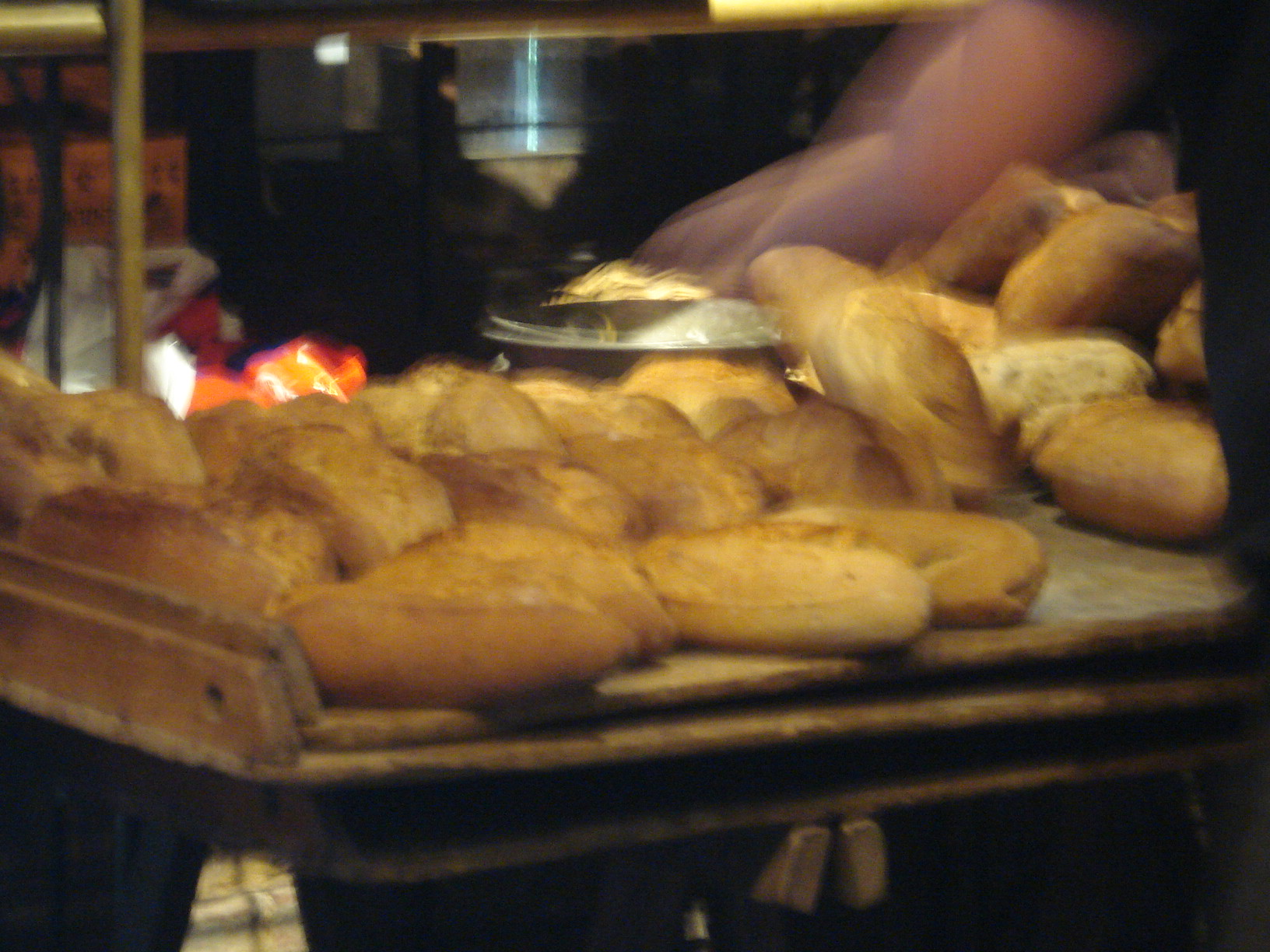
It is in search of bread under its first definition, a baked food made from flour, that we go as soon as we set foot on French soil. A truism, still true: bread never tastes quite like it does in France. For baguettes and croissants, an early morning run up the hill to our local artisanal bakery, Le Fournil de la Roselière in Sainte Opportune La Mare,  does the trick. Although it stands alone in a quiet village, I’ve never seen it empty. Cars and trucks are constantly pulling in and owners whisking out with their daily bread in hand.

In a nearby village, La-Haye-de-Routot, is Normandy’s Bread Oven Museum. Every Sunday afternoon during the year, and every day in the summer, there are bread-making demonstrations.

The bread oven cottage is small and dark, and the bread oven is enormous, filling half of the cottage. It’s the kind of oven Grimm’s witch might have tried to push Hansel and Gretel into. Our children are sceptical, and they keep their distance. The boulanger is large and muscular and has a booming kind of voice. He starts us from the beginning, showing how he heats the oven and removes the coal and ash. It’s hard and hot work, requiring patience.

While he works Monsieur le Boulanger keeps up a comic patter with the audience, telling jokes about the clueless Parisians who take his bread-making courses. He only bakes in the traditional way, he tells us. Baking and keeping alive the art of traditional bread making is quite literally his livelihood.

He shows us how he shapes and decorates the bread, using a special tool for the detail. A pinch here, a prod there, a few seconds of extra work and people will pay three times more for a loaf, he chuckles.

While the bread is baking we go for a walk and return to the smell the baking bread. Now the children are keen, gathering close to the boulanger. Each has a go at helping to remove the bread. The paddle is carefully inserted under a few loaves and then the bread is pulled out with a fast, powerful tug.

Afterwards the fresh bread is sold. We leave with the warm loaves nestled in their white bags, ready for the evening meal.

With most meals in France we eat bread, freshly made and often hot: daily sustenance. One Saturday evening there is a mass in the village chapel, to honour the feast day of the village’s patron saint, St Fiacre. He probably started off as Fiachra, an Irishman, who travelled to France and built a hospice for travelers. Legend has it that St Fiacre furrowed a great garden with his staff. He is the patron saint of gardeners and taxi drivers. This seems fitting for our village with its beautiful cottage gardens, and I like the anomalous conflagration of rural and urban. It’s the story of our lives.

We arrive at the chapel just as mass is starting and are invited to sit in the only free seats, uncomfortable and ancient wooden pews at the front. Next to us is an unexplained heap of warm brioches. Brioche is made in a similar way to bread, but is enriched with egg and butter. It was often used as blessed bread in French churches, and was sold at market in the butter centres of northern France.

The mass is long and the chapel is full. We are hungry and the brioches smell so good. Finally as mass is ending, the priest and the mayor come forwards. The priest blesses the special St Fiacre brioches, sprinkling them with holy water: bread of life. The mayor invites the congregation for a glass of sparkling wine in the mairie, and the brioches are distributed. In the morning for breakfast, is the glistening golden brioche all the more delicious for having been blessed?

Dinner by Michelin: SaQuaNa

Tags

, , ,

Once again I am delighted to welcome my mother as a guest blogger, this time to review Alexandre Bourdas’s two-star Honfleur hotspot SaQuaNa.

* * * * *

Saveurs (flavour), Quality and Nature are the three marks that the restaurant’s chef, Alexandre Bourdas, seeks in his cooking. He is successful. On his website he speaks of being influenced by his mother’s home in Aveyron and his own cooking experience in Japan. Surprising combinations, the melding of what might be considered opposites, mark the experience of a meal at SaQuaNa. This is not comfort food, nor usual French cooking, but it is creative cooking in which interesting flavors are combined carefully, yet hold their own identity.

My husband and I began with a “pascade Aveyronnaise,” a baked crepe with the crunch of crispy sugar as one bit into it. That first taste was immediately followed by the savory taste of fresh chives and the overall flavor of truffle. What a fabulous start! Next was steamed pollack with Gomasio (a salt and sesame seed preparation), turnips, radish, mustards, grilled sardines and frothed olive oil. Sea-bream with Colonnata bacon with fresh almonds, pointed head cabbage, meadow mushrooms and parsley flowers was the following course. Then came veal and button mushrooms which had an emulsion of preserved lemon, swisschard and chervil.

A cake, which was more like a cookie, followed: salted caramel and chocolate, fromage blanc and pineapple sorbet, cream and hazelnut oil. Then a second dessert was served: “cappuccino” of iced coffee, ganache, a cocoa tile, mousse with cocoa butter, toffee, and a choux bun with caramel and whipped cream. Add to the above the little bits and pieces delivered to the table in most two star Michelin restaurants, not ordered, but delightful offerings to further enhance the experience, and you will have a sense of the seriousness and the playfulness of this chef and his kitchen. Portions are individual and small. That is unless you are including some of the most delicious bread known to man or the large bowl of fresh salad. Both are communal and are to be shared by the table.

The staff is excellent. Despite all of that food, they do not rush one. The pace is practiced and perfect and polished. The staff seems warm and welcoming and happy to answer any question put to them.

The restaurant sits on a square, not far from the beautiful harbor, in this stunning port city which is full of 17th century buildings plus a fascinating church. Sa.Qua.Na’s building looks like an old store front, except that there are sun shades resting at various levels. They look not like a mistake but a plan. The inside seems simple, pure, and like the food, full of surprises when you examine its interior closely. The light colored wooden tables look Scandinavian.

There are nods to Asia in the decoration. What is noticed is that the vertical strip lighting serves as a part of the decoration. The colors are mysterious . The tables have been carefully designed so that the marvelous cheese tray can hang off of the end of each table. Essential elements decorate. It feels natural. You notice the quality and thought put into the design. SaQuaNa.

We just love these pictures

Tags

, , , ,

We love feedback at Les Iris. We are always grateful when guests take the time to tell us what they liked, and what we could do better.

Best is when they share their holiday stories and pictures. One guest who stayed at Les Iris with his family recently shared these evocative and mysterious pictures of his time at Les Iris and in Normandy.

French Women Can Play Basketball

Tags

, , , , , ,

This will be my last post about the Olympics, I promise. I’m sticking to my rule that I will only post if it has something to do with France. So I won’t tell you about the excellent Italian fencing final we got to see. Or what an thrill it is to be in London this week.

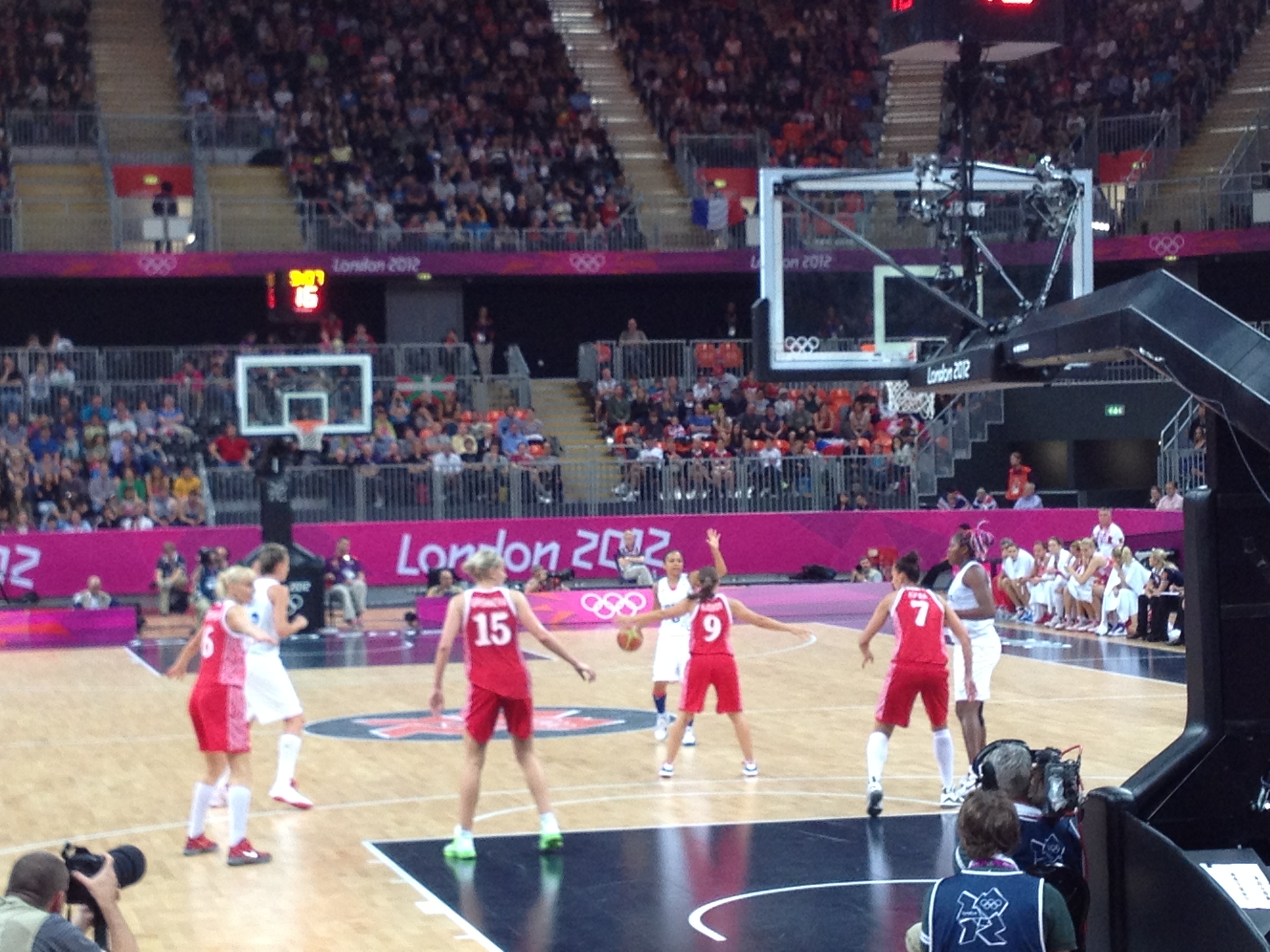
What I will tell you is that today we were lucky enough to score tickets to see France play Russia at women’s basketball. The French team are unbeaten so far in the tournament, and we expected a good match.

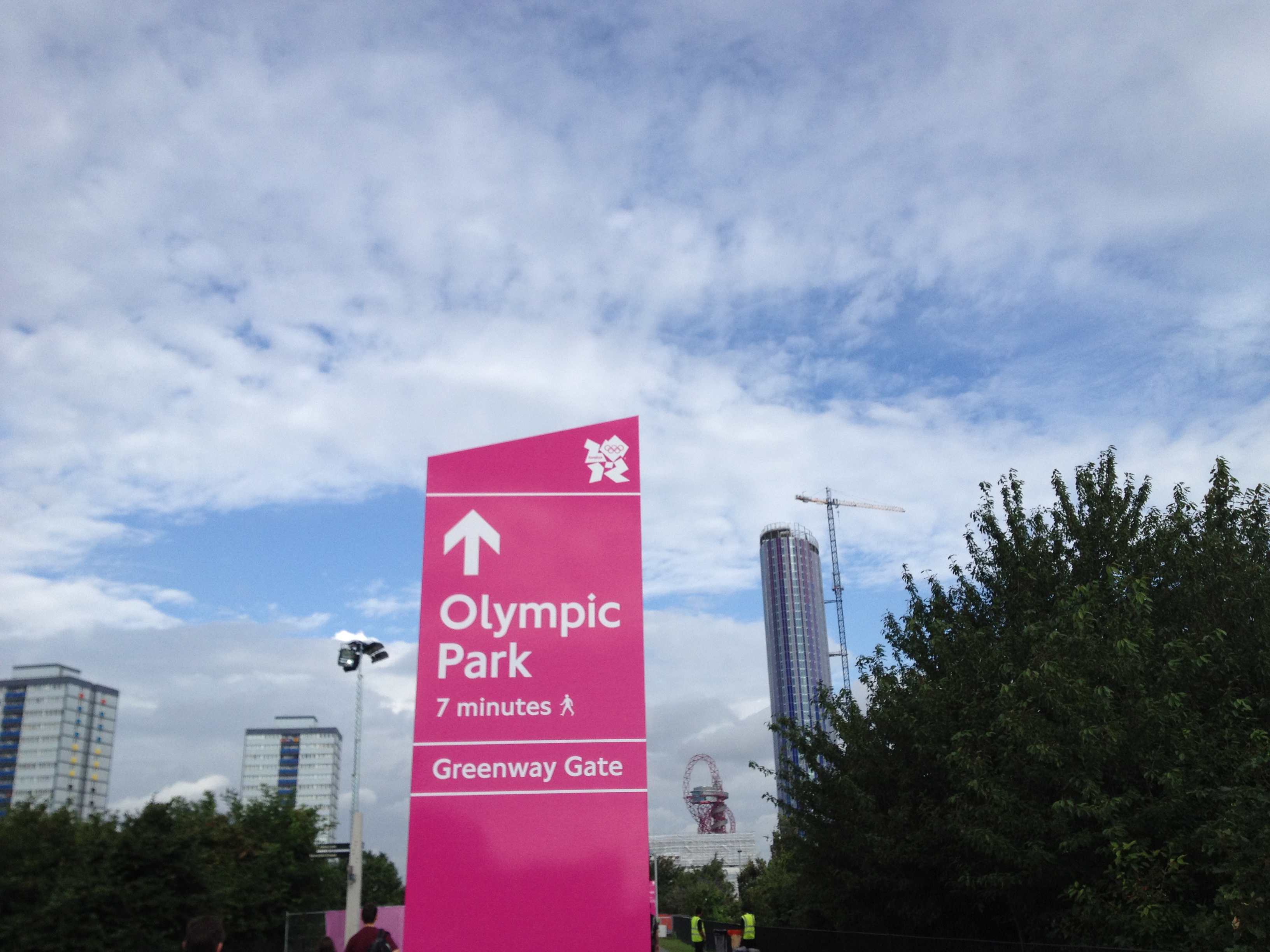
Everything about going to the Olympics is exciting.  We arrived from West Ham station and walked along an elevated pathway that gradually reveals the panorama of stadiums in the park. There were jugglers and stilt-walkers and high-fiving volunteers. A carnival atmosphere, still celebrating Team GB’s record 6 gold medals won the previous day.

Inspire a generation, Olympic Park, London

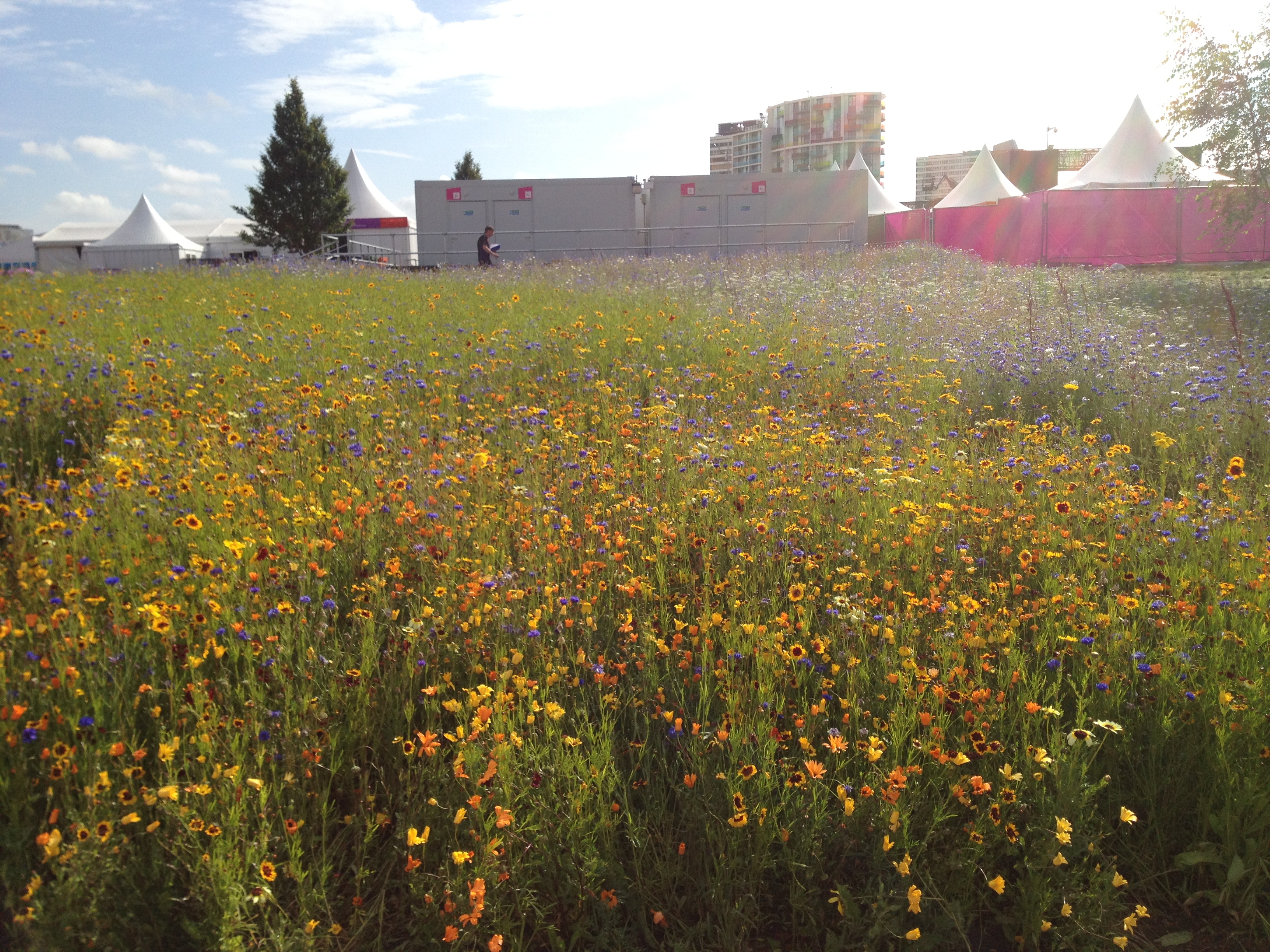
How different it looked from last time we saw it, just three months ago. One of the great surprises of the Olympic Park is just how attractive it is. Banks of wildflowers shimmered everywhere in the early morning light. Redolent of the golden colour you see sometimes in Normandy.

Wildflowers, Olympic Park, London

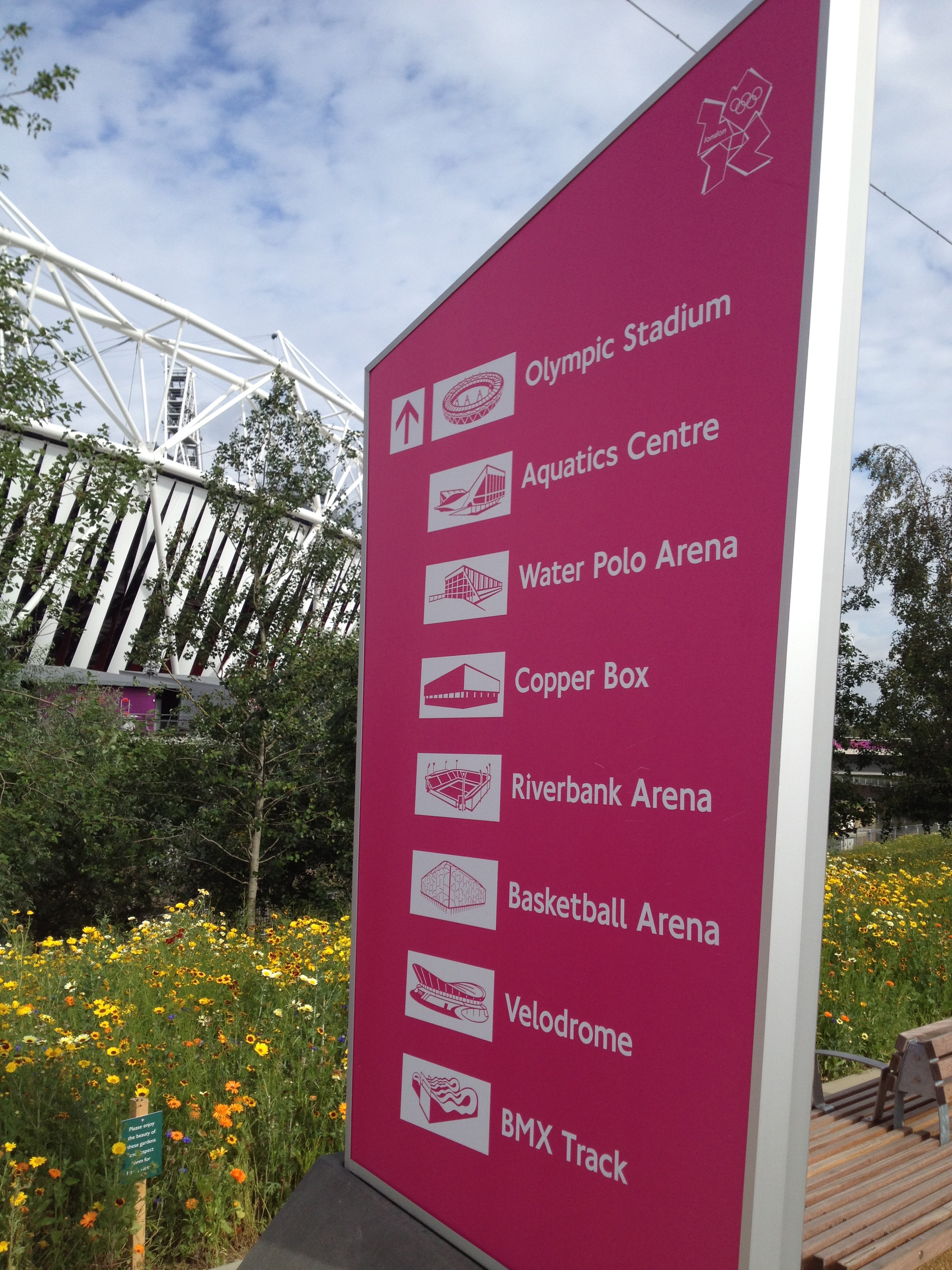
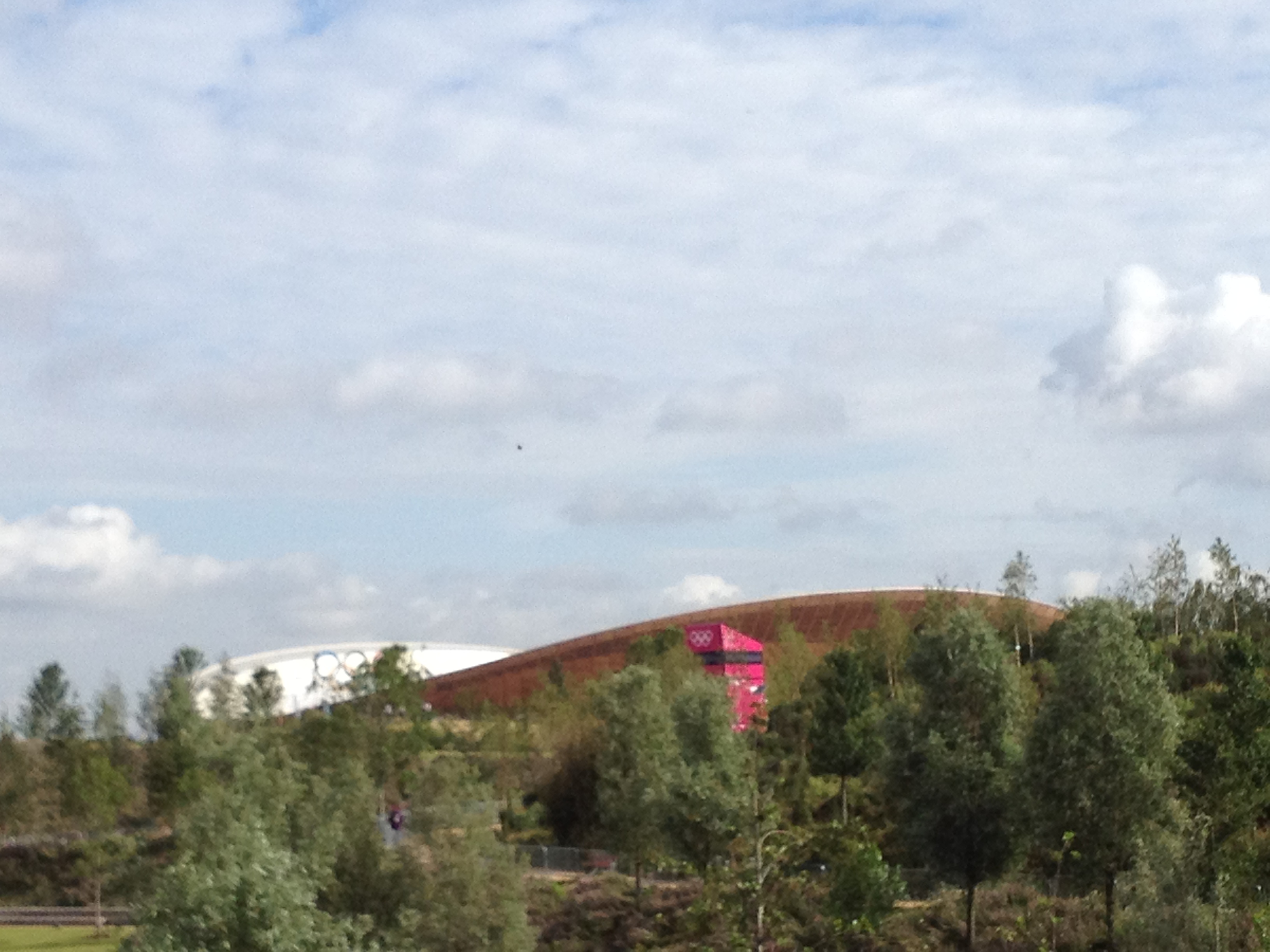
I’ve already written about seeing the Olympic road race and would have loved to attend a cycling event the velodrome. Second best was seeing the magnificent stadium from the outside.

Velodrome, Olympic Park, London

Olympic Park, London, 5 August 2012

Now onto the basketball.

Basketball Stadium, Olympic Park, London

Given the number of French nationals who live in London (between 300 and 400,000 according to the French embassy), French support felt muted, especially compared to the vigorous flag-waving by Poland supporters at the GB-Poland volleyball match we had attended the day before.  However as French points rose, the tricolore started to appear around the stands.

French supporter, Women's Basketball, London Olympics

The French women played a smart and controlled game. They deserved to win, and we’ll be watching as they go into the quarterfinals later this week.